
English Cottage Style
12 English Cottage Style Ideas for a Warm, Lived-In Home
English cottage style is not about buying a whole new house. It is a look you can build room by room: soft colours, natural materials, floral prints, and furniture that looks like it has a story. These 12 ideas show you how to get the style — whether you live in a real cottage or a modern flat.
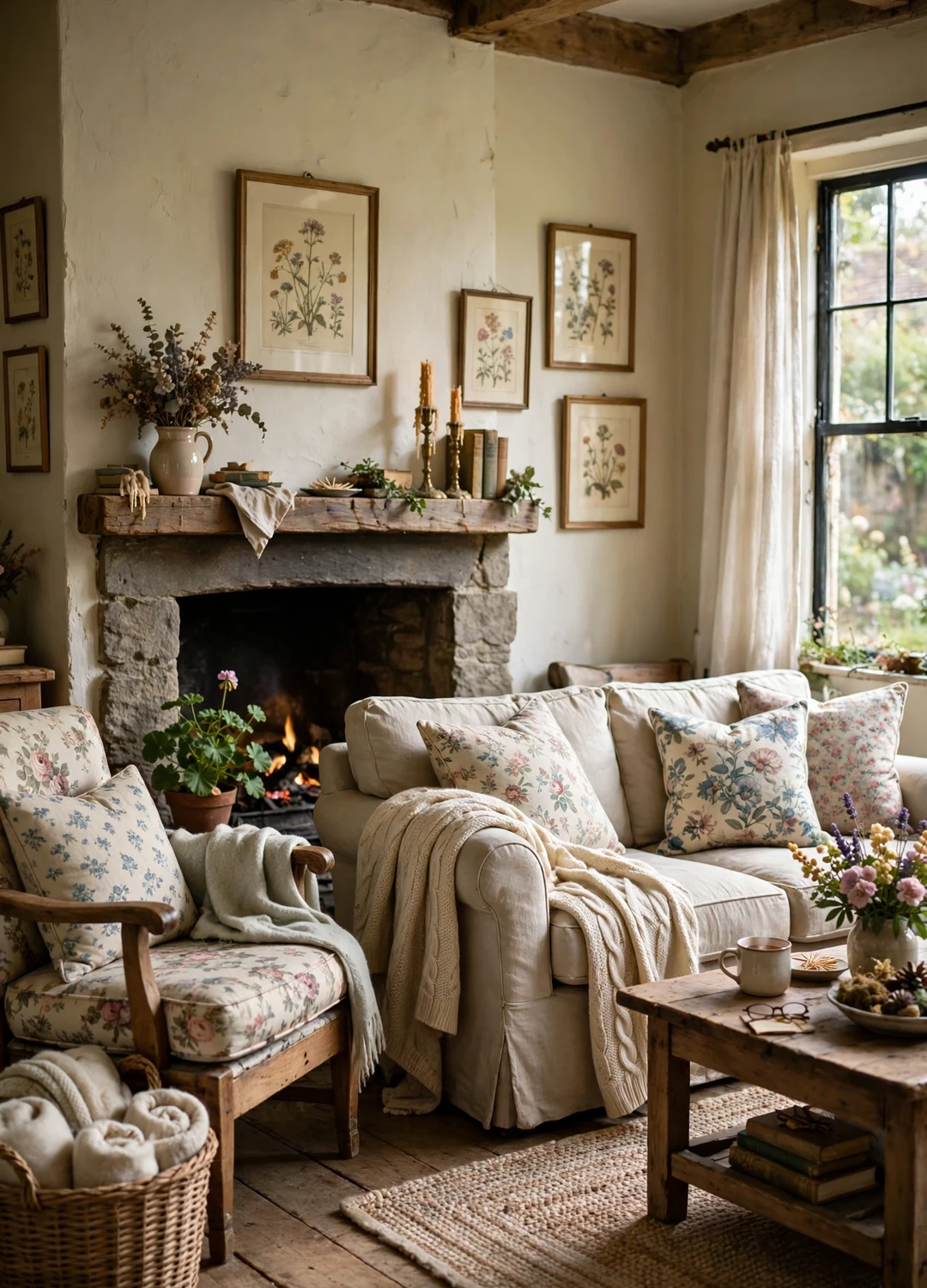
Soft colours, natural materials and a fireplace — the heart of English cottage style.
English cottage style grew out of small country homes where nothing matched perfectly and everything was used every day. That is still the secret of the look. Instead of a showroom set, you layer old and new, soft and sturdy, plain and patterned — and you let the room look lived in. The 12 ideas below work in any home, one room at a time. Start with the colour palette, add the textiles, then bring in the furniture and the small details that make the style yours.
1. Start with a Soft, Muted Colour Palette
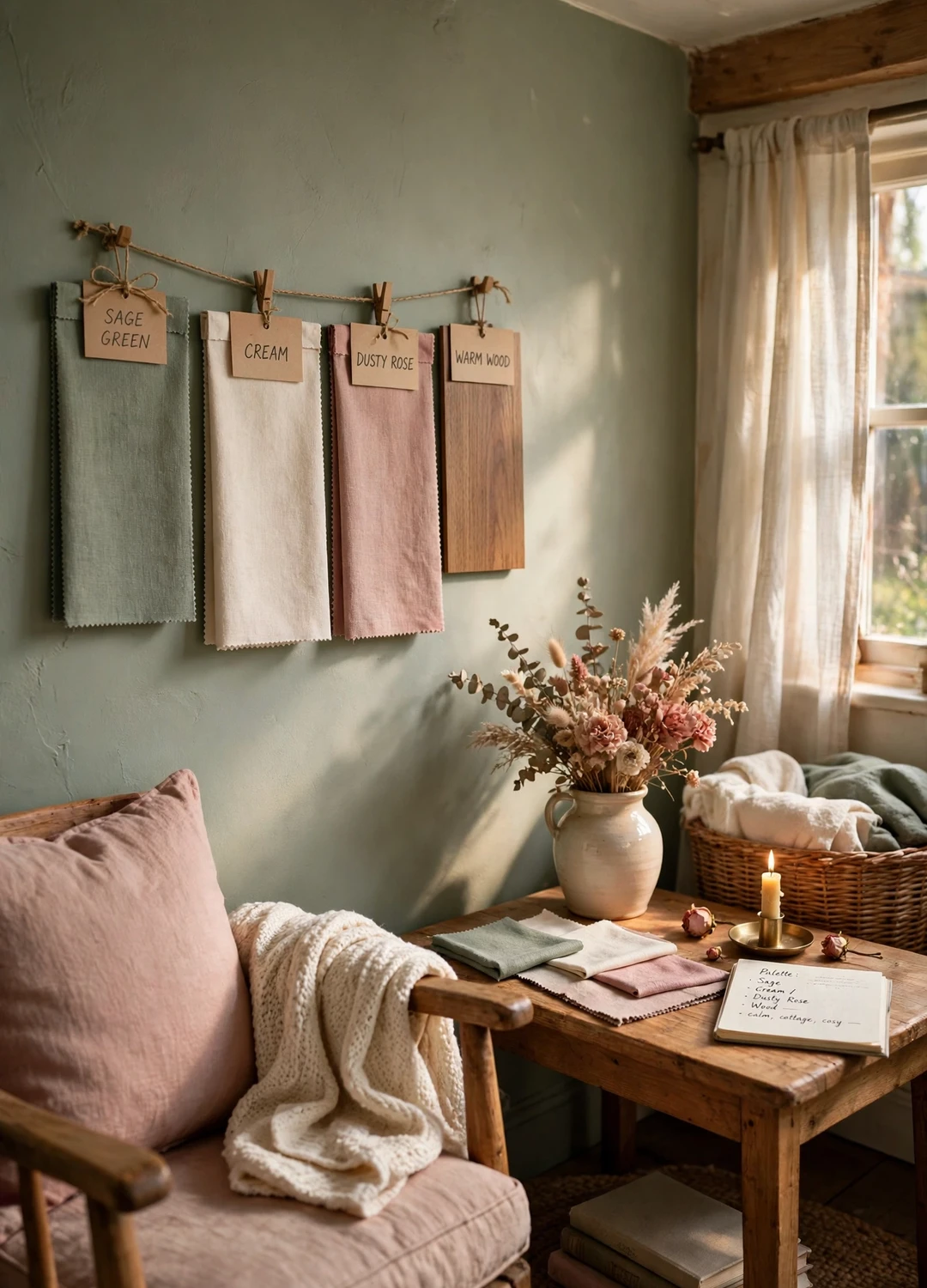
English cottage style starts with colour — and the colours are always soft. Think warm cream walls, sage green, dusty rose, butter yellow, and pale sky blue, all slightly faded as if the sun has softened them over the years. Keep the walls light and let the colour come from the fabrics and furniture. A room painted in one pale shade feels calm, and it lets the patterns and textures do the talking.
Why It Works
Muted colours make a small room feel bigger and a big room feel cosier. They also forgive mismatched furniture, because everything sits inside the same gentle palette. Bright, sharp colours fight the cottage look; soft ones hold it together.
Best for
Every room, but most of all small living rooms and bedrooms. If your room gets little light, warm cream and pale yellow will lift it. If it is very sunny, sage and dusty blue will cool it down.
Styling Tips
Pick three colours and repeat them through the room — one for the walls, one for the main fabric, and one small accent. Test paint on the wall and look at it in morning and evening light before you commit. If you want more on the house itself, our English cottage post covers the classic cottage colours room by room.
2. Bring In Floral and Botanical Prints
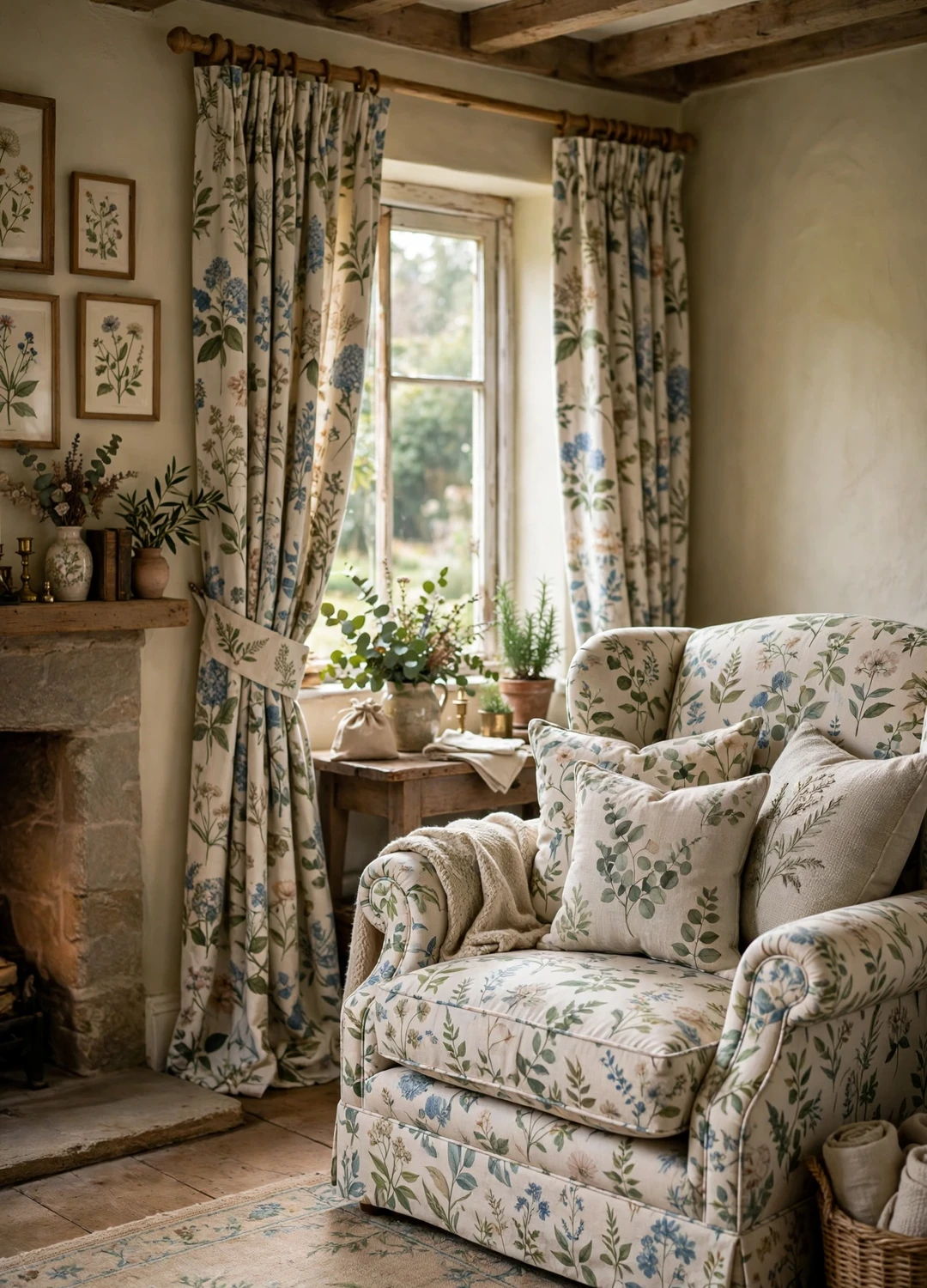
No pattern says "English cottage" like a floral. Small ditsy prints on cushions, a bigger rose print on curtains, a botanical print on a lampshade — flowers belong everywhere in this style. Use them in moderation so the room feels fresh rather than busy: one bold floral, one small print, and one plain fabric in a matching colour is a good rule. Roses, lavender, wildflowers, and leafy trails all work.
Why It Works
Florals bring the garden indoors and soften hard furniture. They are also the quickest way to change a room's mood — swap the cushion covers in spring and the whole room feels new. The trick is scale: mix a large print with a small one so they do not compete.
Best for
Curtains, cushions, armchairs, and bed linen. A floral headboard or a floral roman blind can carry a whole bedroom on its own.
Styling Tips
Keep the background colour of your florals in the same family as your walls — cream on cream, or sage on sage — so the pattern feels part of the room. If you love roses, our plants for an English cottage garden post shows which varieties suit the look, inside and out.
3. Use Natural Materials Everywhere
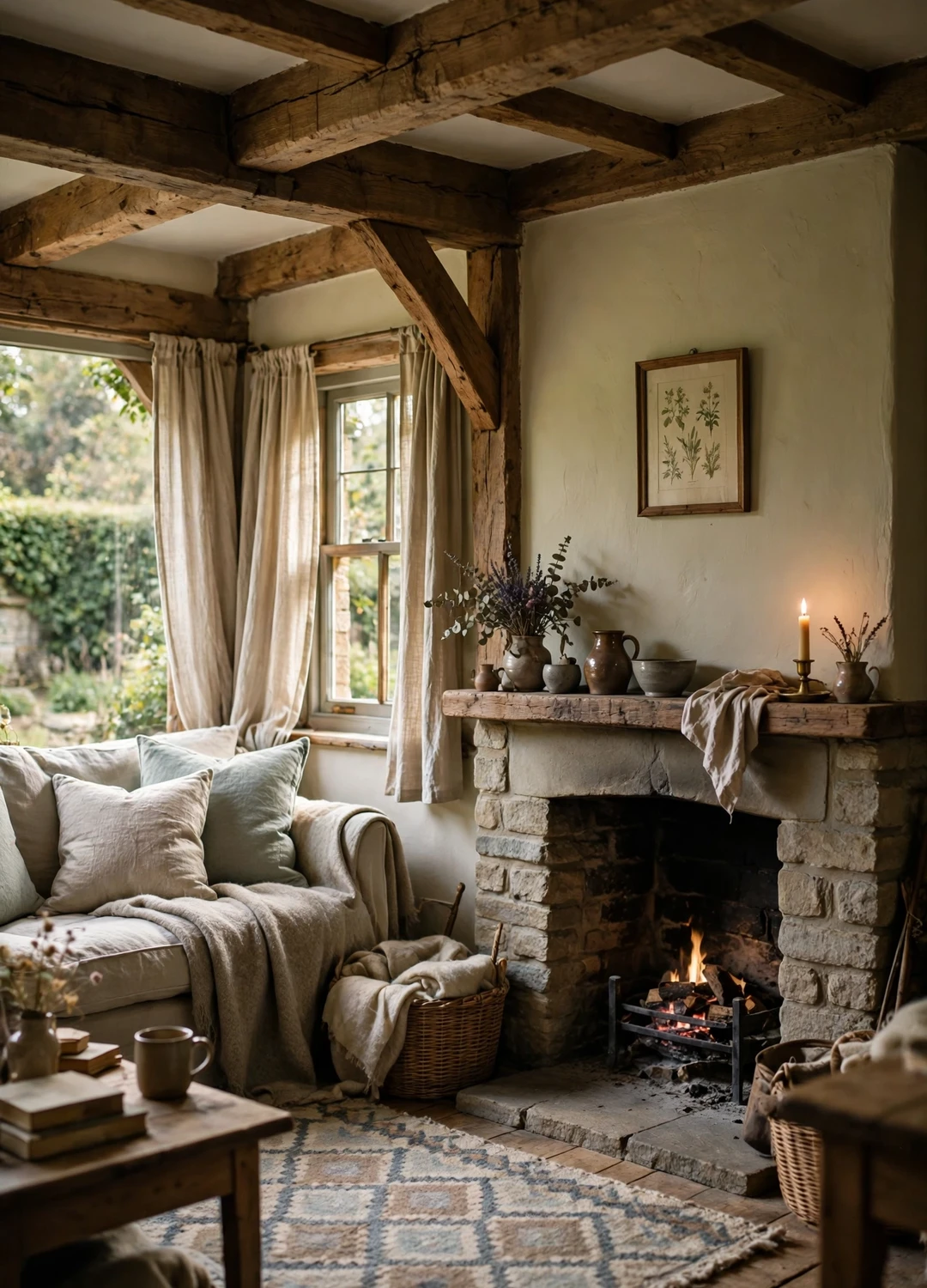
Wood, stone, linen, cotton, wool, and wicker — English cottage style is built on materials you can touch. Exposed wooden beams, a stone or brick fireplace, a scrubbed pine table, linen curtains that move in the breeze: these are the textures that make the style feel honest. Even in a modern house, a wooden floor, a stone hearth, or a linen sofa cover will pull the room toward cottage style.
Why It Works
Natural materials age well. Wood darkens, linen softens, stone weathers — and every mark adds character instead of looking like damage. Shiny plastic and chrome do the opposite: they stay perfect and look cold next to everything else.
Best for
Floors, fireplaces, tables, and window treatments. If you can only change one thing, choose a natural floor — wood, stone, or a wool rug over boards.
Styling Tips
Mix the materials rather than matching them: dark wood with pale linen, rough stone with soft wool. One or two natural textures in every sightline is enough — you do not need to replace everything at once.
4. Layer Textiles Until the Room Feels Soft
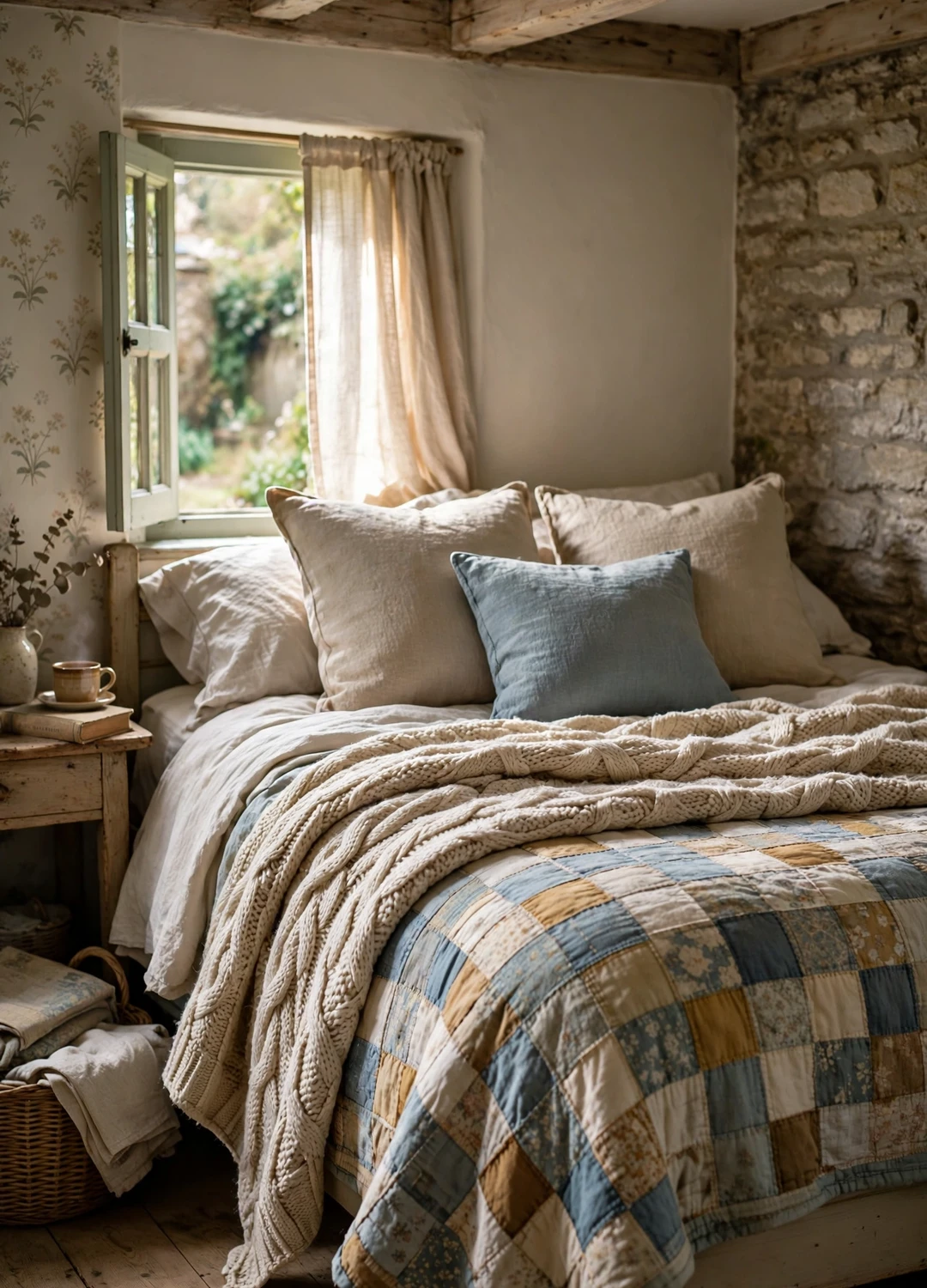
A cottage room is never bare. Layer a quilt over the bed, a knitted throw over the sofa arm, cushions in three fabrics, and a rug under the coffee table. Curtains should be full and soft, not flat and stiff. The layers do two jobs: they make the room feel warm and lived in, and they let you change the look with the seasons — light cotton in summer, heavy wool in winter.
Why It Works
Layering is what turns a tidy room into a cosy one. Each layer adds warmth and softens the edges of the furniture. It also hides the fact that nothing matches perfectly, which is exactly the point of cottage style.
Best for
Beds and sofas first, then windows and floors. A bed with a quilt, a throw, and four cushions already looks like a cottage bedroom.
Styling Tips
Use odd numbers — three cushions, not two — and vary the texture: one smooth linen, one knitted wool, one floral cotton. Fold the throw over the arm of the sofa rather than draping it flat, so it looks used rather than arranged.
5. Choose Vintage Furniture with Patina
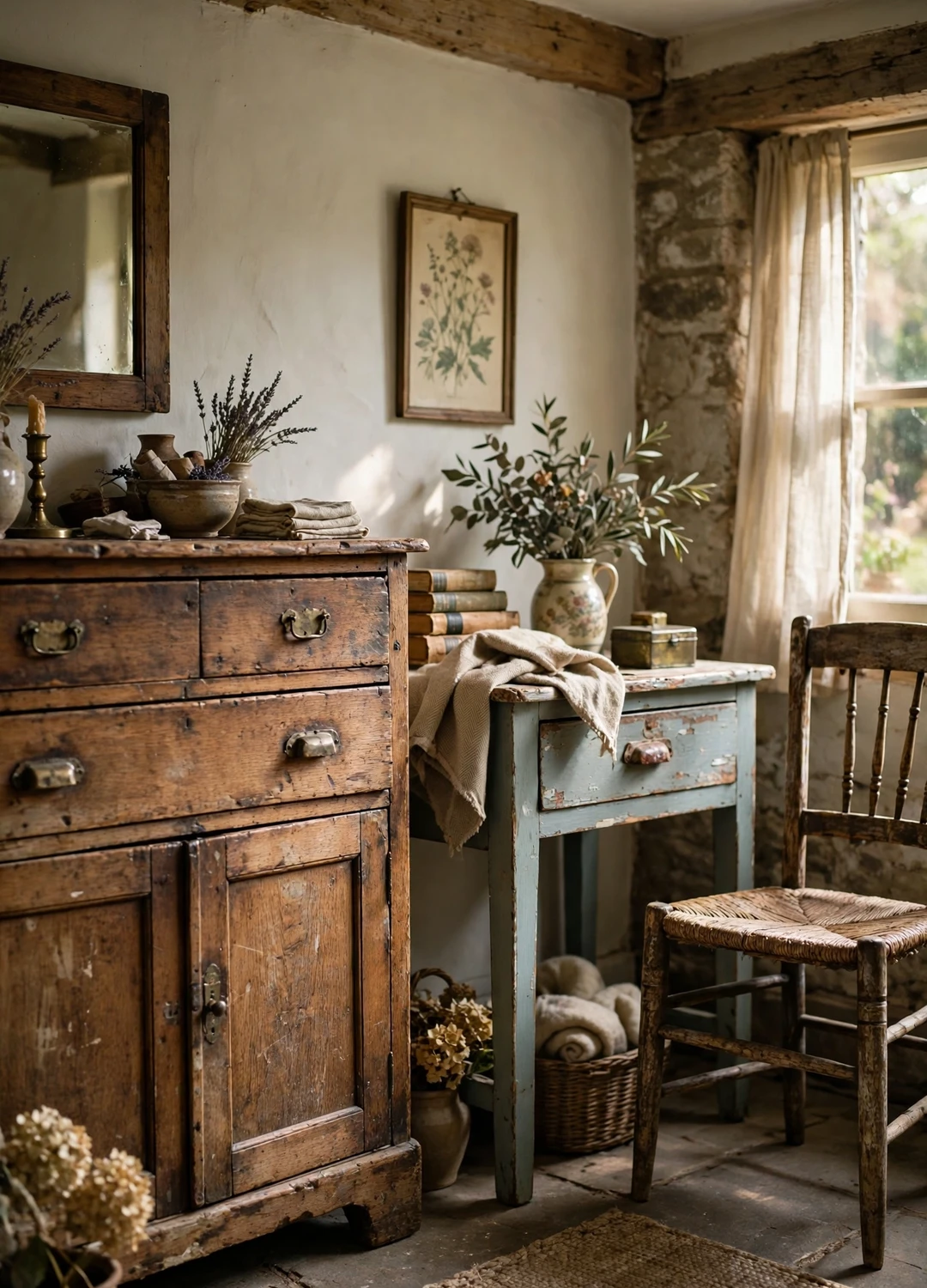
Cottage style loves old furniture. A painted dresser, a worn oak table, a spindle-back chair, a chest of drawers with mismatched handles — pieces that show their age are the heart of the look. You do not need real antiques. A second-hand find, a painted charity-shop table, or a family piece with a scratch or two will do. What matters is that the furniture looks like it has lived a life.
Why It Works
Patina tells a story, and a room full of stories feels like a home. Old wood also has a warmth that new flat-pack furniture cannot copy. And because cottage style mixes eras freely, you can add one vintage piece at a time without redoing the room.
Best for
Dressers, side tables, dining chairs, and bedside tables. One good old piece per room is enough to set the tone; the rest can be simple and new.
Styling Tips
Paint is your friend. A tired wooden dresser in sage green or cream chalk paint looks made for a cottage. Keep the original handles if you can — old brass or ceramic knobs add more character than new ones.
6. Open Shelves and Displayed Collections
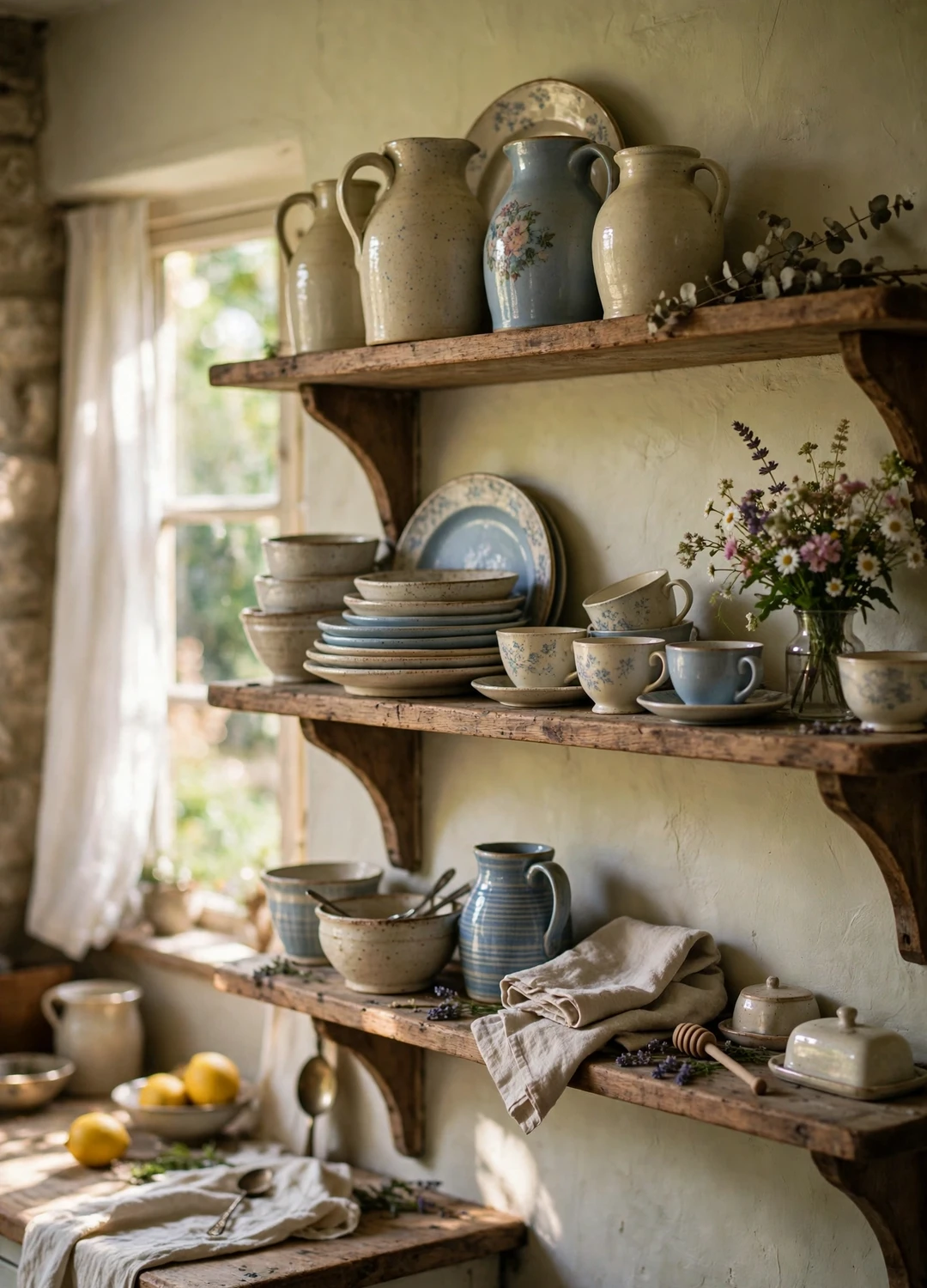
Instead of hiding everything behind cupboard doors, cottage style puts it on show. Open shelves with stacked plates, ceramic jugs, teacups, jam jars, and a few cookbooks turn a kitchen into a display. A dresser with plates on the top shelf and bowls below is the classic cottage piece. The rule is simple: display what you use, and use what you display.
Why It Works
Open shelves make a small kitchen feel bigger, because the eye travels past the shelves instead of stopping at a wall of doors. They also add colour and pattern for free — a row of mismatched mugs is decoration in itself.
Best for
Kitchens and dining rooms. A single open shelf above a worktop, or a plate rack on the wall, is enough to start.
Styling Tips
Group things in threes and leave breathing space between groups — a shelf packed edge to edge looks like clutter, not a collection. Put everyday items at hand height and pretty things you rarely use up high. Keep the colours in your palette so the display feels calm.
7. Make a Cosy Window Seat or Reading Corner
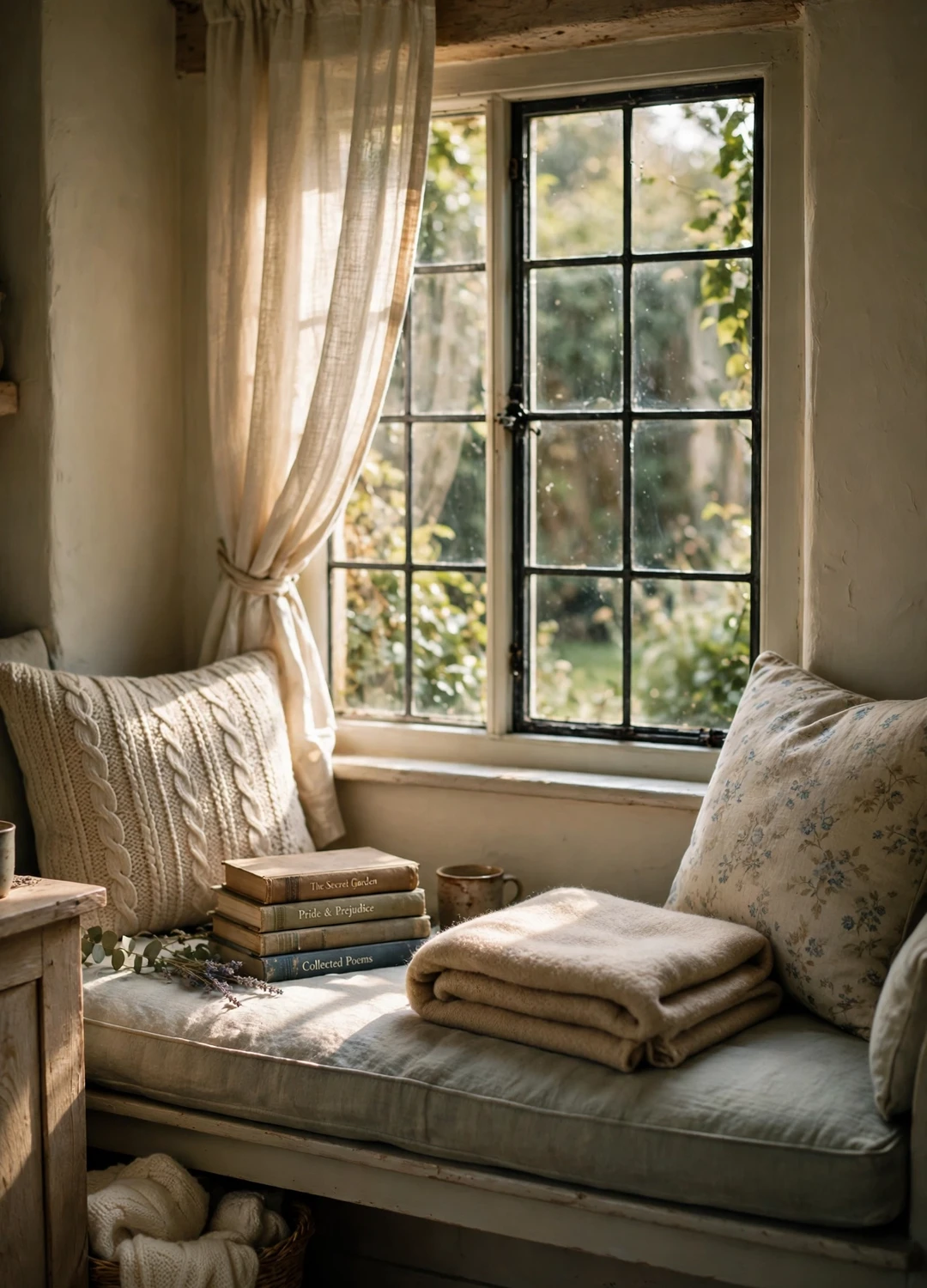
Every cottage needs a spot to sit with a book. A window seat with a thick cushion, a folded blanket, and a small stack of books is the dream — but a deep armchair by the window with a floor lamp and a side table does the same job. Add a cushion in a floral print and a throw you can pull over your knees, and the corner is done.
Why It Works
A reading corner gives the room a purpose beyond looking nice. It invites you to slow down, and it uses the best light in the house — the light by the window. In a small room, it also turns a dead corner into the most loved seat in the house.
Best for
Bay windows, deep sills, and any quiet corner near natural light. If you have no window seat, a slipcovered armchair angled toward the window works just as well.
Styling Tips
Keep the cushion thick — at least 10 cm — or the seat will not be comfortable enough to use. Add storage under the seat for books and blankets. A small basket beside the chair keeps the corner tidy and adds to the cottage feel.
8. Mix Patterns — Florals, Checks and Stripes Together
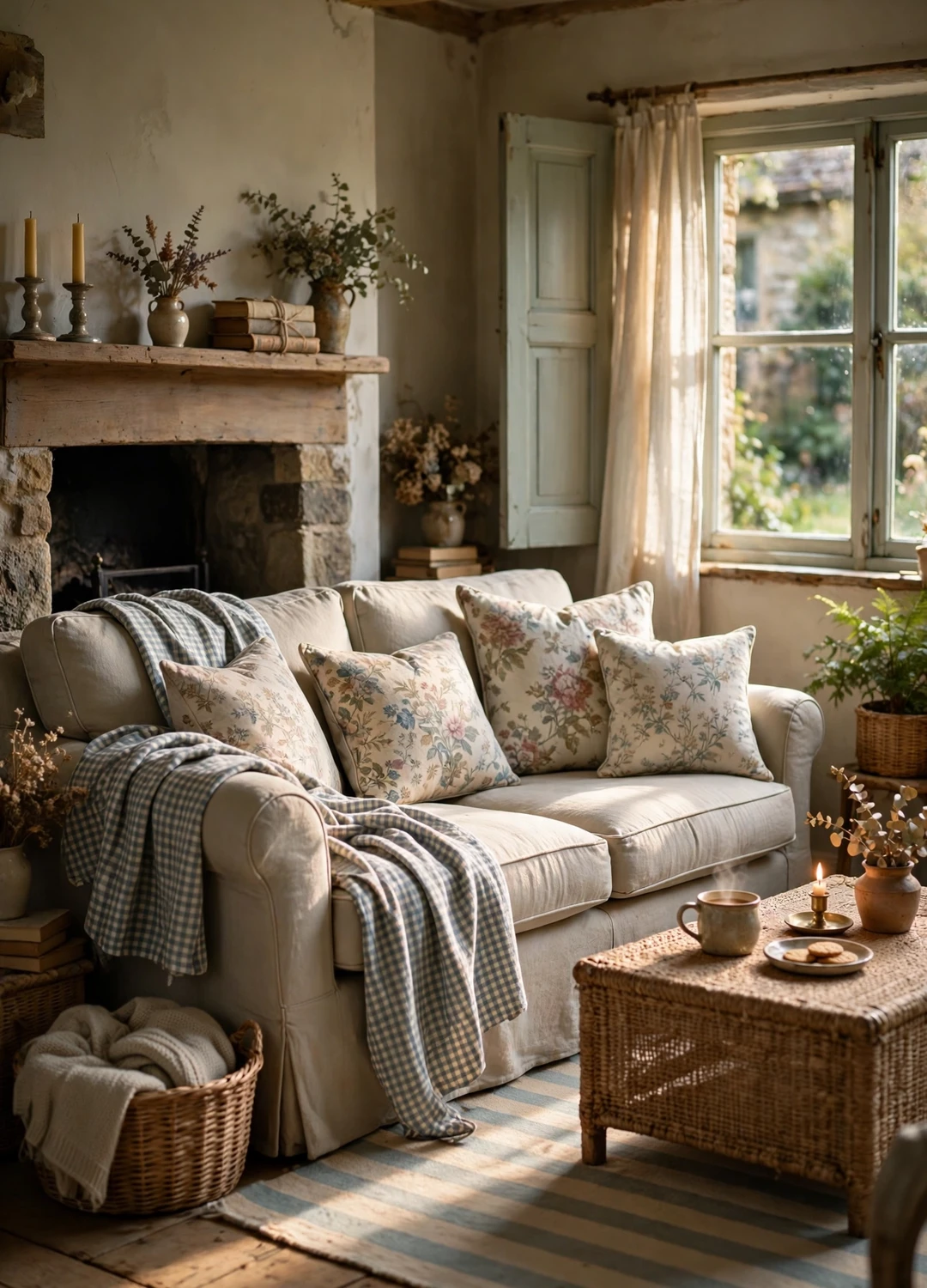
Cottage style is famous for mixing patterns: a floral sofa with gingham cushions, a striped rug under a checked armchair. The secret is a shared colour. If the floral, the check, and the stripe all contain the same sage green or dusty rose, they will sit together happily. Vary the scale too — a big floral, a medium check, and a fine stripe — so no two patterns fight for attention.
Why It Works
Pattern mixing is what makes cottage style feel collected rather than bought as a set. It also lets you use fabrics you already own. A room with three patterns in one colour family looks rich; a room with one pattern everywhere looks like a hotel.
Best for
Soft furnishings — cushions, throws, curtains, and rugs. Keep the walls and the big furniture plain so the patterns have room to breathe.
Styling Tips
Start with two patterns, not three, and add the third once you are happy. If a mix looks wrong, check the colours first — nine times out of ten, one pattern has a cold blue where the others are warm, and swapping it fixes the clash.
9. Fresh Flowers and Greenery in Every Room
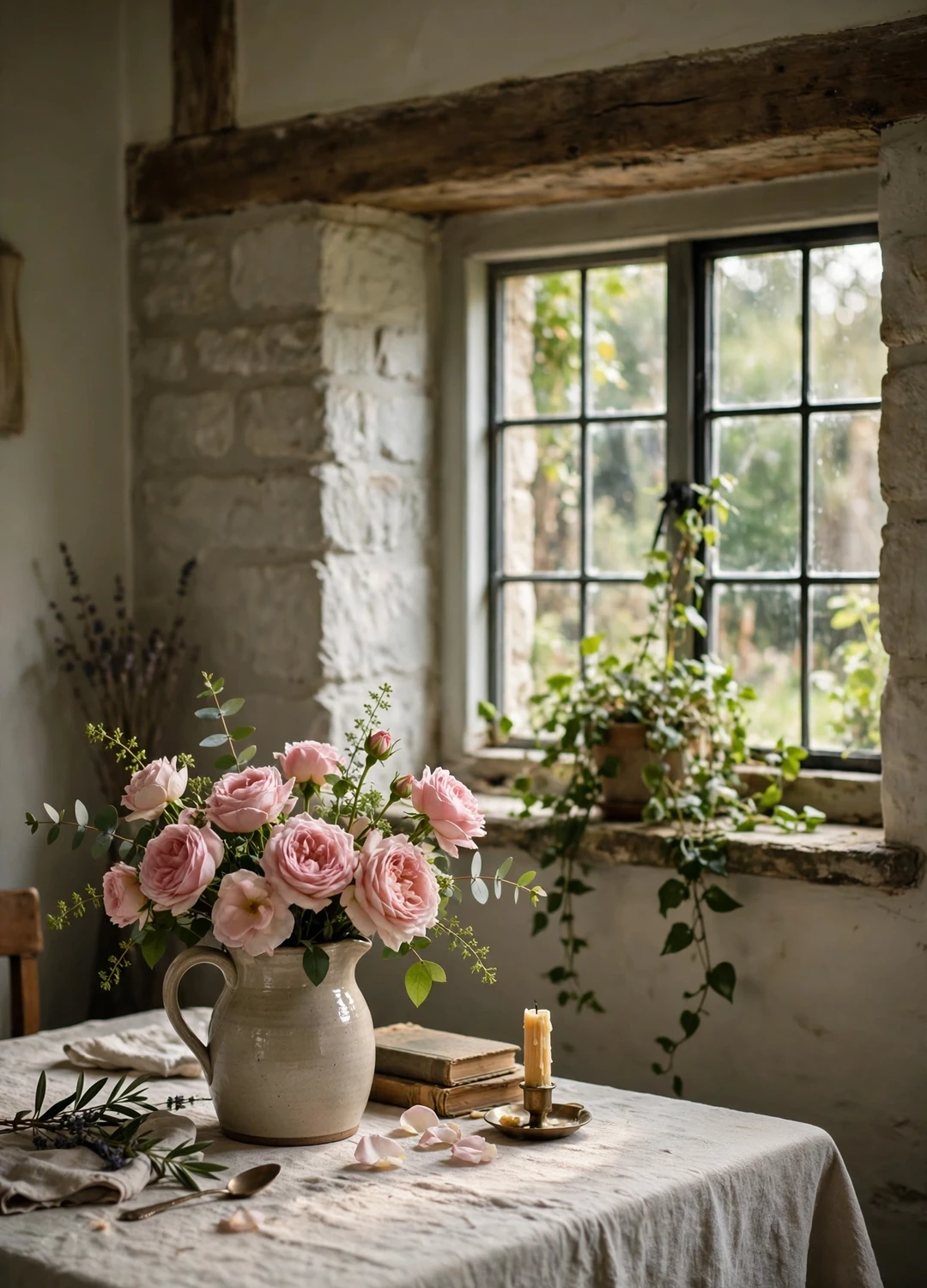
A cottage without flowers is not a cottage. A jug of roses on the kitchen table, a small posy on the bedside table, a trailing plant on the windowsill — fresh flowers and greenery belong in every room. You do not need expensive bouquets. Garden flowers, a bunch from the market, or even a few stems of herbs in a jam jar will do. What matters is that something living is in the room.
Why It Works
Flowers add colour, scent, and life in a way no object can. They also change with the seasons, so the room never looks frozen. A single stem in a small vase on a shelf is enough to lift a whole corner.
Best for
The kitchen table, the hall, and the bedroom. Put the biggest arrangement where you see it first when you walk in.
Styling Tips
Use simple containers — a ceramic jug, a glass jar, a tin bucket — rather than a formal vase. Cut stems short and let the flowers sit low and full. If you want to grow your own, our English cottage garden flowers post lists the easiest varieties to cut for the house.
10. Warm, Low Lighting — Lamps and Candles
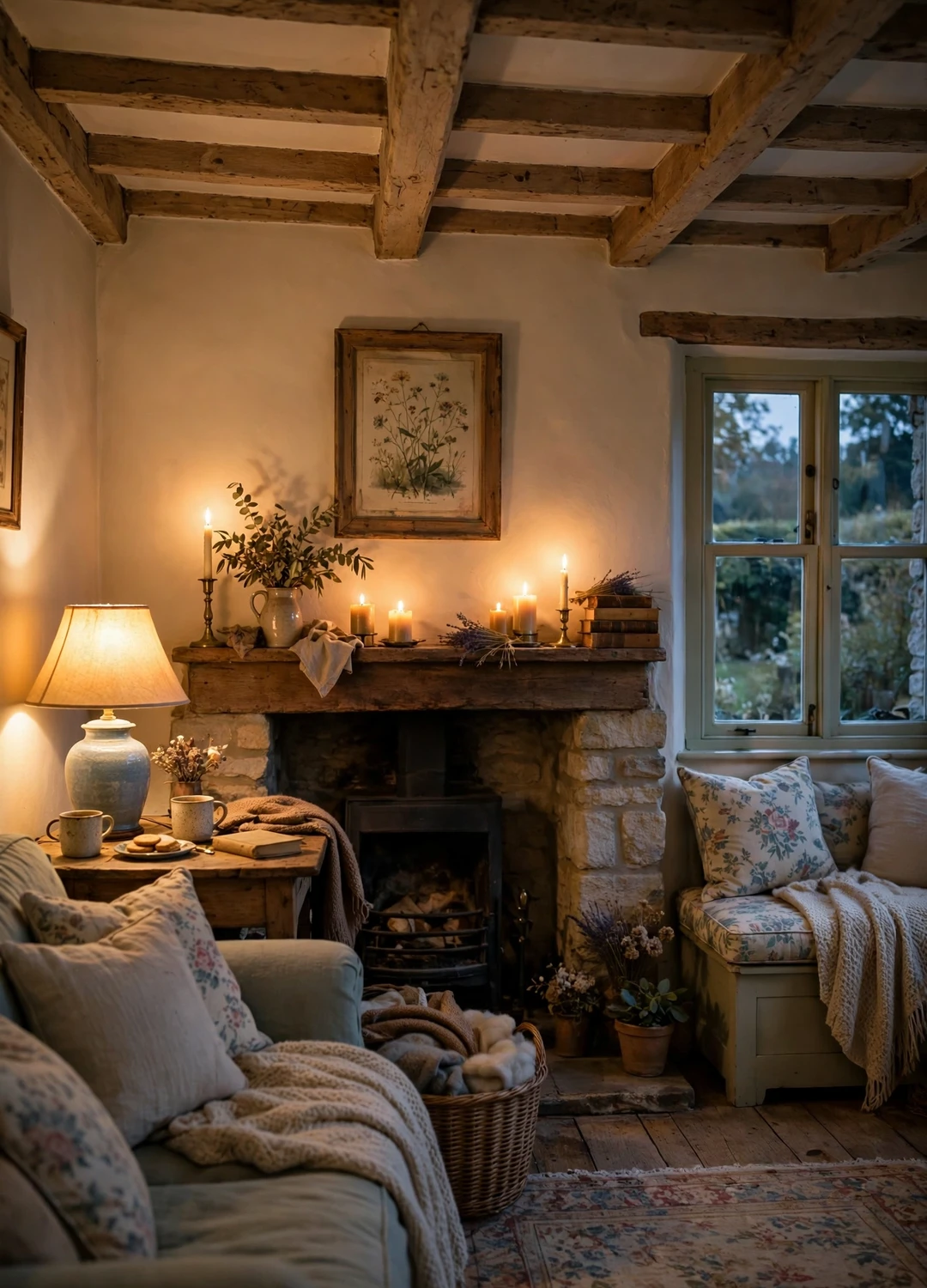
Cottage style glows. Instead of one bright ceiling light, use several small ones: a table lamp beside the sofa, a floor lamp by the reading chair, candles on the mantelpiece, and fairy lights in a jar. Warm bulbs — not bright white — keep the light soft and golden, especially in the evening. A lamp with a fabric shade spreads the light gently and looks right in a cottage room.
Why It Works
Low, warm light makes a room feel intimate and flatters everything in it — wood looks richer, fabrics look softer, and the whole room feels like a place to relax. One bright overhead light does the opposite: it flattens the room and shows every flaw.
Best for
Living rooms and bedrooms. Aim for three light sources at different heights in a living room, and two in a bedroom.
Styling Tips
Put lamps on a dimmer if you can, and use warm white bulbs (around 2700K). Keep candles in safe holders on the mantel or the dining table — never leave them burning in an empty room. A mirror opposite a lamp doubles the glow.
11. The Cottage Kitchen Look
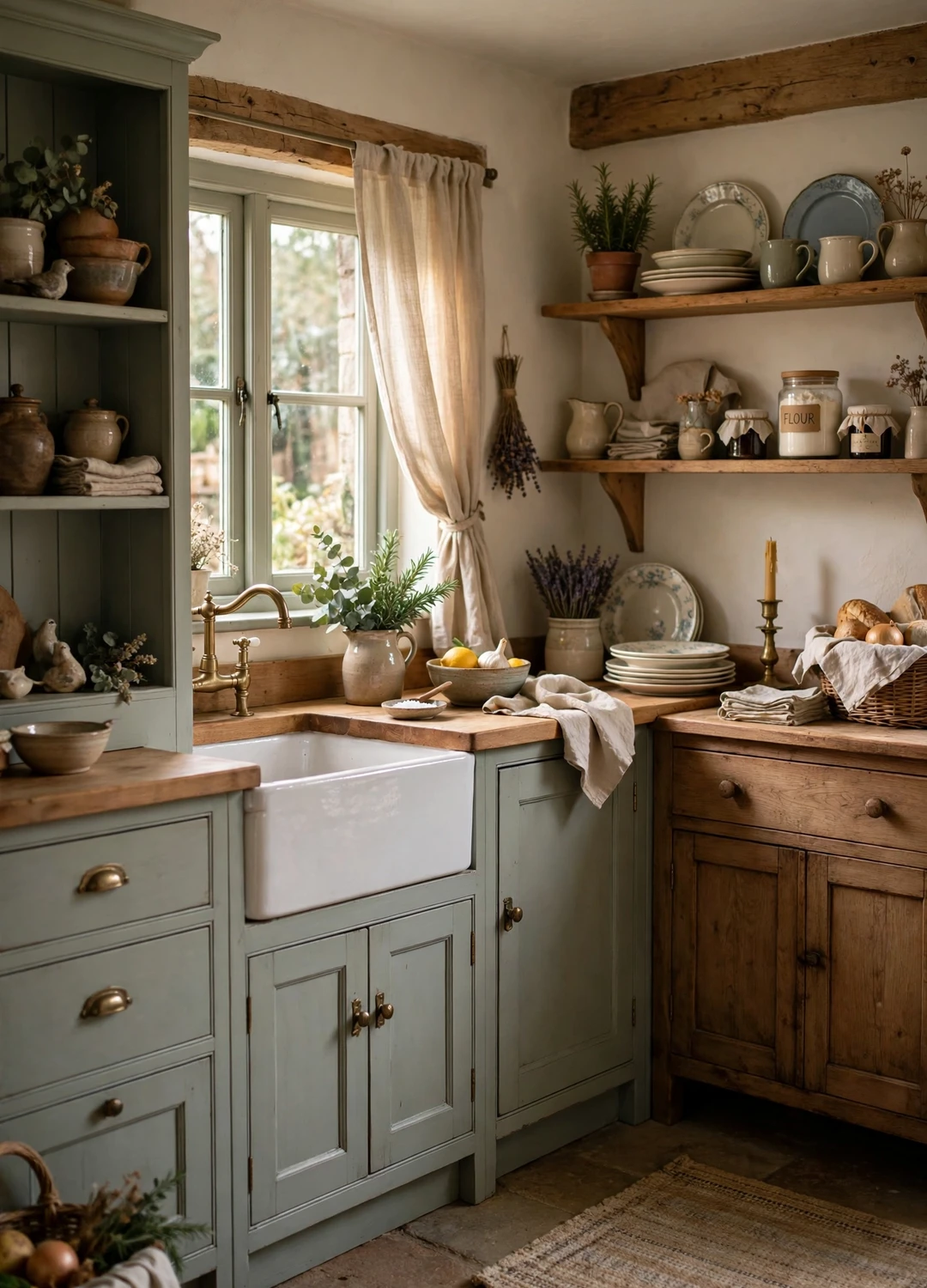
The cottage kitchen is the heart of the style. A deep butler sink, painted cupboards in sage or cream, a wooden dresser, open shelves, and a scrubbed pine table with mismatched chairs — that is the look. You do not need a new kitchen to get it. Paint the cupboard doors, change the handles to ceramic or brass, add a butler-style tap, and put a dresser against one wall. Even a small kitchen can carry the style if the materials are right.
Why It Works
A cottage kitchen feels like a working room, not a showroom. Painted wood, open shelves, and a big sink all say "cook here, sit here, stay a while." It is also a forgiving style — a scuff on a painted cupboard or a ring on a pine table just adds to the charm.
Best for
Kitchens of any size, and kitchen-diners where the table is part of the room. If your kitchen is tiny, a dresser and painted cupboards will do more than a new layout.
Styling Tips
Keep worktops simple — wood or a pale stone — and let the dresser and shelves carry the pattern. A rail with hanging mugs and a row of herbs on the sill finish the look. For the garden side of cottage living, see our English cottage garden plan for a kitchen garden by the back door.
12. Collected-Over-Time Details
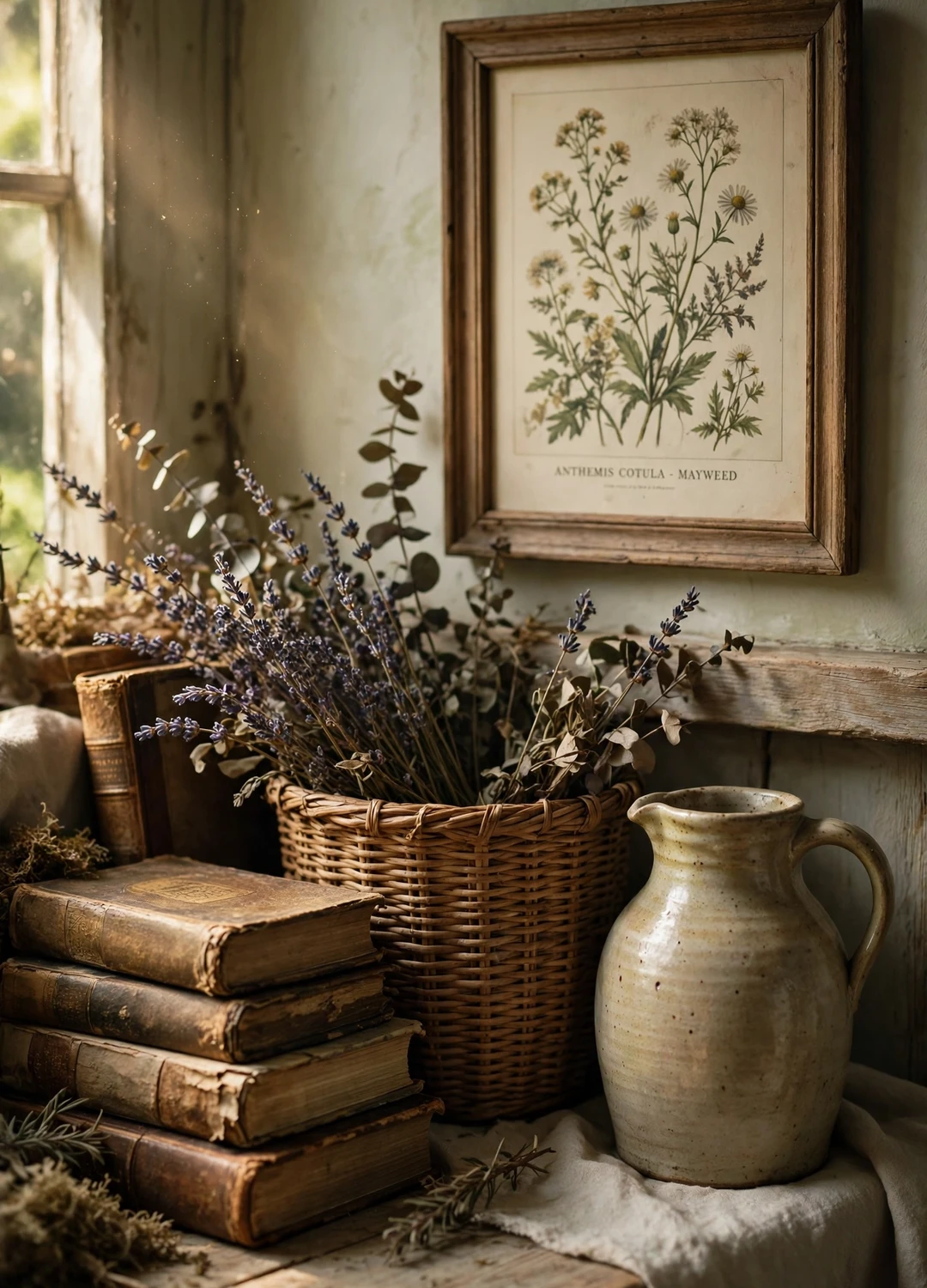
The last ingredient in English cottage style cannot be bought in one trip: the small things collected over time. Old books stacked on a side table, a woven basket by the door, a ceramic jug from a market, a framed botanical print, a quilt your grandmother made. These details are what make the style personal. Add them slowly, one at a time, and only keep the ones you truly like.
Why It Works
A room full of collected things feels like someone lives there. A room full of matching accessories from one shop feels like a display. The difference is time — and time is what gives cottage style its warmth.
Best for
Side tables, mantelpieces, hallways, and shelves. One or two personal objects per surface is enough; more than that starts to look cluttered.
Styling Tips
Group small things together — three books, a candle, and a small vase — rather than spreading them out one by one. Leave some empty space on every surface so the objects you keep can be seen. And if you are still shaping the bones of the house, our English cottage floor plans show how the classic cottage layout makes room for all of it.
Start with Colour, Then Collect the Rest
English cottage style is not a shopping list — it is a way of putting a room together. Start with the soft colour palette, add natural materials and layered textiles, then bring in one vintage piece and a few patterns that share a colour. Let the flowers, the lighting, and the collected details follow over time. The style rewards patience: a room that grows slowly looks far more cottage-like than one bought in a weekend. Pick one idea from the list, try it this week, and let the rest of the room catch up.
More Cottage Ideas
Frequently Asked Questions
What is English cottage style?
English cottage style is a warm, relaxed decorating look inspired by small country cottages. It uses soft muted colours, natural materials like wood, stone and linen, floral prints, vintage furniture, and layered textiles. The rooms feel lived in and collected over time, never formal or matching.
What colours are used in English cottage style?
Soft, muted colours: warm cream, sage green, dusty rose, butter yellow, and pale blue. Walls are usually light, with colour coming from fabrics, furniture, and flowers. Pick three colours and repeat them through the room for a calm, pulled-together look.
Can I get English cottage style in a modern house?
Yes. You do not need beams or a stone fireplace. Start with the colour palette, add natural materials like wood and linen, layer textiles, and bring in one or two vintage pieces. Floral cushions, a painted dresser, and warm lamps will pull even a new-build room toward cottage style.
How do I mix patterns in English cottage style?
Keep one colour in common across all your patterns — for example, sage green in the floral, the check, and the stripe. Vary the scale, mixing a large floral with a medium check and a fine stripe, and keep the walls and big furniture plain so the patterns have room to breathe.