
English Cottage: A Complete Guide to the Classic Look
English Cottage
English Cottage: A Complete Guide to the Classic Look
An English cottage is small, warm, and full of character — stone walls, a thatched or slate roof, roses over the door, and a garden that looks after itself. This guide explains what makes a cottage a cottage, inside and out, and how to get the look in any home.
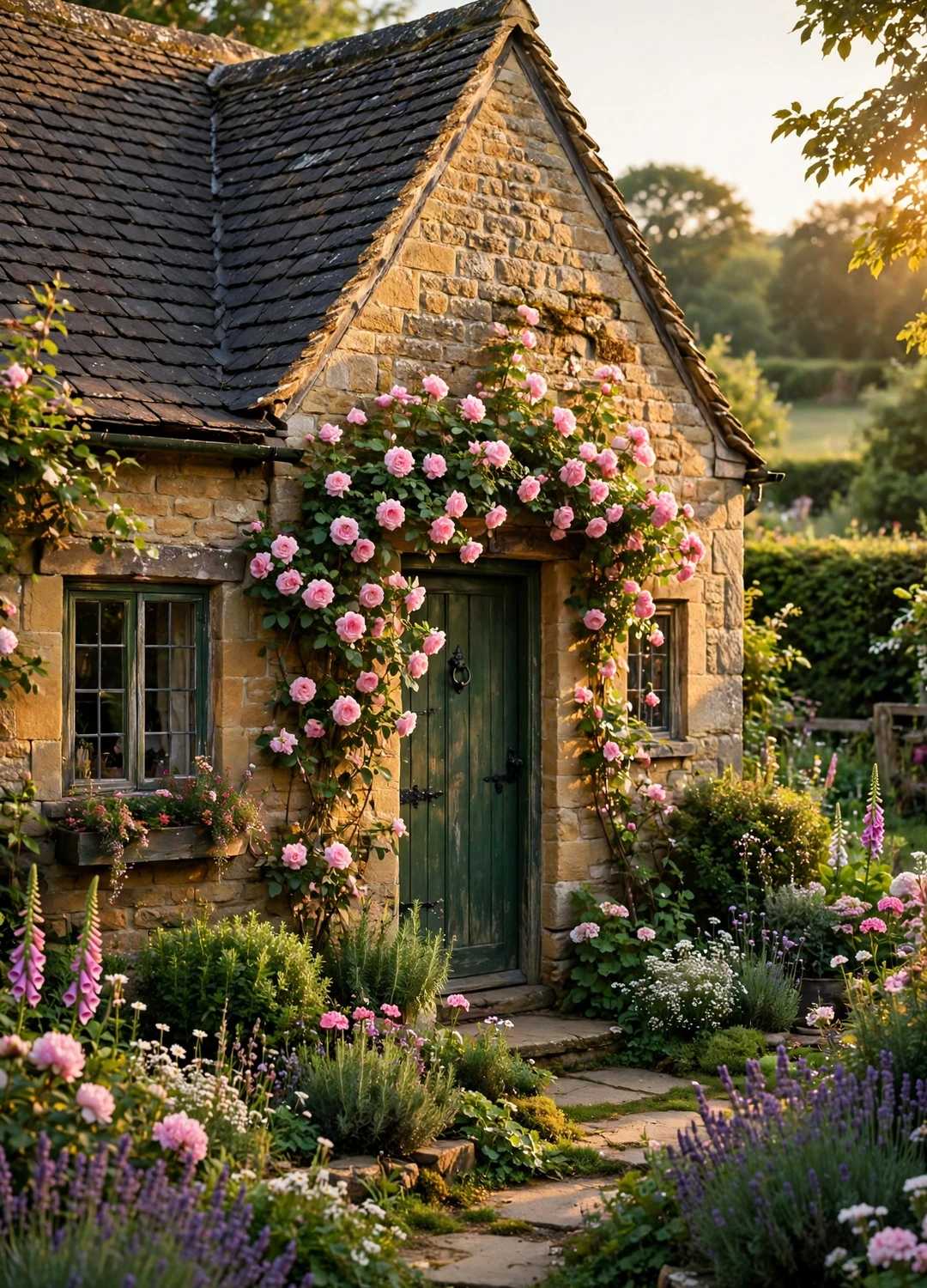
Stone walls, a pitched roof, and roses over the door — the classic English cottage.
The English cottage began as a small rural home, built by hand from whatever the land provided — stone in the Cotswolds, brick in the east, cob in the west. Most date from the 17th to the 19th century, and they were built for farm workers and craftsmen, not for show. That is why they feel so honest: thick walls, small windows, low ceilings, and a fireplace at the heart of the house. Today the cottage is one of the most loved home styles in the world, and its look works just as well in a new build or a city flat as it does in a village.
1. Stone Walls and Thatched Roofs
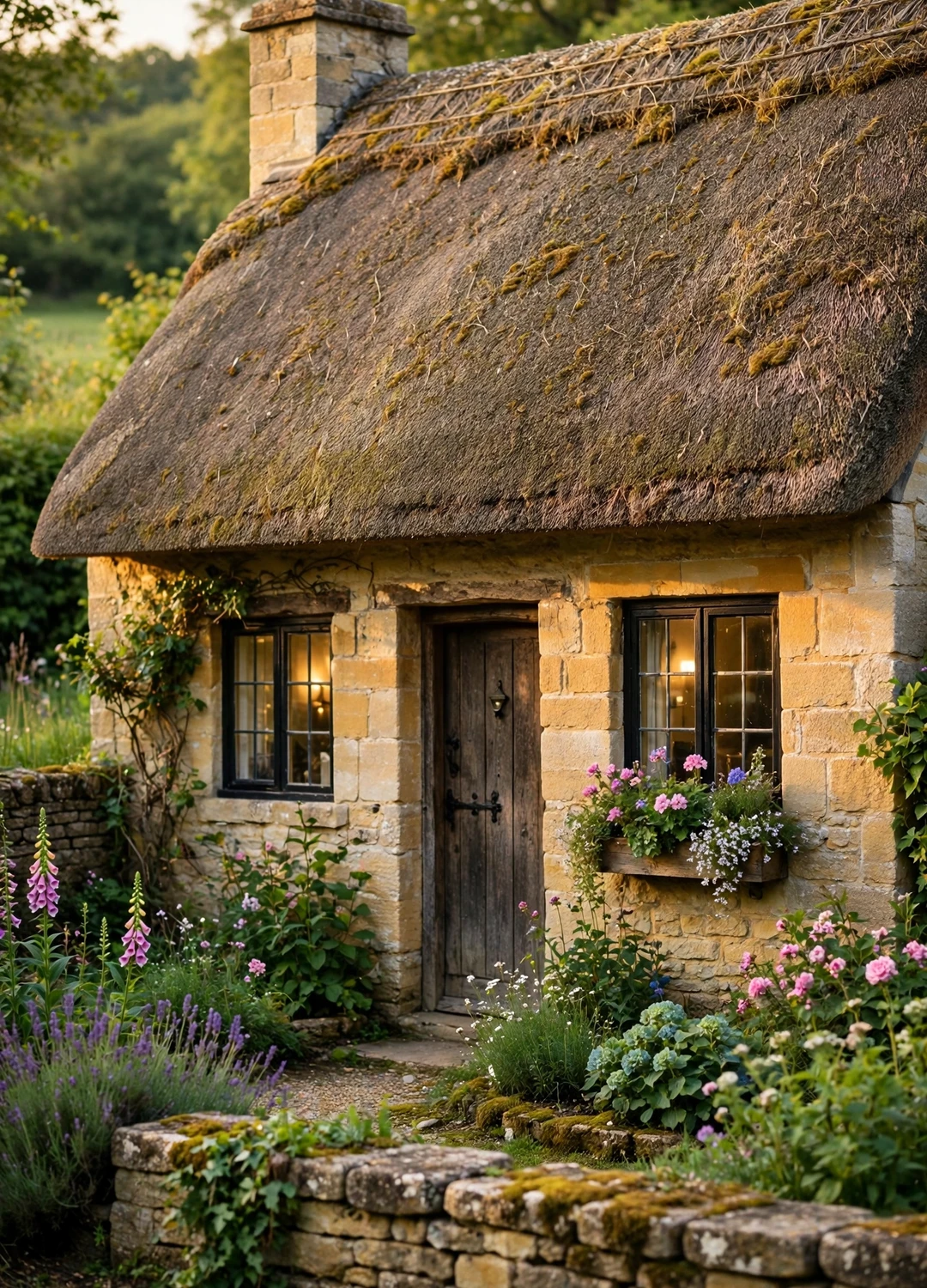
The outside of a cottage tells you where it comes from. Cotswold cottages glow with honey-coloured limestone. Cornish cottages are whitewashed stone. Norfolk cottages wear flint. Roofs are thatch, slate, or clay tile, pitched steeply to throw off the rain. Nothing is straight or perfect, and that is the charm.
Why It Works
Local materials make the house sit naturally in its landscape. The colours are soft and earthy, so the cottage looks like it grew there rather than being placed there.
Best for
Country homes and village houses. If you are restoring a cottage, keep the original stone and roof materials — they are the whole character of the building.
Styling Tips
In a new build, use local stone or a lime render in a warm, muted tone. Avoid bright white paint and sharp, modern lines on the outside — the cottage look is soft and weathered.
2. Climbing Roses Over the Door
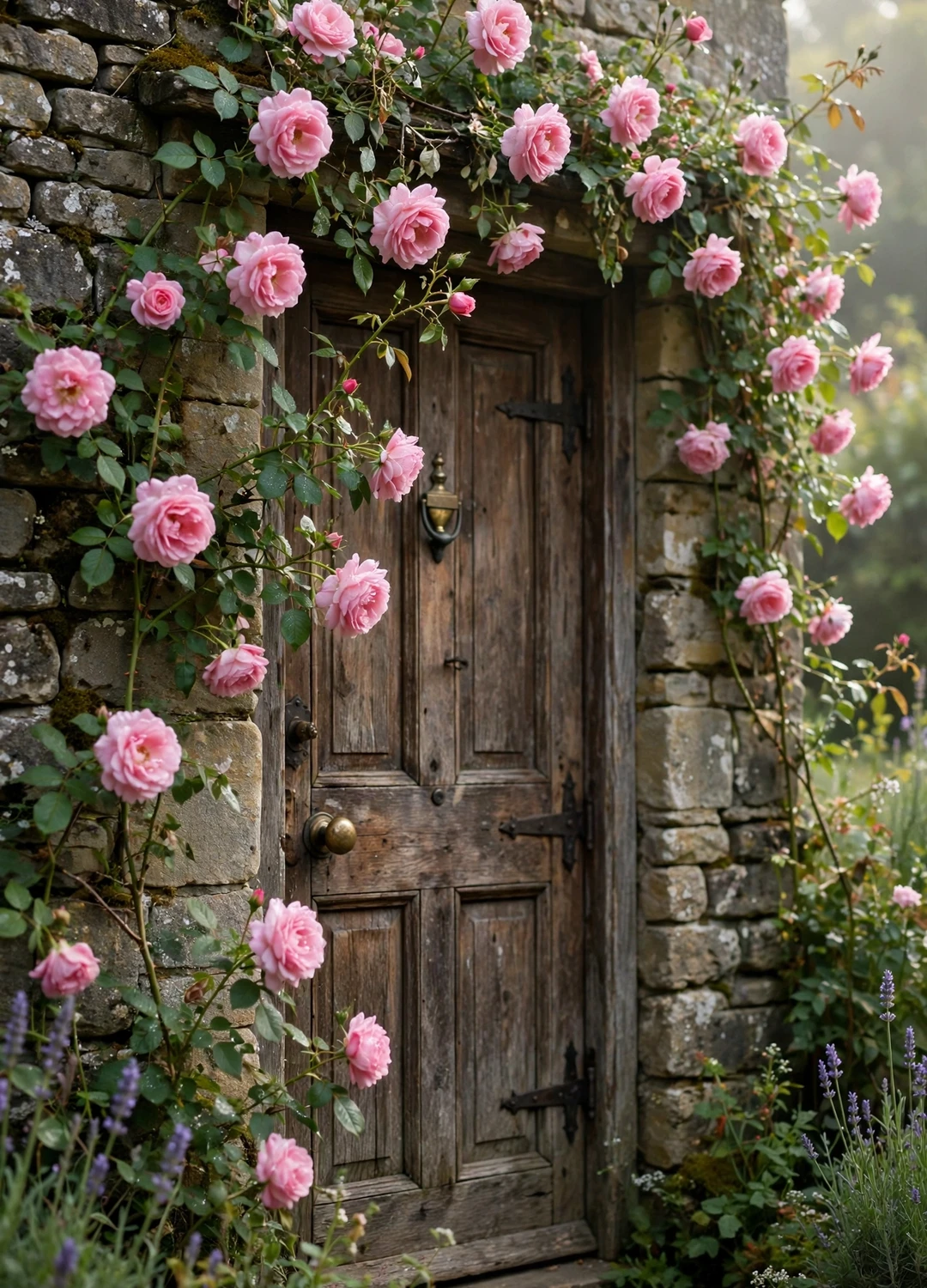
Nothing says English cottage like roses over the front door. A climbing rose frames the entrance, scents the air in summer, and turns the smallest cottage into a picture. Rambling roses do the same job over fences and porches.
Why It Works
Roses soften hard walls and make the entrance feel welcoming. They are the first thing visitors see and the last thing they remember.
Best for
Sunny doorways, porches, and arches. Thornless climbers like ‘Zéphirine Drouhin’ are a kind choice beside a door people brush past every day.
Styling Tips
Train the rose on wires or a small trellis, and tie new growth in while it is young and bendy. Underplant with lavender or catmint for scent at ground level too.
3. Low Ceilings and Exposed Beams
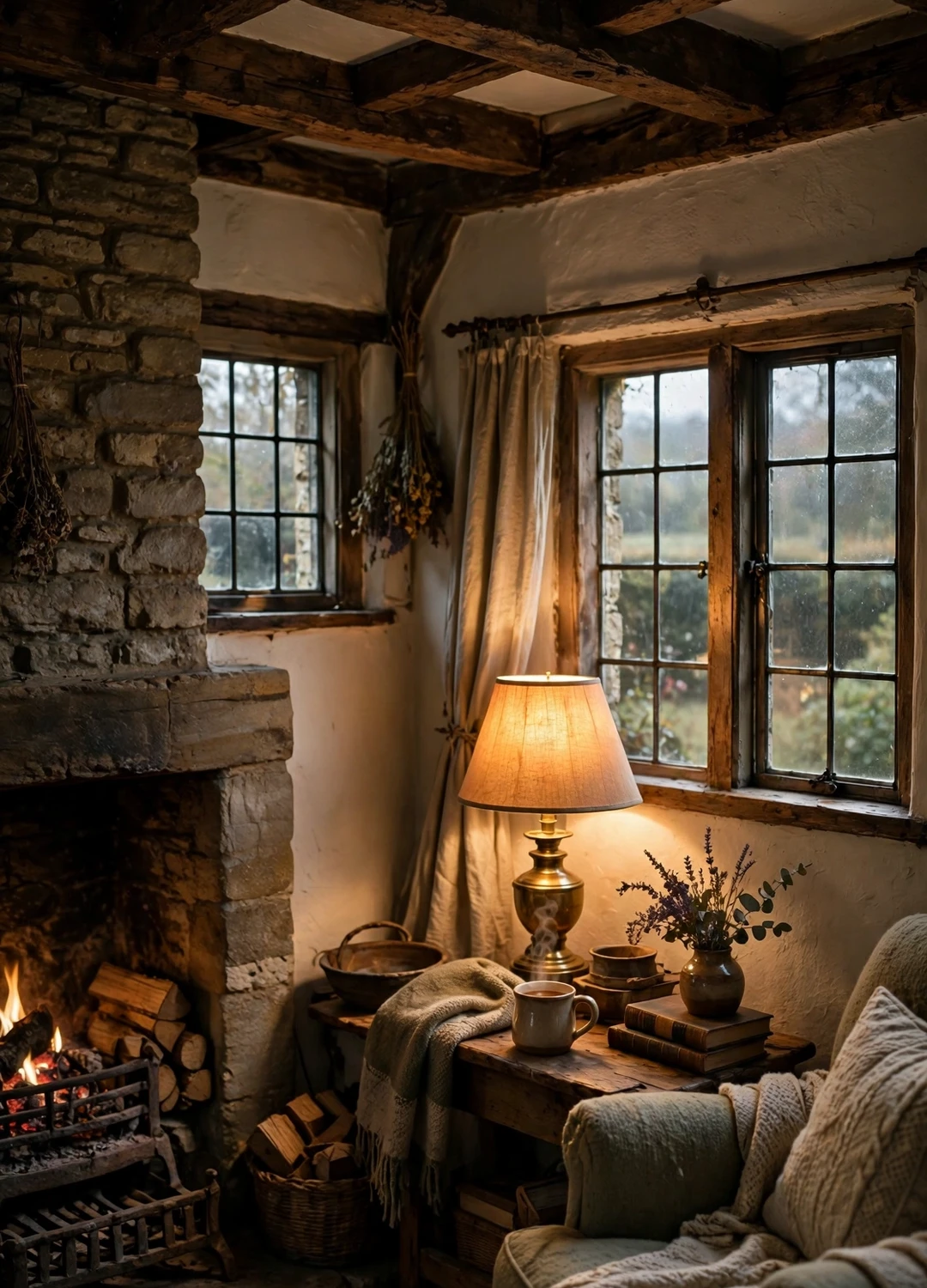
Step inside an old cottage and the ceiling is low, the beams are dark oak, and the rooms are small. The beams held the house up for centuries, and the low ceilings kept it warm. Today they are the features buyers love most.
Why It Works
Beams and low ceilings make a room feel sheltered and cosy. They give a modern room instant age and warmth that no new material can copy.
Best for
Living rooms and bedrooms in period cottages. Keep original beams exposed and never paint them white unless they are already damaged beyond saving.
Styling Tips
Paint the walls between the beams a warm white so the room stays bright. In a new home, a few reclaimed oak beams across the ceiling give the same feeling without a full renovation.
4. Inglenook Fireplaces
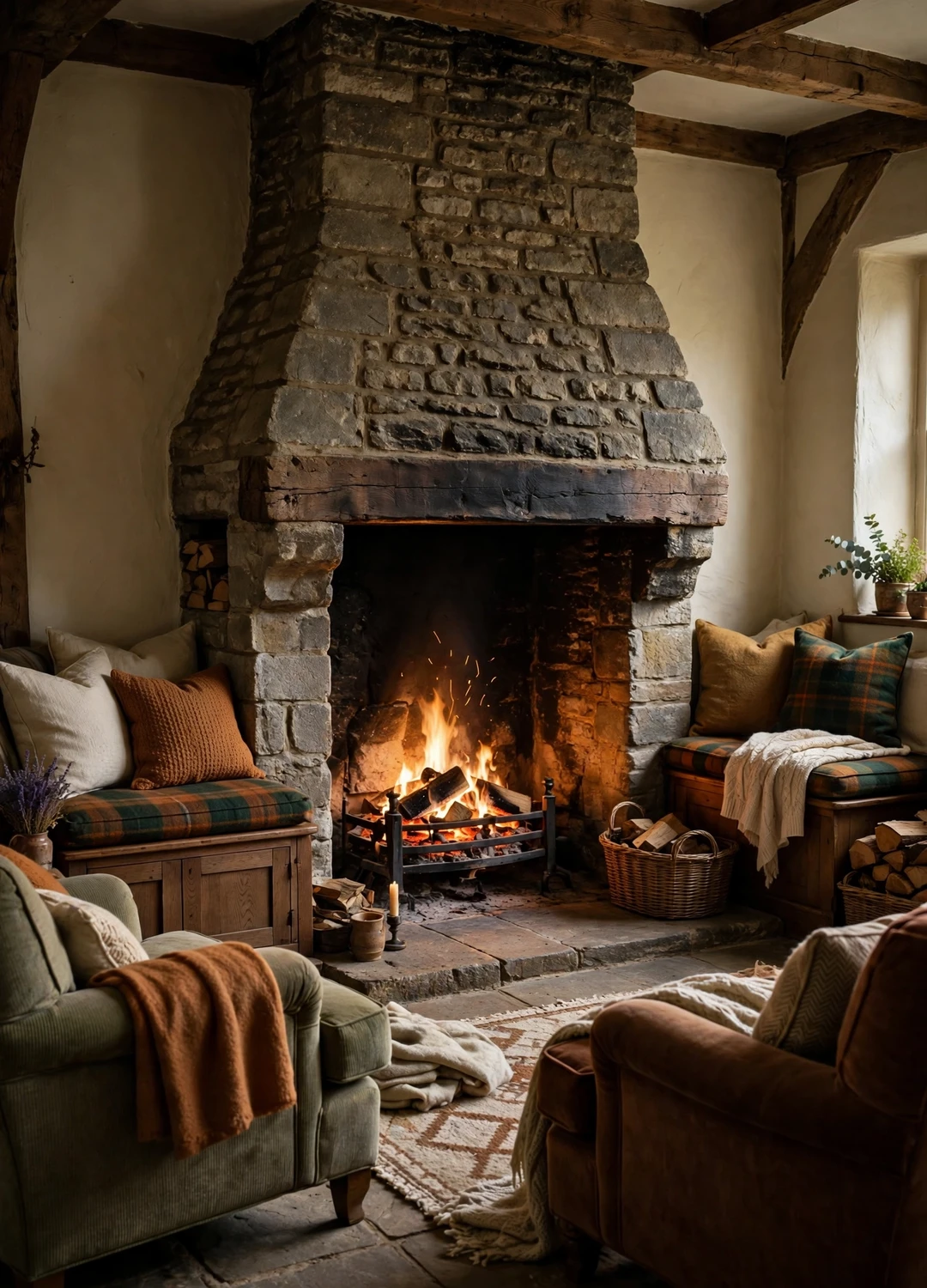
The inglenook is the heart of the cottage — a huge, open fireplace with seats built into the chimney breast on either side. Families cooked, warmed themselves, and gathered here for centuries. Even in cottages where the fire no longer burns, the inglenook stays as the centrepiece of the room.
Why It Works
A big fireplace anchors the whole room. Everything else — the chairs, the rug, the shelves — gathers around it naturally.
Best for
The main living room. If your cottage has an inglenook, make it the focal point and keep the mantel simple: a few candles, a small clock, or a jug of garden flowers.
Styling Tips
See our farmhouse fireplace ideas for ways to style the mantel and surround. In a home without a real fireplace, a wood-burning stove in a stone surround gives the same warmth and focus.
5. Small-Paned Windows
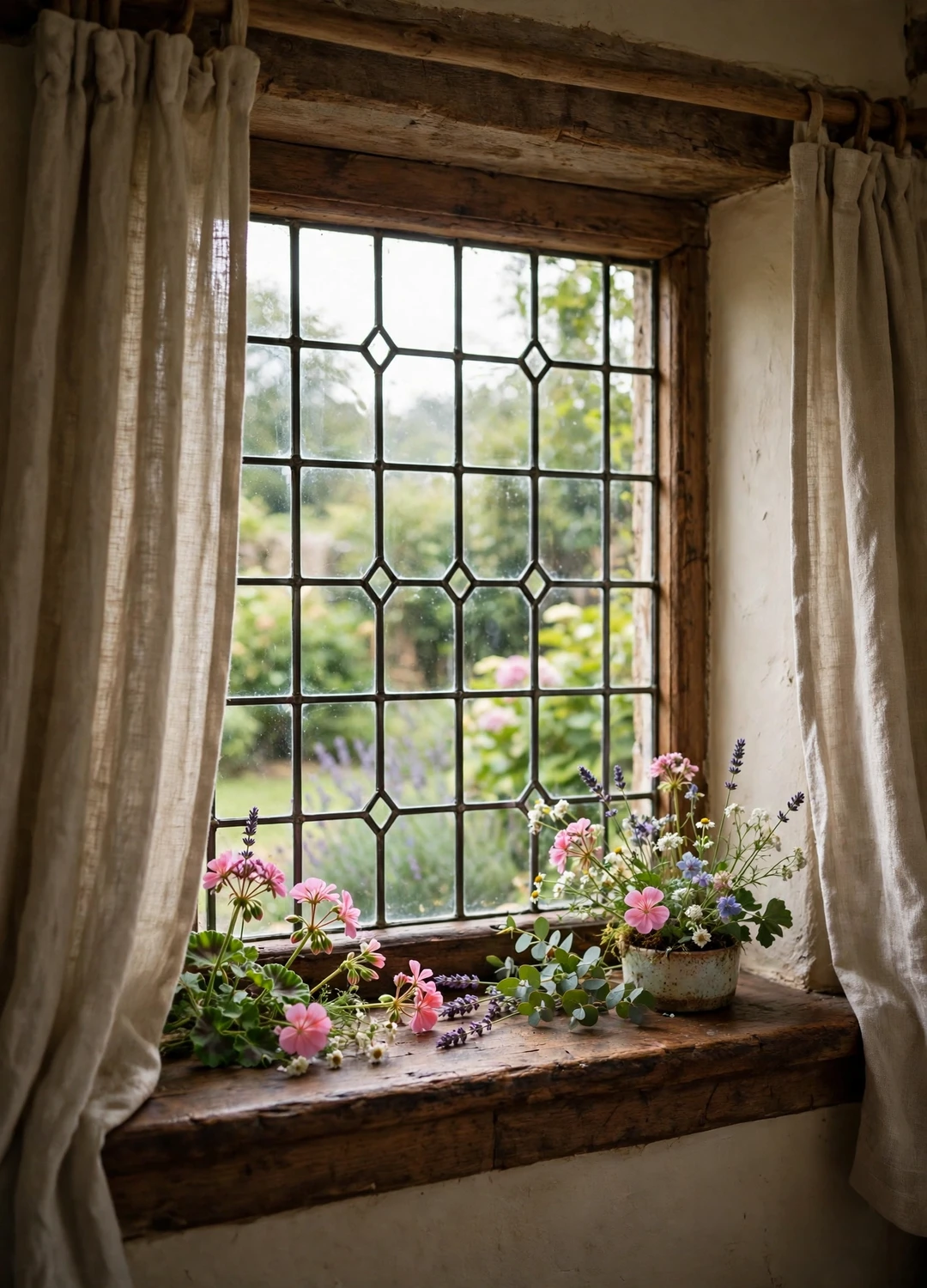
Cottage windows are small, with many little panes held in lead or wood frames. Glass was expensive when these houses were built, so windows stayed small — and that is why cottage rooms feel so sheltered. A window seat, a deep sill with a plant, or a curtain in a floral print finishes the look.
Why It Works
Small panes break the view into pretty pieces and make the room feel snug. They are one of the easiest ways to spot a real cottage from the street.
Best for
Every room in a period cottage. Keep the original frames if you can, and add slim secondary glazing inside for warmth rather than replacing them.
Styling Tips
Dress cottage windows simply: linen curtains on a wooden pole, or a plain Roman blind. Heavy curtains will swallow the light in a small room.
6. Cosy Cottage Living Rooms
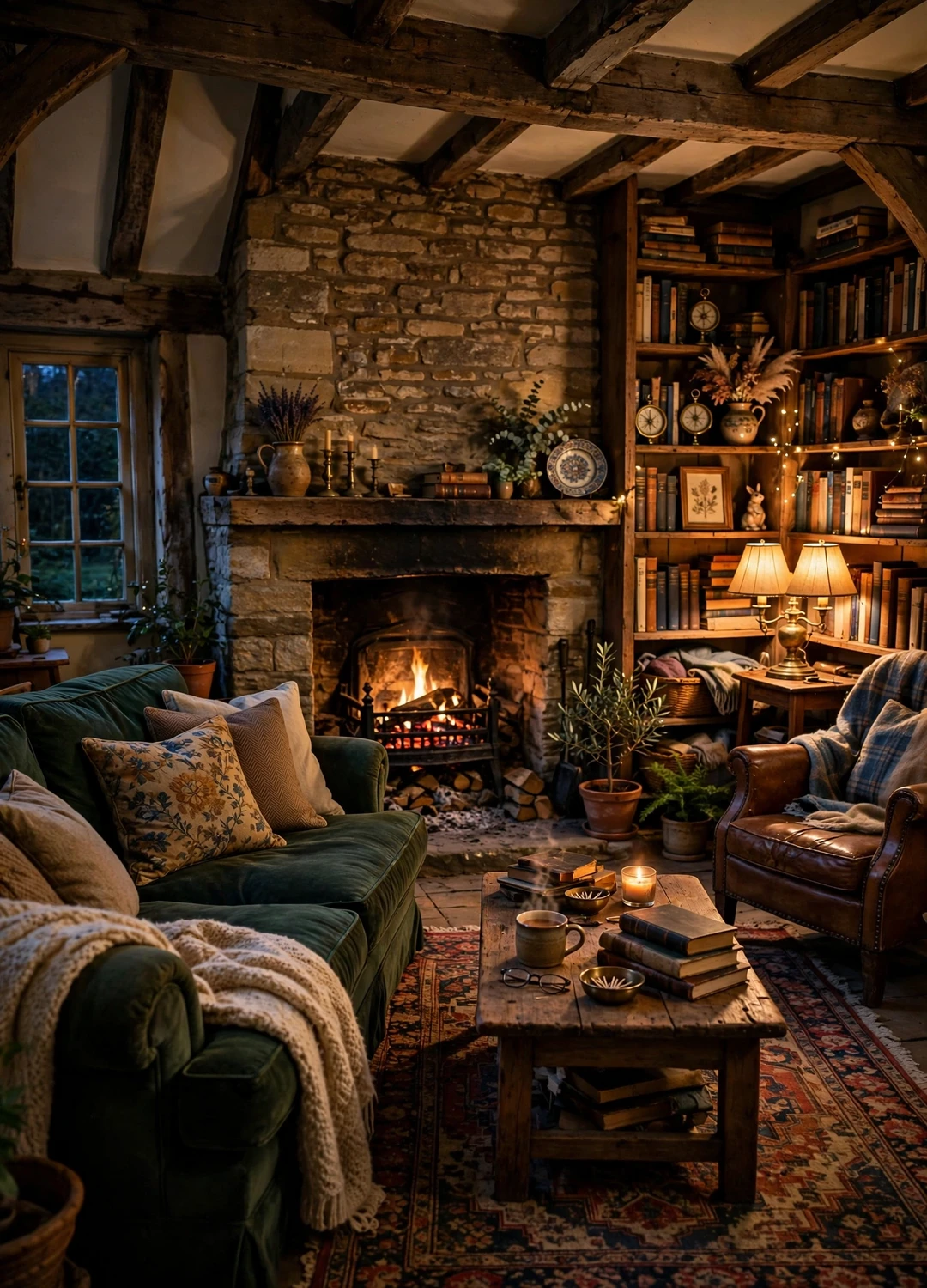
A cottage living room is for settling in: a deep sofa, a rug underfoot, books on the shelves, and lamplight in the evening. Nothing matches, yet everything goes together — that mixed, collected-over-time feeling is the whole point.
Why It Works
The room works because it is comfortable first and decorated second. Soft textures, warm light, and familiar objects make people relax the moment they sit down.
Best for
Small living rooms where a big modern suite would overwhelm the space. A two-seater sofa and a pair of armchairs fit a cottage room better than a corner sofa.
Styling Tips
See our cozy cottage living room ideas for the full room-by-room guide — including the fireplace wall, the bookshelves, and the bay window seat.
7. Cottage Kitchens
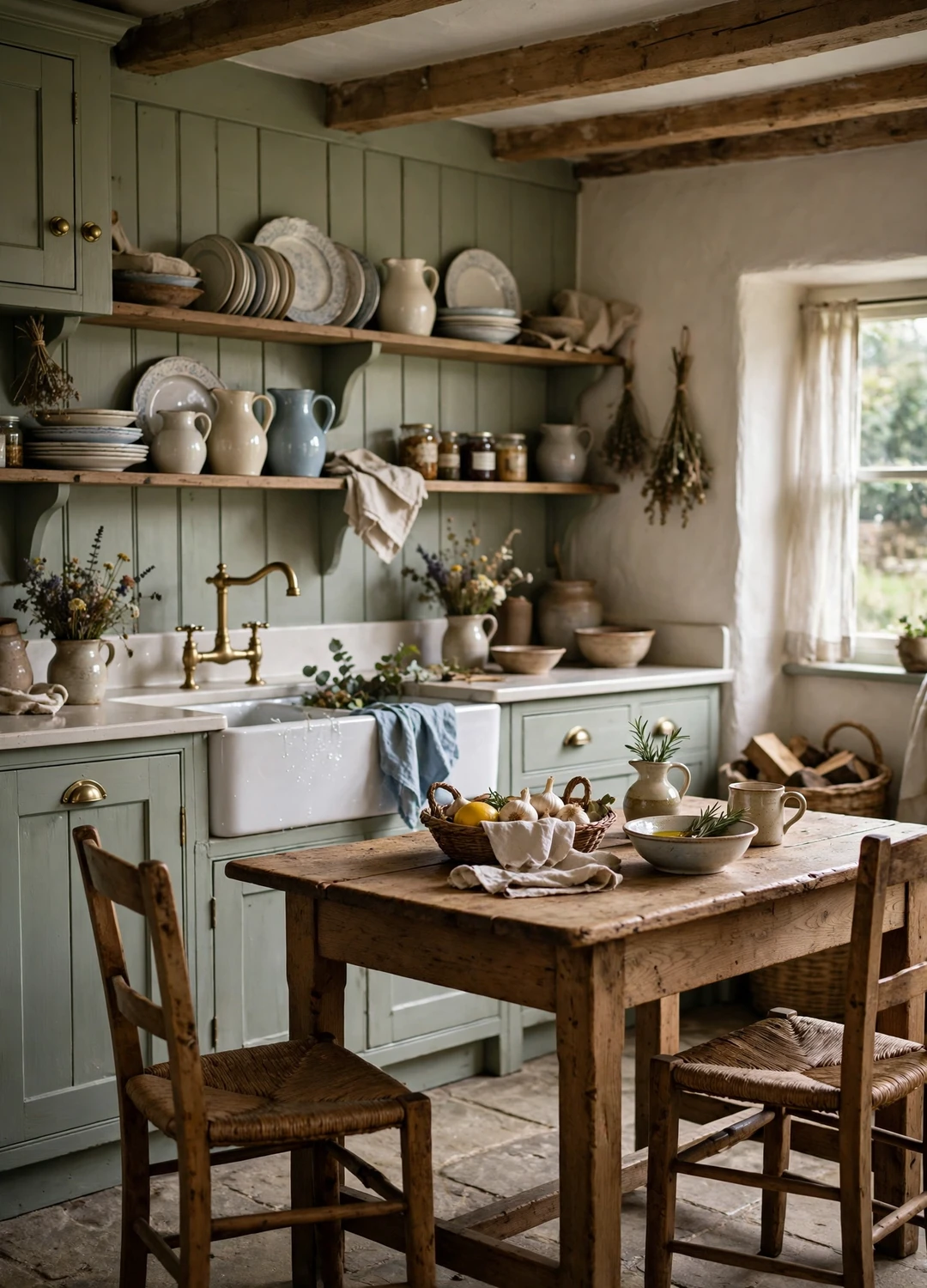
The cottage kitchen is practical and pretty at once: painted wooden cupboards, open shelves with plates and jugs, a big farmhouse sink, and a table in the middle where everything happens. It is a working room, not a showroom.
Why It Works
Open shelves and everyday objects on display make the kitchen feel lived in. The mix of wood, paint, and crockery is warm in a way that flat, handleless units never are.
Best for
Small kitchens, where painted cupboards in cream, sage, or soft blue keep the room light. A dresser against one wall gives storage and display in one piece.
Styling Tips
Keep worktops clear except for one or two useful, beautiful things — a wooden board, a jug of herbs, a bowl of fruit. Hang pans from a rail and mugs from hooks under the shelves.
8. Floral Fabrics and Vintage Wallpaper
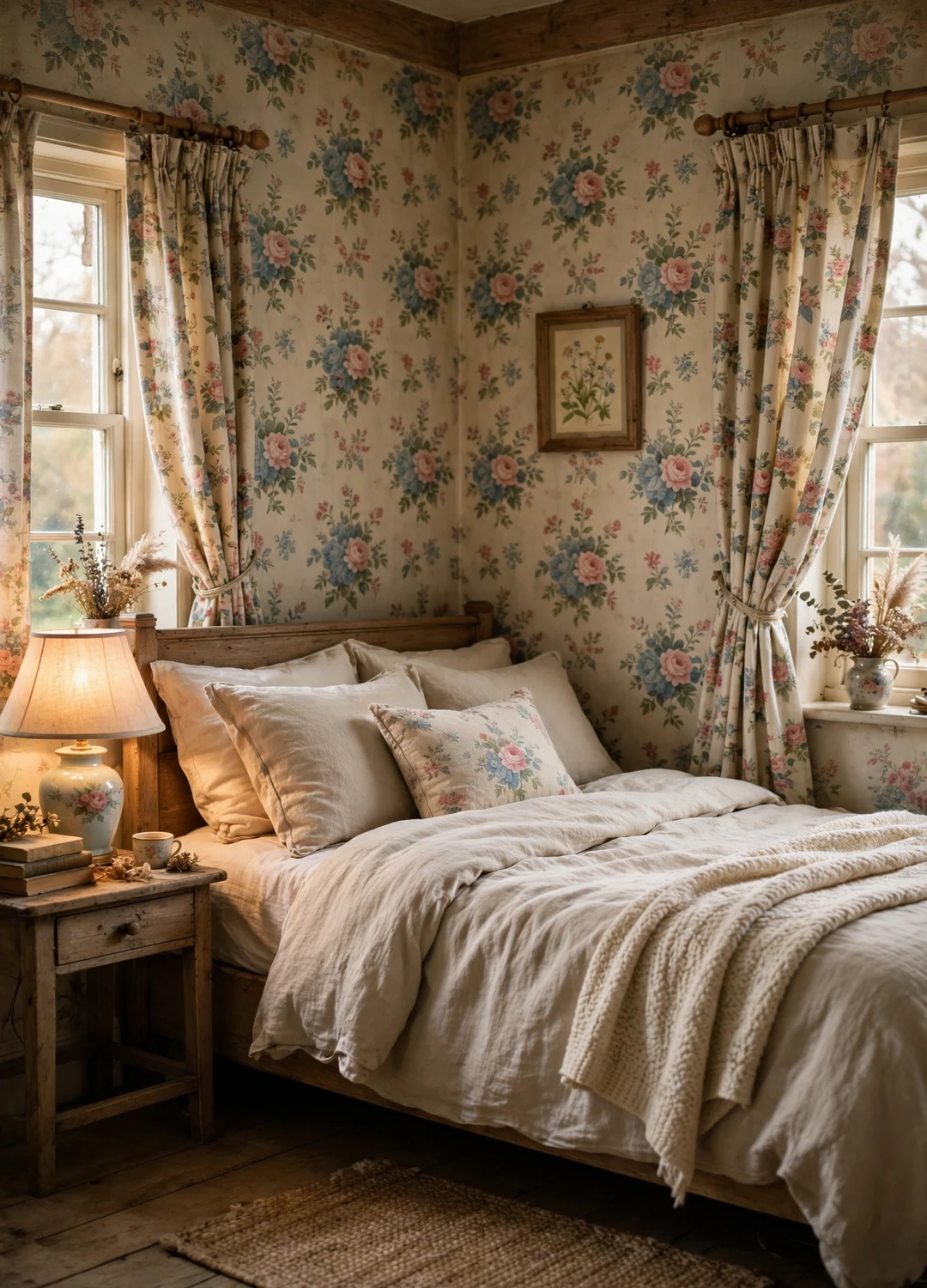
Floral prints are the signature pattern of the English cottage — on curtains, cushions, bedding, and wallpaper. The classic look mixes small ditsy florals with larger rose prints, always in soft, faded colours. It should feel collected over years, not bought in one trip.
Why It Works
Floral fabric brings the garden indoors and softens every hard edge. It is the fastest way to make a plain room feel like a cottage.
Best for
Bedrooms and living rooms. One floral wallpaper wall behind the bed, with plain bedding and floral cushions, is enough — a whole room of pattern will overwhelm a small space.
Styling Tips
Mix two florals at most, and keep one of them small-scale. Pair them with plain linen in cream or sage so the pattern has room to breathe.
9. Wooden Furniture and Antiques
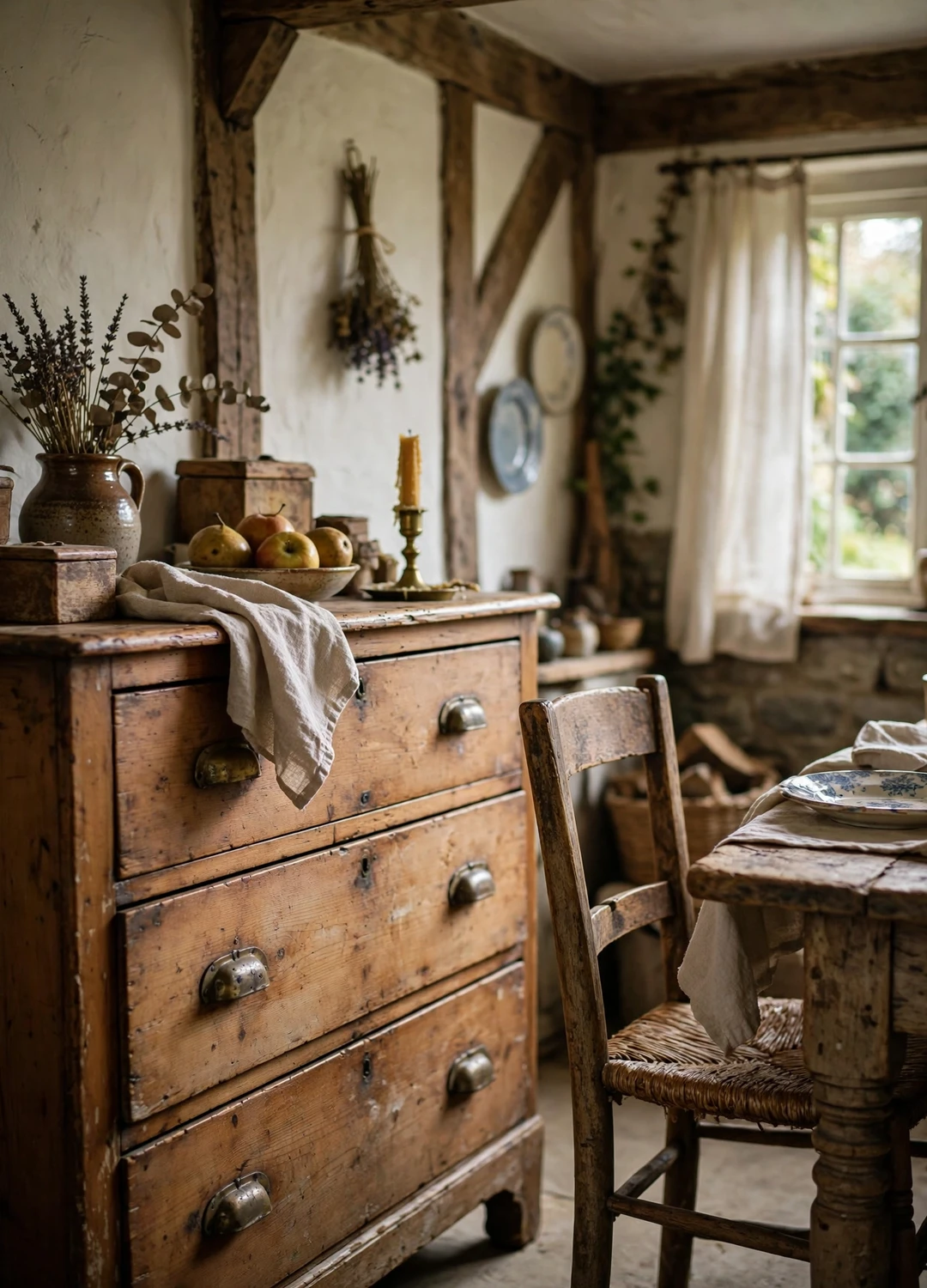
Cottage furniture is wooden, worn, and full of history: a pine dresser, a scrubbed farmhouse table, a rocking chair by the fire. Pieces were handed down, repaired, and repainted — never thrown away. That is why no two cottage rooms look alike.
Why It Works
Old wood brings warmth and patina that new furniture cannot copy. Every scratch and faded patch tells a story, and the mix of pieces keeps the room from looking like a showroom.
Best for
Dining rooms and living rooms. One good antique — a dresser, a chest, a farmhouse table — anchors the room, and simpler pieces can fill in around it.
Styling Tips
Buy second-hand and look for solid wood, dovetail joints, and honest wear. A coat of chalk paint in cream or sage can save a tired piece and keep it in the family for another generation.
10. The Cottage Garden
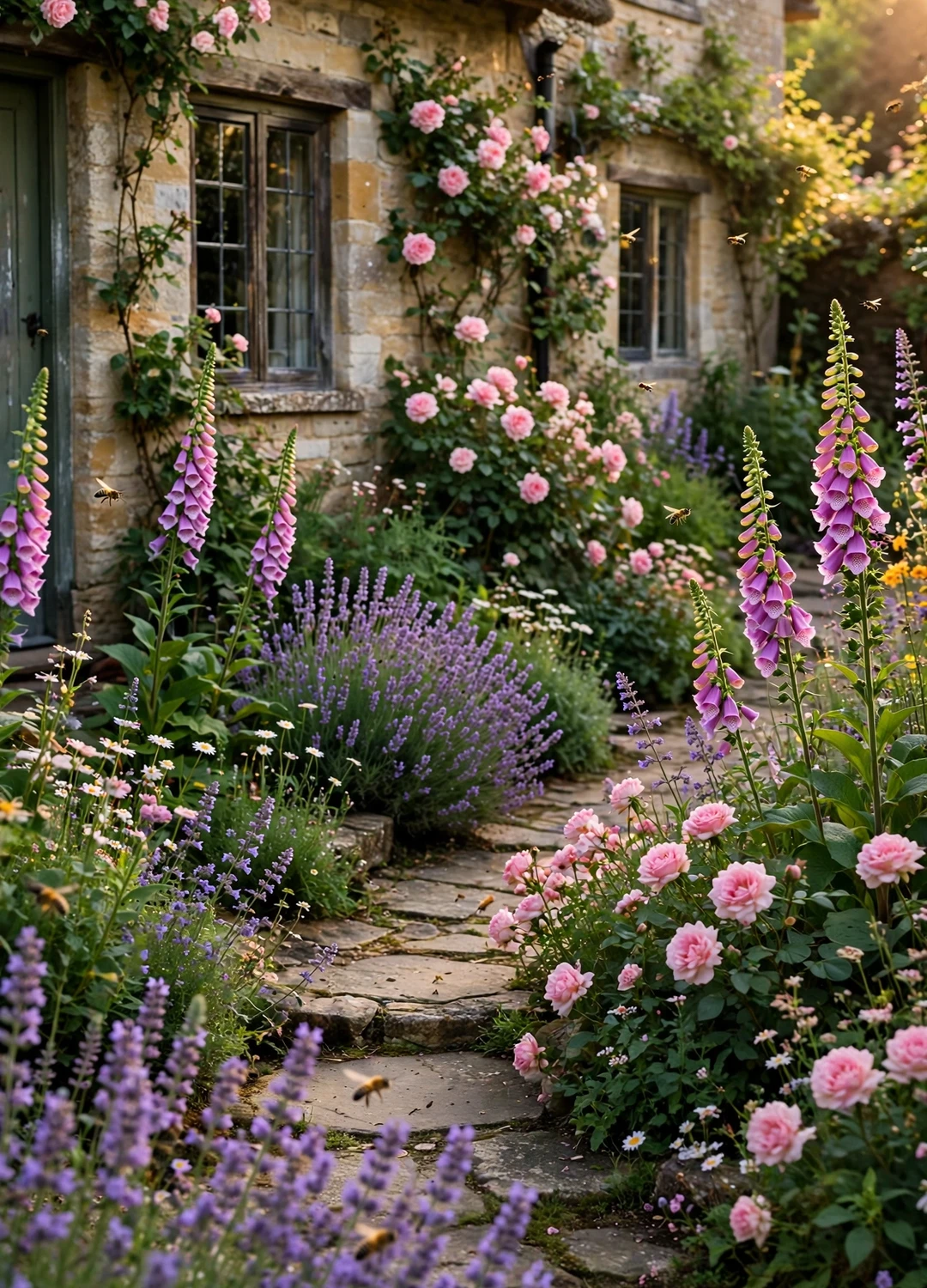
The garden is half the cottage. Roses over the door, lavender along the path, foxgloves at the back of the border, and a tangle of flowers that looks after itself. A cottage garden is planted for scent and colour, not for neat rows — and it is full of bees from spring to autumn.
Why It Works
The garden softens the house and ties it to the landscape. A cottage without its garden looks bare; a cottage with one looks complete.
Best for
Front gardens and small plots. Even a tiny front garden can hold roses, lavender, and a few foxgloves.
Styling Tips
Start with our 12 plants for an English cottage garden — roses, lavender, and foxgloves first, then fill in the gaps with whatever self-seeds. Let the plants spill over the path edges; that relaxed look is the whole point.
11. Colour: Soft Whites and Sage Greens
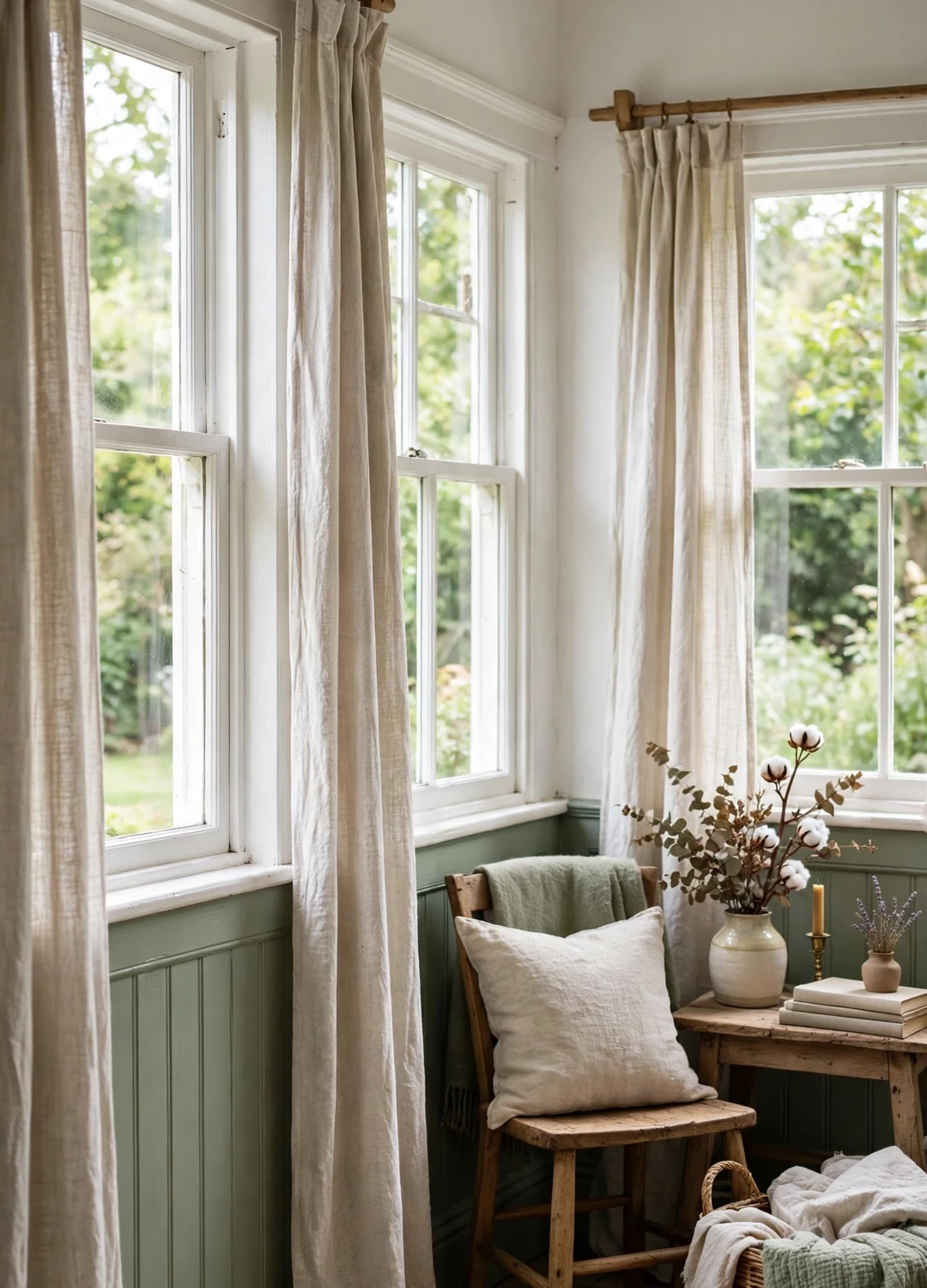
Cottage colours come from nature and from limewash: soft white, cream, sage green, dusty blue, and pale rose. Walls are warm white, woodwork is painted rather than stained, and colour comes from fabrics and flowers instead of bold paint.
Why It Works
Pale, muted colours keep small, low-ceilinged rooms bright. They also let the wood, the stone, and the garden do the talking.
Best for
Every room, but especially small bedrooms and dark hallways. Sage green on kitchen cupboards and cream on the walls is the classic combination.
Styling Tips
Test paint in the room itself — cottage light is soft and changes through the day. Keep the palette to three colours per room and repeat them in the fabrics.
12. How to Get the Look in a Modern Home
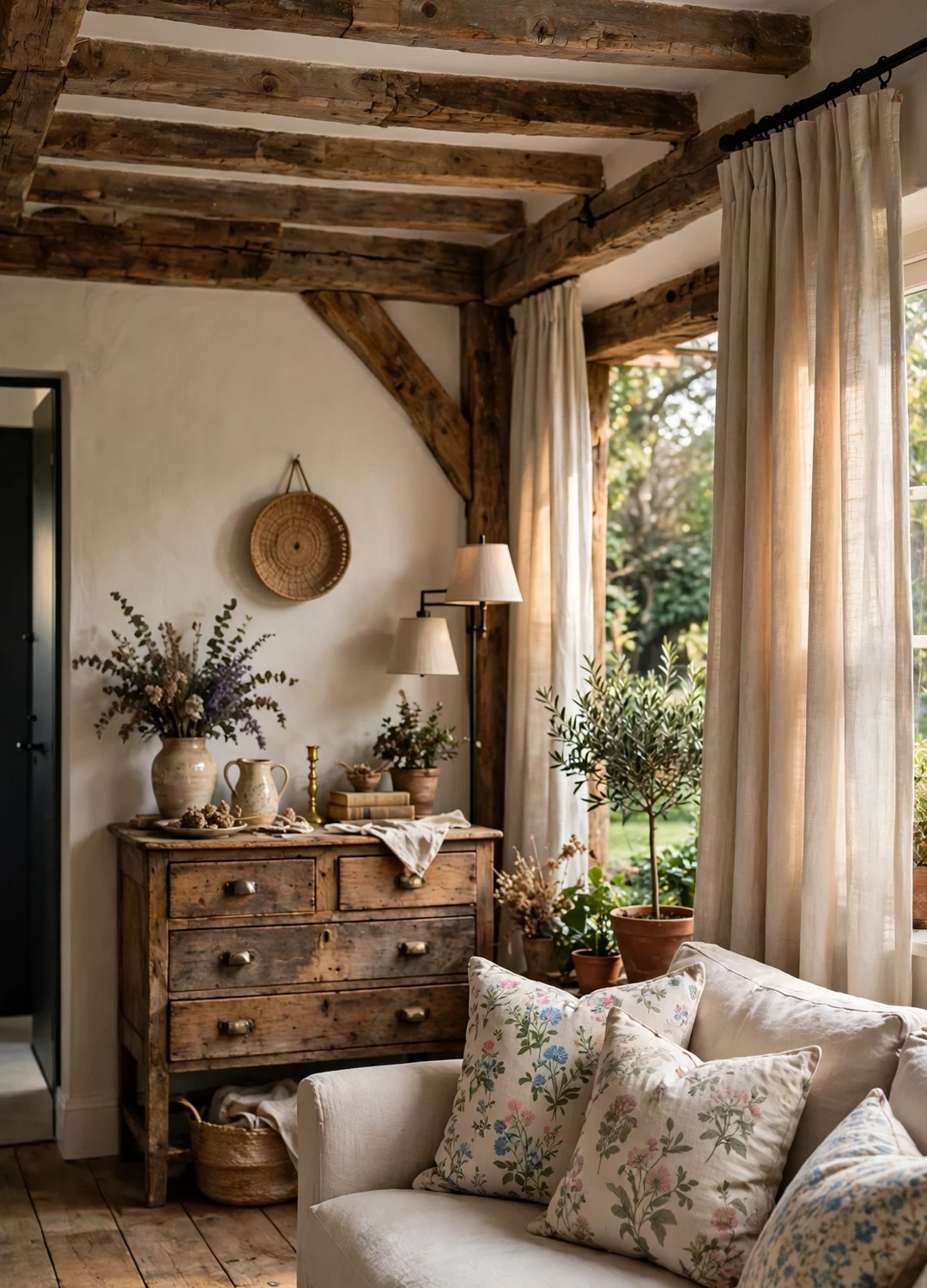
You do not need a 300-year-old cottage to get the look. Start with the pieces that carry the most character: a few reclaimed oak beams, linen curtains, a floral cushion or two, an old wooden dresser, and roses by the door. Add one thing at a time and let the room grow into the style.
Why It Works
The cottage look is a feeling — warm, collected, a little imperfect — not a shopping list. A few honest materials and soft colours get you most of the way there.
Best for
Any home, including flats and new builds. Renters can get the look with curtains, cushions, and plants alone.
Styling Tips
Pick one room and start there. Paint the walls warm white, add linen and florals, bring in one piece of old wood, and put a plant on the sill. Live with it for a month before adding more — cottage style grows slowly, and that is the charm of it.
Planning an English Cottage of Your Own
If you are dreaming of a cottage rather than decorating one, start with the bones: a small footprint, a steep roof, thick walls, and a garden at the front. Our English cottage floor plans post walks through the classic layouts — one-storey storybook cottages, dormer bedrooms, wraparound porches, and even a cottage with a turret — so you can see how the rooms and the garden fit together before you build or buy.
More Cottage Ideas
Frequently Asked Questions
What is an English cottage?
An English cottage is a small, traditional rural home, usually built between the 17th and 19th centuries from local materials like stone, brick, or cob, with a steep pitched roof, low ceilings, and a fireplace at its heart.
What is the difference between a cottage and a house?
A cottage is a small house, traditionally a rural worker's home. The difference is size and character: cottages are compact, often one or two storeys, with thick walls, small windows, and a garden — built for warmth and practicality rather than grandeur.
What colours suit an English cottage?
Soft whites, cream, sage green, dusty blue, and pale rose. Keep walls warm white, paint woodwork in muted colours, and let fabrics and flowers bring in the stronger colour.
Can you build a new English cottage?
Yes. New cottages work best when they copy the old proportions — a small footprint, a steep roof, thick walls, and local materials — rather than just adding cottage decoration to a modern box.
What plants suit an English cottage garden?
Roses, lavender, foxgloves, hollyhocks, and delphiniums are the classics. See our 12 plants for an English cottage garden for the full list and how to layer them in a border.