12 English Cottage Kitchen Ideas for a Warm, Lived-In Room
English Cottage Kitchen
12 English Cottage Kitchen Ideas for a Warm, Lived-In Room
An English cottage kitchen is a room that works hard and still feels soft. Painted cabinets in muted colours, a deep farmhouse sink under the window, a range cooker in its alcove, and a wooden table where everyone gathers. These 12 ideas show you how to build that room — feature by feature, in any size of kitchen.
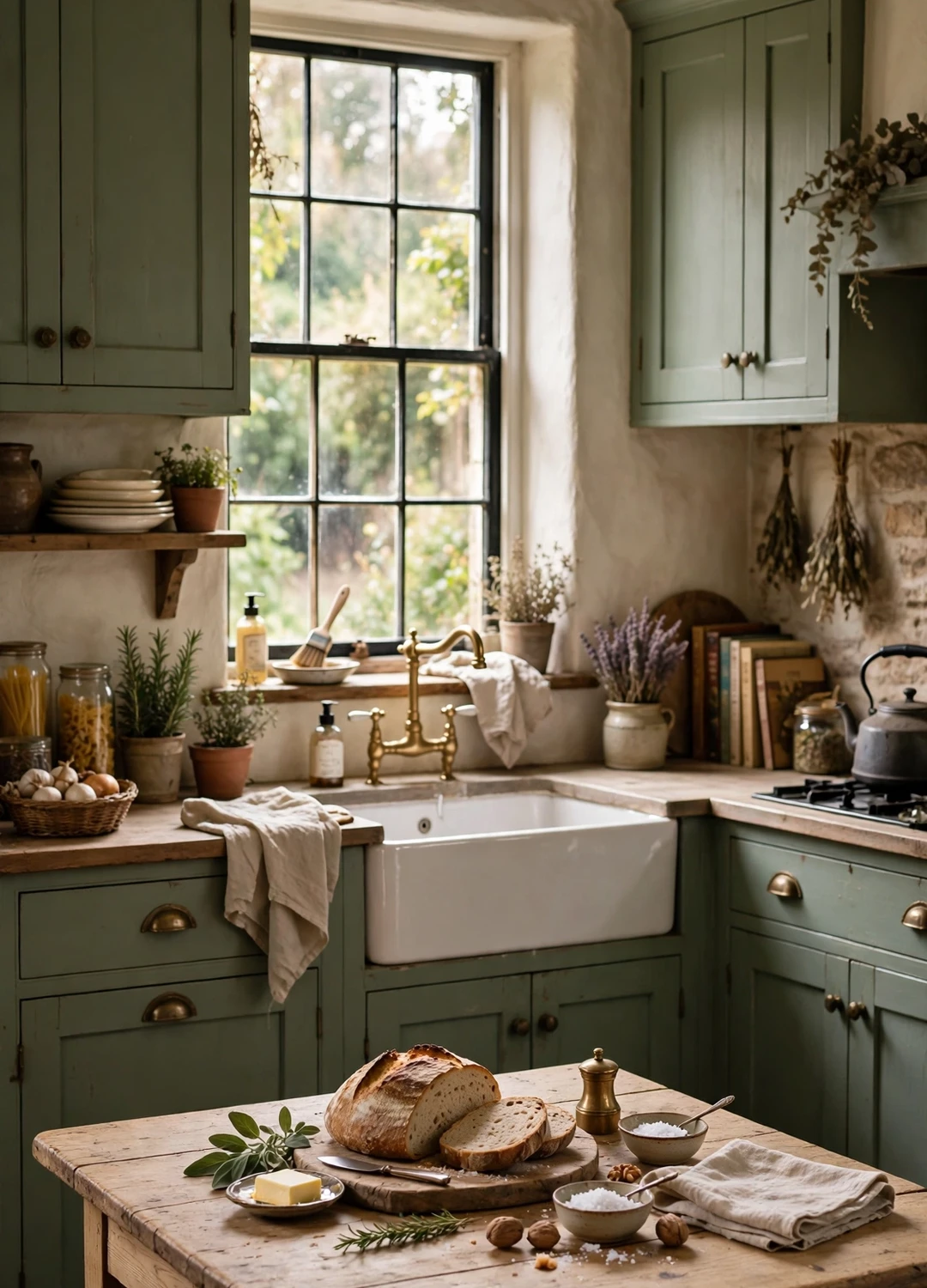
Painted cabinets, open shelves and a farmhouse sink — the heart of the cottage kitchen.
The English cottage kitchen is not a showroom. It is a working room that has grown over time: a Welsh dresser older than the cabinets, a table that has seen a thousand breakfasts, and worktops that show a little wear. The cottage look comes from painted wood, natural materials, and furniture that feels collected rather than fitted. You do not need a country house or a big budget. The 12 ideas below cover the cabinets, the sink, the cooker, the worktops, the storage, and the light — start with one, and the room will follow.
1. Painted Shaker Cabinets in Soft Colours
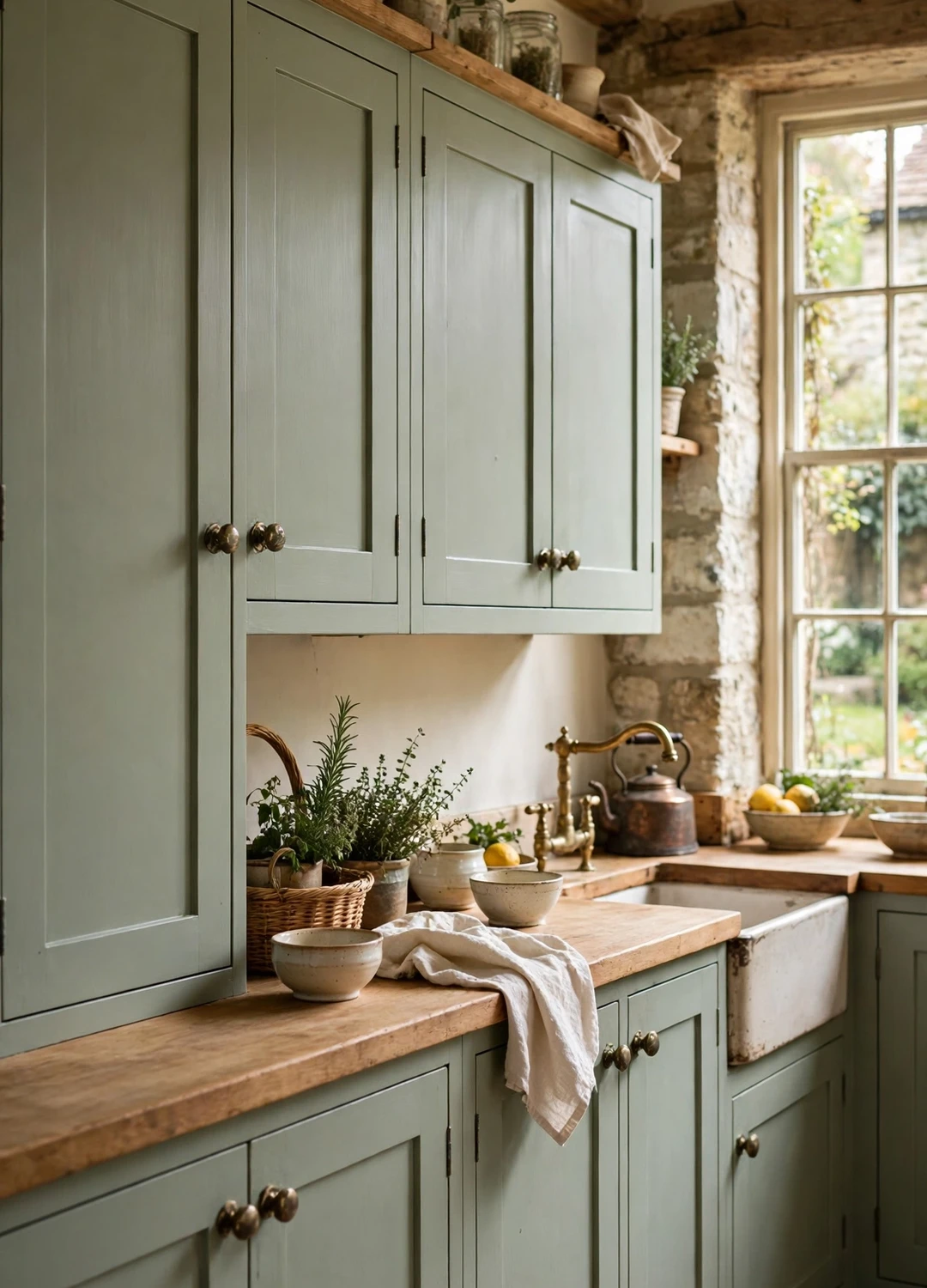
Start with the cabinets, because they set the colour of the whole room. Shaker doors are the cottage classic: a simple flat centre panel inside a clean frame, with no fuss and no shine. Paint them in soft, muted colours — sage green, warm cream, dusty pink, or deep forest green. These colours suit the soft grey light of an English kitchen, and they look better with age. If the budget allows, choose in-frame joinery, where the doors sit inside a wooden frame for a crafted, furniture-like finish.
Why It Works
Shaker cabinets are plain in the best way. Their simple lines let the colour and the wood do the talking, and painted wood feels warm where flat, glossy cabinets feel cold. A muted colour also forgives the marks of daily life — a scuff here, a splash there — so the kitchen looks lived-in, not worn-out.
Best for
Any kitchen, any size. In a small kitchen, keep the upper cabinets in a pale colour and use the deeper colour below, so the room still feels light. In a large kitchen, a deep green or navy on the island or the dresser adds depth.
Styling Tips
Paint a test patch on a door and live with it for a week, in morning and evening light, before you commit. Use cup handles and round knobs in aged brass or black iron — they suit painted wood far better than shiny chrome. For the full cottage look beyond the kitchen, see our English cottage post.
2. A Belfast Sink as the Centrepiece
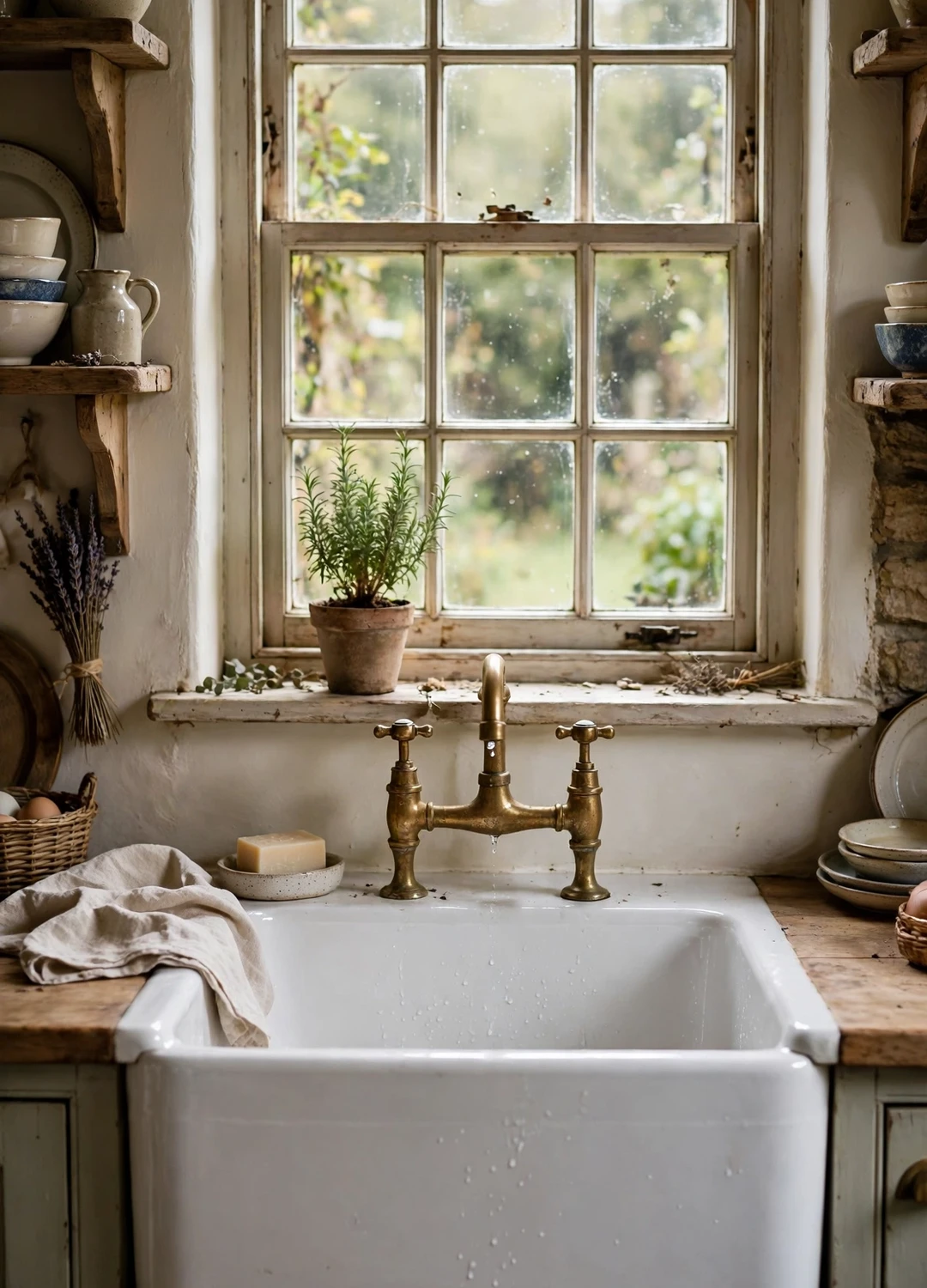
The Belfast sink — also called a farmhouse sink — is the feature that says "cottage" at a glance. It is deep, white, made of fireclay, and it has a wide apron front that sits proud of the cabinets. Set a single large bowl under the window, with aged brass or copper taps, and the sink becomes the centrepiece of the room. It swallows big pots, roasting trays, and armfuls of vegetables from the garden without a splash.
Why It Works
A Belfast sink is honest and practical. Its depth means you can wash a stockpot without water going everywhere, and its white fireclay brightens the darkest corner of the kitchen. The apron front breaks up a long run of cabinets and gives the room its cottage shape.
Best for
Anyone who cooks properly and washes up by hand, at least sometimes. Put it under a window if you can — washing up is far nicer with a view of the garden.
Styling Tips
Keep the windowsill clear except for a small potted herb and a bar of soap in a dish. Pair the sink with a simple wooden draining board, not a plastic rack, and choose taps with a traditional shape — a bridge tap or a single lever in aged brass. For more on styling cottage rooms around these classics, see our English cottage style ideas.
3. A Range Cooker in an Inglenook Alcove
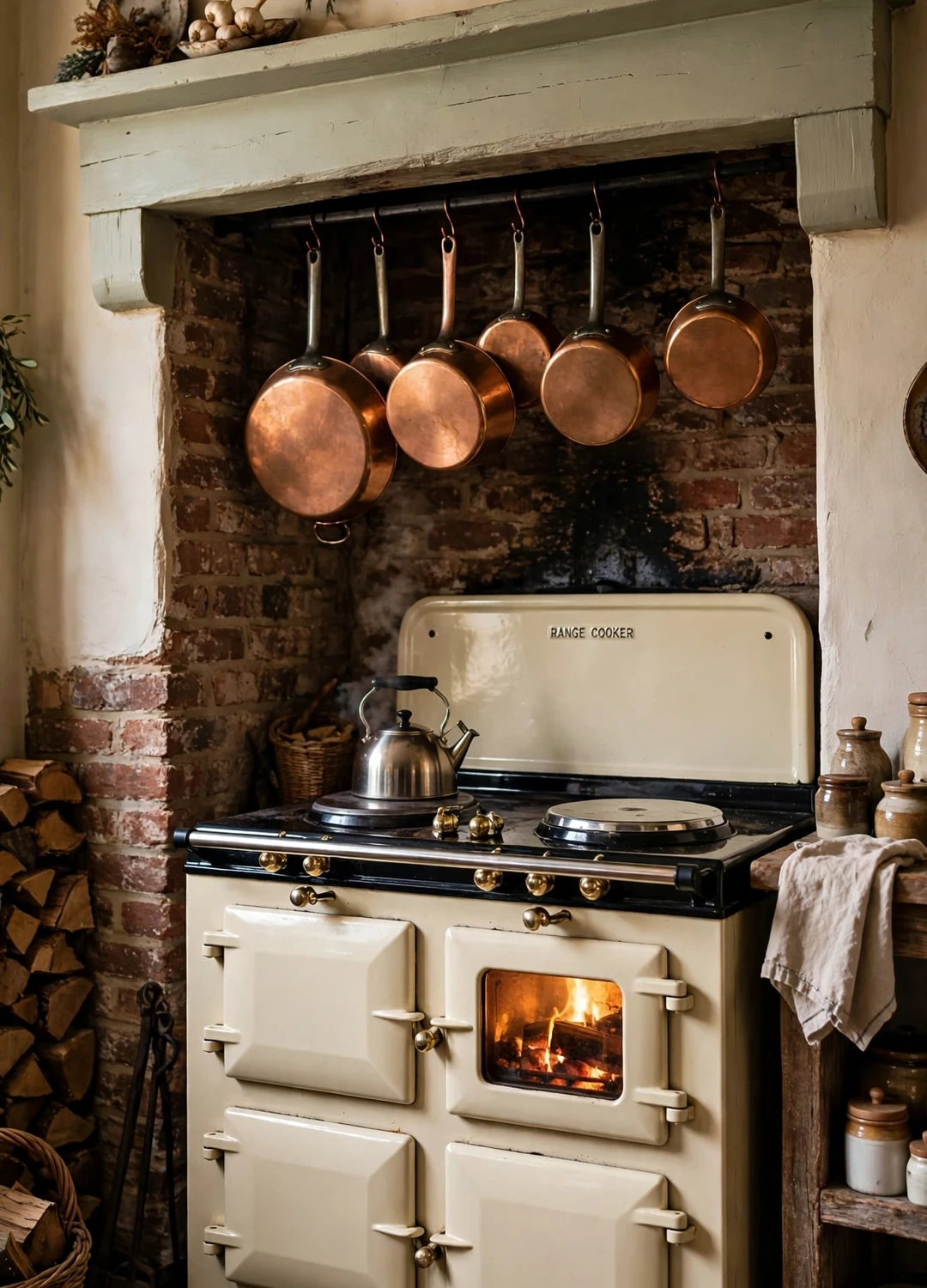
Nothing anchors a cottage kitchen like a range cooker tucked into a deep inglenook alcove. The classic is a cast-iron range — the Aga-style cooker in cream, pale blue, or deep green — set under a painted timber mantle, with brick or limestone behind it. The alcove makes the cooker feel like part of the house, not an appliance in a row of units.
Why It Works
A range cooker gives the kitchen its hearth. It warms the room, it holds heat for slow cooking and baking, and it gives the kitchen a focal point that a flat modern cooker never does. The deep alcove frames it, so the whole wall becomes a feature.
Best for
Kitchens with a chimney breast or a deep wall you can build an alcove into. If you love the look but not the running cost, be honest with yourself: a traditional Aga runs constantly and costs real money to fuel. A modern range cooker in the same alcove gives you the look and the cooking without that cost.
Styling Tips
Paint the mantle the same colour as the cabinets for a calm, joined-up look, or leave the timber bare for contrast. Hang a rail with a few copper pans above the range, and keep a kettle on top — a range should look used. If you are planning the room around a cooker, read our vintage kitchen decor ideas for more period touches.
4. An Unfitted Kitchen, Like a Room of Furniture
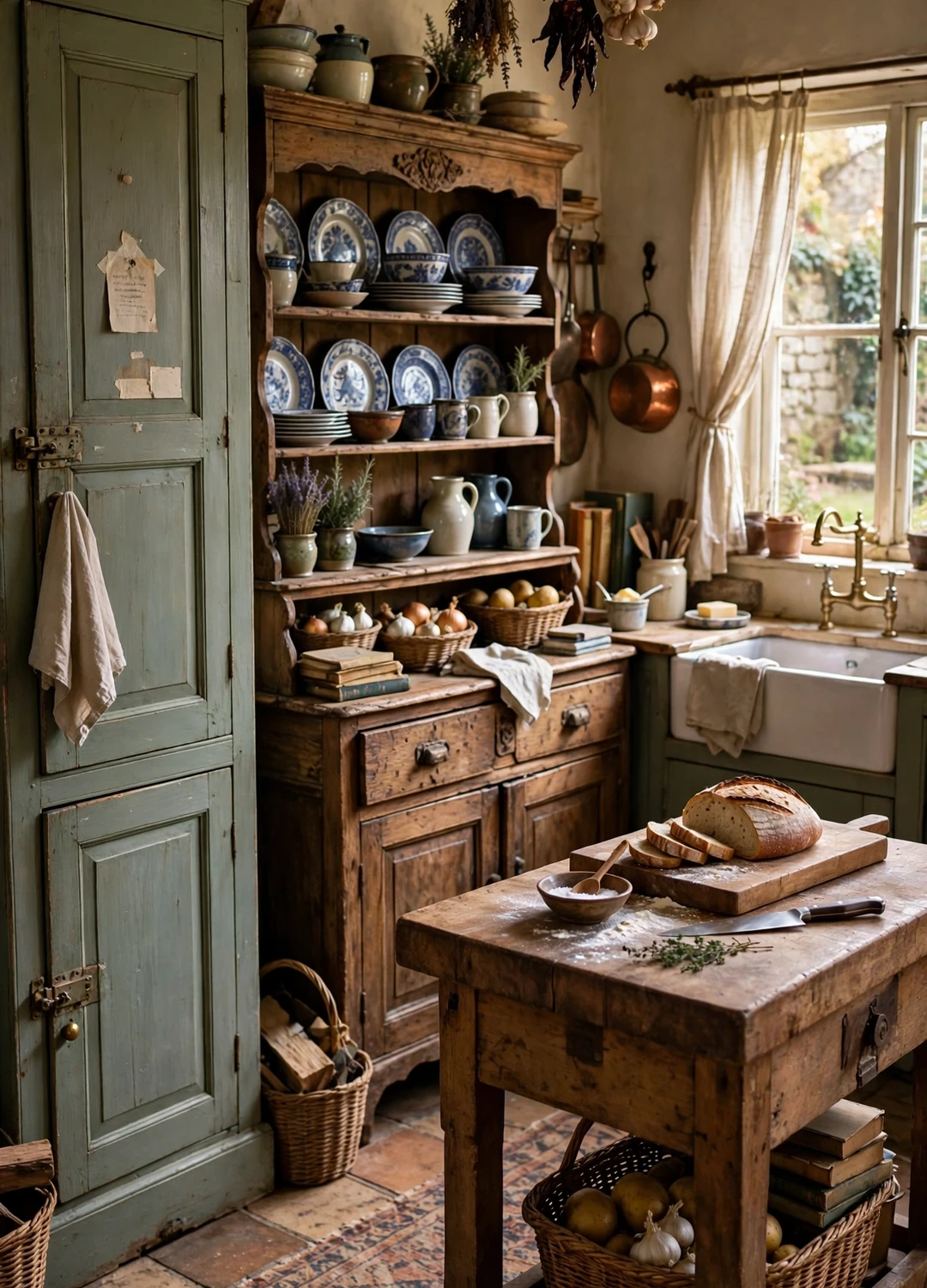
Old cottage kitchens were not fitted — they were furnished. So skip the wall-to-wall matching run where you can. Add a tall larder cupboard in a different paint colour from the cabinets, a Welsh dresser that is older than the kitchen itself, and a freestanding butcher's block instead of a fixed island. Each piece should feel as if it arrived at a different time and stayed because it works.
Why It Works
Unfitted pieces make the kitchen feel like a room, not a unit. They break up the straight lines, they give you places to show off pretty things, and they let you change the room later — move the dresser, swap the block — without ripping out a fitted run.
Best for
Older houses, uneven walls, and anyone who likes to rearrange. A freestanding larder also suits a rented home, because you can take it with you.
Styling Tips
Keep the base cabinets in one colour and let one freestanding piece be the accent — a dresser in deep green against cream cabinets, for example. Leave small gaps between pieces rather than pushing everything tight together; the breathing room is part of the look. For ideas on mixing old and new furniture through the house, see our English cottage style post.
5. Butcher-Block and Stone Worktops That Age Well
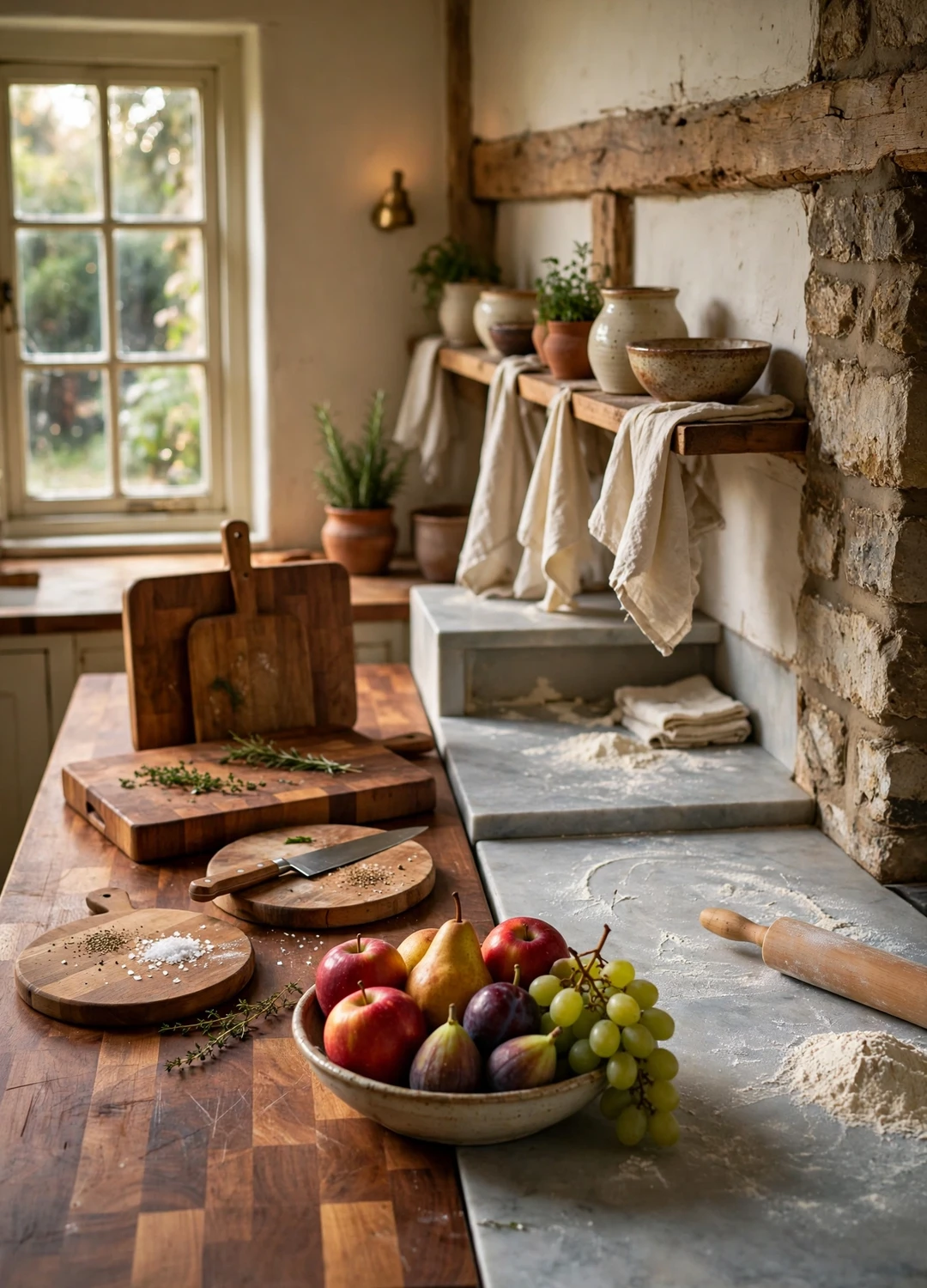
Choose worktops that get better with use, not worse. A walnut or oak butcher block brings warmth to the room and feels kind under your hands. Soapstone or marble makes a cool, perfect surface for pastry and baking. These are materials that gain patina — marks, oil, and softening edges — instead of staying perfect and showing every scratch as damage.
Why It Works
A cottage kitchen is a working room, and its worktops should show it. Wood and stone age gracefully, while shiny, perfect surfaces fight the cottage feeling and look worse the moment they mark. Mixing two materials — wood by the sink, stone by the cooker — also breaks up long runs and adds interest.
Best for
Bakers, who will love a cool stone slab, and anyone who cooks daily and wants a surface they can chop on, knead on, and set a hot pan down on without worry.
Styling Tips
Oil wooden worktops regularly so they stay fed and water-resistant, and keep a thick wooden chopping board on the stone for everyday prep. Let the wood darken and the stone mark a little — that is the patina, not a flaw. For more on choosing surfaces that suit older homes, see our vintage kitchen decor ideas.
6. Open Shelves and Glass-Front Display Cabinets
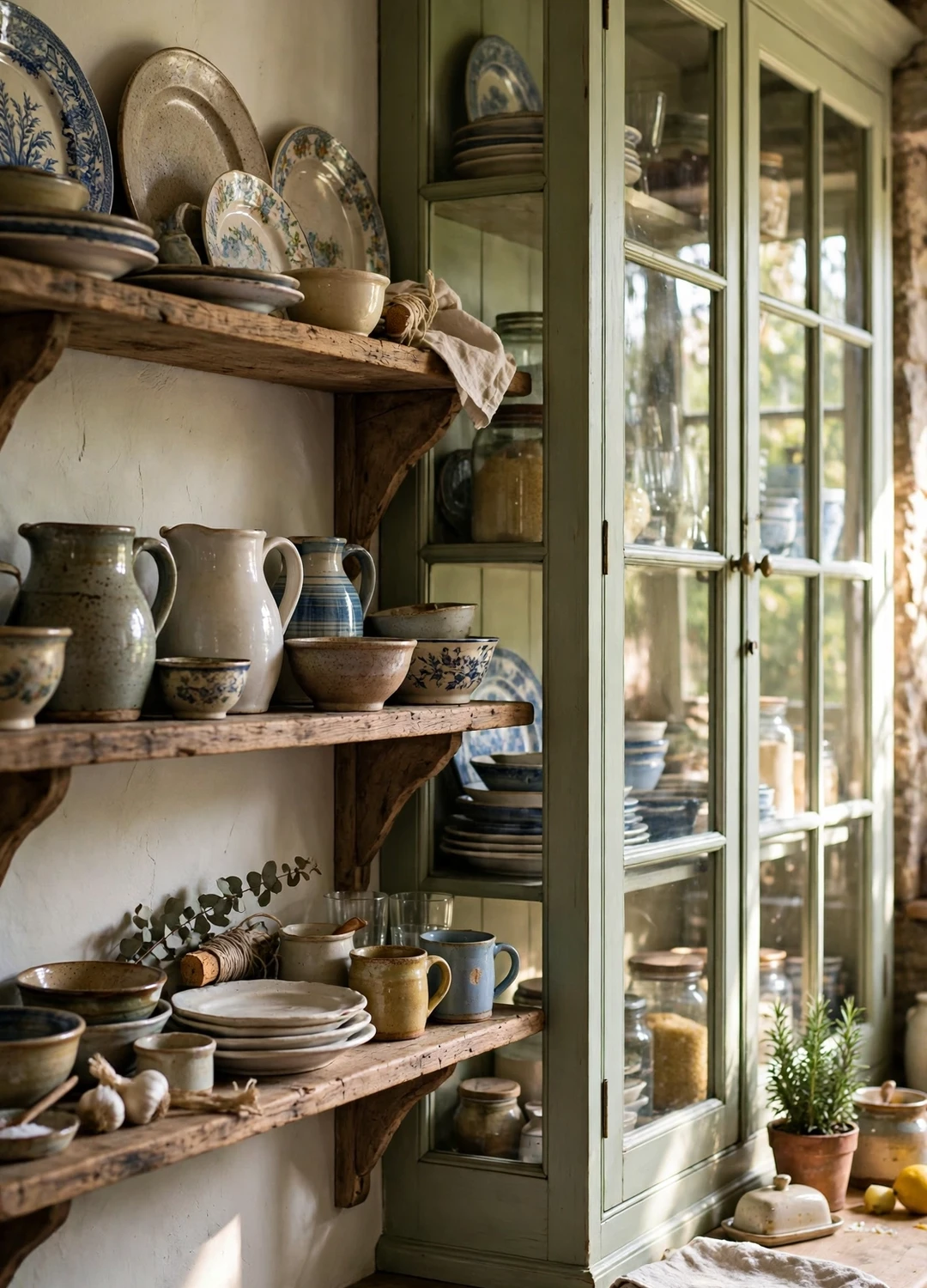
Swap some of the closed wall cabinets for open wooden shelves, and put glass fronts on the rest. Open shelves hold the everyday plates, bowls, and pitchers where you can reach them, and they make the kitchen feel open and airy. Glass-front cabinets show off the pretty dishes while keeping the dust off. Fill them with collected, mismatched crockery — not a matching set.
Why It Works
Open shelves make a small kitchen feel bigger, because the eye travels past them to the wall. They also force you to keep only the things you love and use. Mismatched plates and jugs give the kitchen its collected-over-time feeling, which is the heart of the cottage look.
Best for
Small kitchens, where closed cabinets can feel heavy, and anyone with pretty crockery that deserves to be seen. Keep the open shelves near the sink or the table, where the plates are used most.
Styling Tips
Stack plates in small piles, stand jugs and pitchers in a row, and leave a little space — a shelf packed edge to edge looks like a shop, not a kitchen. Use the top shelf for the things you use least. For more on styling shelves and surfaces, see our English cottage style ideas.
7. A Plate Rack and a Shaker Peg Rail
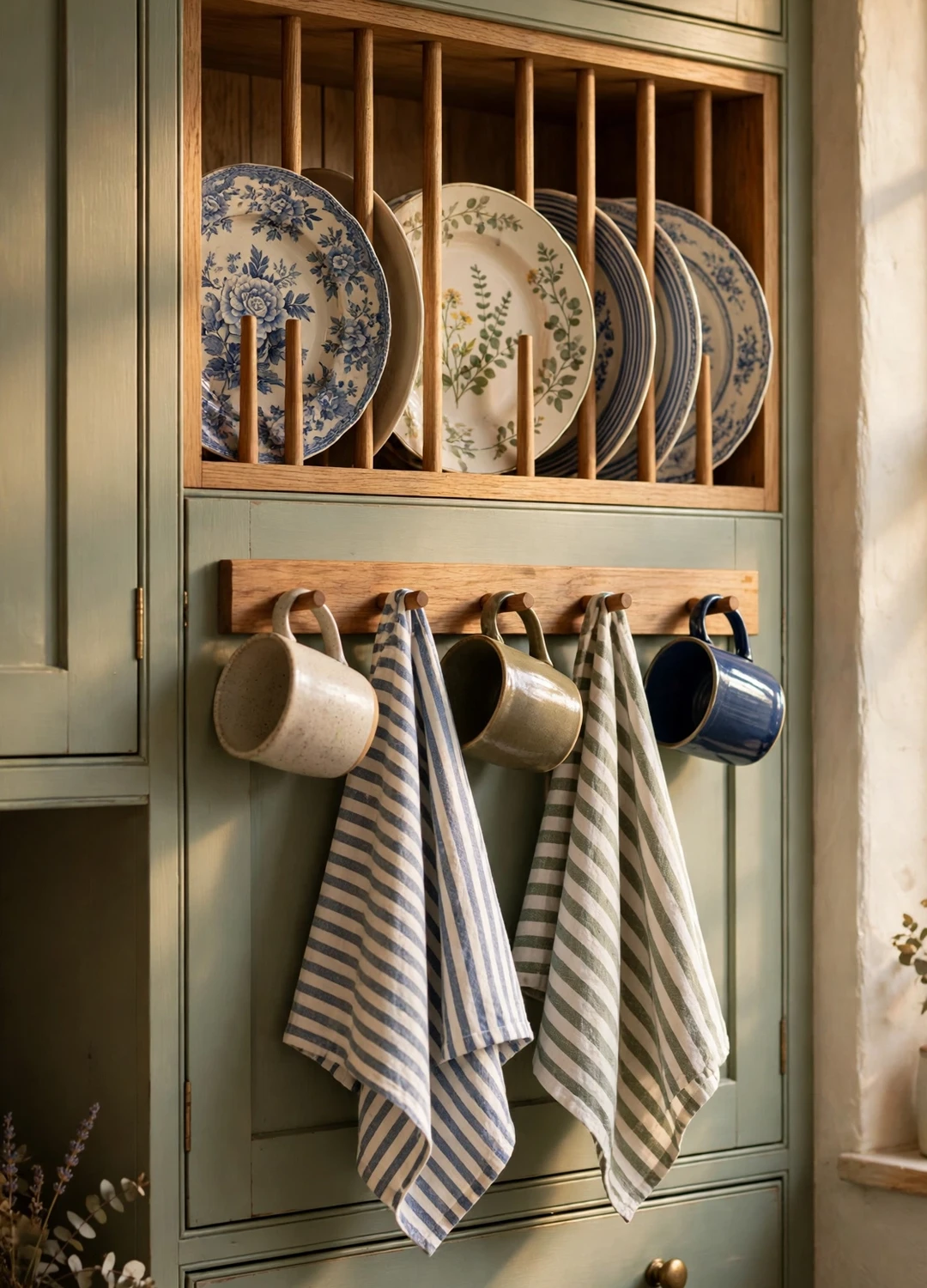
Two small details carry a surprising amount of the cottage feeling. A plate rack — built into the upper cabinets, or hung on its own — holds plates upright where you can see their patterns, with a scalloped trim where it fits. A Shaker peg rail runs along the wall, holding tea towels, mugs, and a small pendant or two. Both are simple, wooden, and endlessly useful.
Why It Works
Plate racks and peg rails are the details that make a kitchen feel old and honest. They show the tools of the room instead of hiding them, and they keep the things you reach for every day within arm's reach. A peg rail also adds a horizontal line that softens a plain wall.
Best for
Small kitchens with little cupboard space, and anyone who likes their everyday things on show. A peg rail by the back door is perfect for aprons and dog leads too.
Styling Tips
Paint the plate rack the same colour as the cabinets so it reads as part of the furniture, and hang only things you use — a rail full of unused gadgets looks cluttered. Keep the peg rail low enough to reach without a step. For more cottage storage ideas that work in small rooms, see our open kitchen and living room designs.
8. A Farmhouse Table as Island and Dining Spot
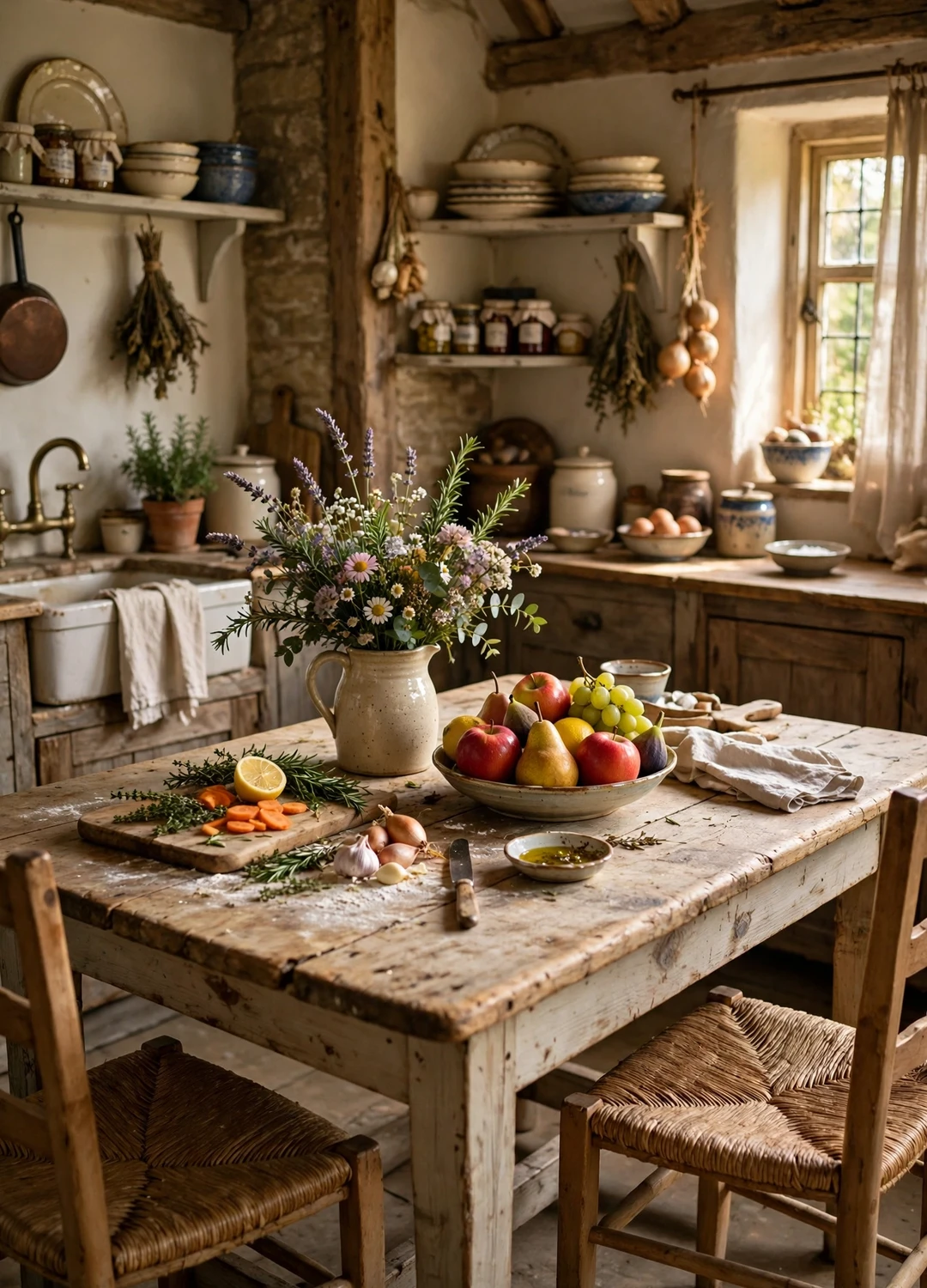
Instead of a fixed island, use a scrubbed pine farmhouse table. It does double duty: a prep surface by day, a dining table by night. Put rush-seat chairs around it, and a comfy stool or two so people can sit and keep the cook company. The table should be big enough to roll pastry on and small enough to walk around.
Why It Works
A table is warmer than an island. It has legs you can see under, chairs you can pull up, and a surface that invites people to sit down rather than stand at a counter. It also keeps the kitchen flexible — push it against the wall for a party, pull it out for a big Sunday lunch.
Best for
Family kitchens and anyone who eats in the kitchen. A table also suits a long, narrow kitchen better than a fixed island, which can block the walkway.
Styling Tips
Scrub the pine top with a brush and hot water now and then to keep it pale and clean, and wax it lightly so it resists stains. Keep the centre simple — a jug of flowers, a bowl of fruit, or a candle — so there is always room to work. For more on dining in a cottage kitchen, see our kitchen island and dining table ideas.
9. Natural Floors and Handmade Tiles
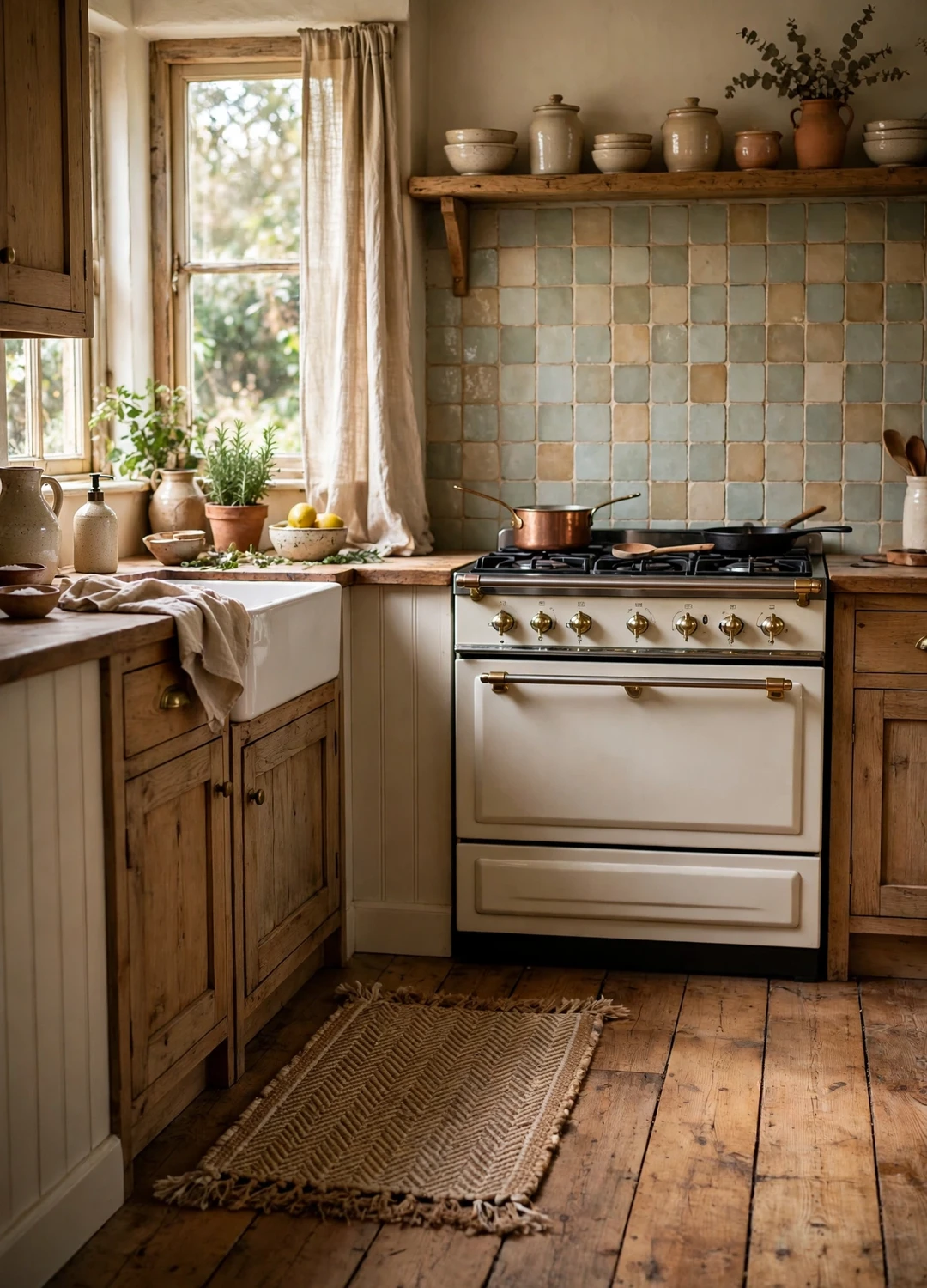
Underfoot, keep it natural: wide wood boards, worn stone flags, or warm neutral tiles. Behind the range and the sink, use a handmade-look tile backsplash — zellige-style tiles with a soft glaze and slightly uneven edges — for texture over shine. The floor and the tiles should feel like they have been there for decades, even if they are new.
Why It Works
Natural floors warm the whole room and forgive the spills and scuffs of a working kitchen. Handmade-look tiles catch the light in a way flat, glossy tiles never do — each tile is a little different, so the wall feels alive rather than printed.
Best for
Anyone replacing a floor or a backsplash. Wood suits a kitchen that opens onto the garden; stone flags suit a cool, north-facing room. Zellige-style tiles work behind any cooker or sink.
Styling Tips
Choose a tile colour that picks up the cabinet paint — sage, cream, or a soft blue — and use a grout that is close in tone, so the tiles read as one soft surface. Add a woven rug or a runner by the sink for warmth underfoot. For more on floors and surfaces that suit cottage rooms, see our vintage kitchen decor ideas.
10. Soft Colour, Floral Fabric and a Cottage Window
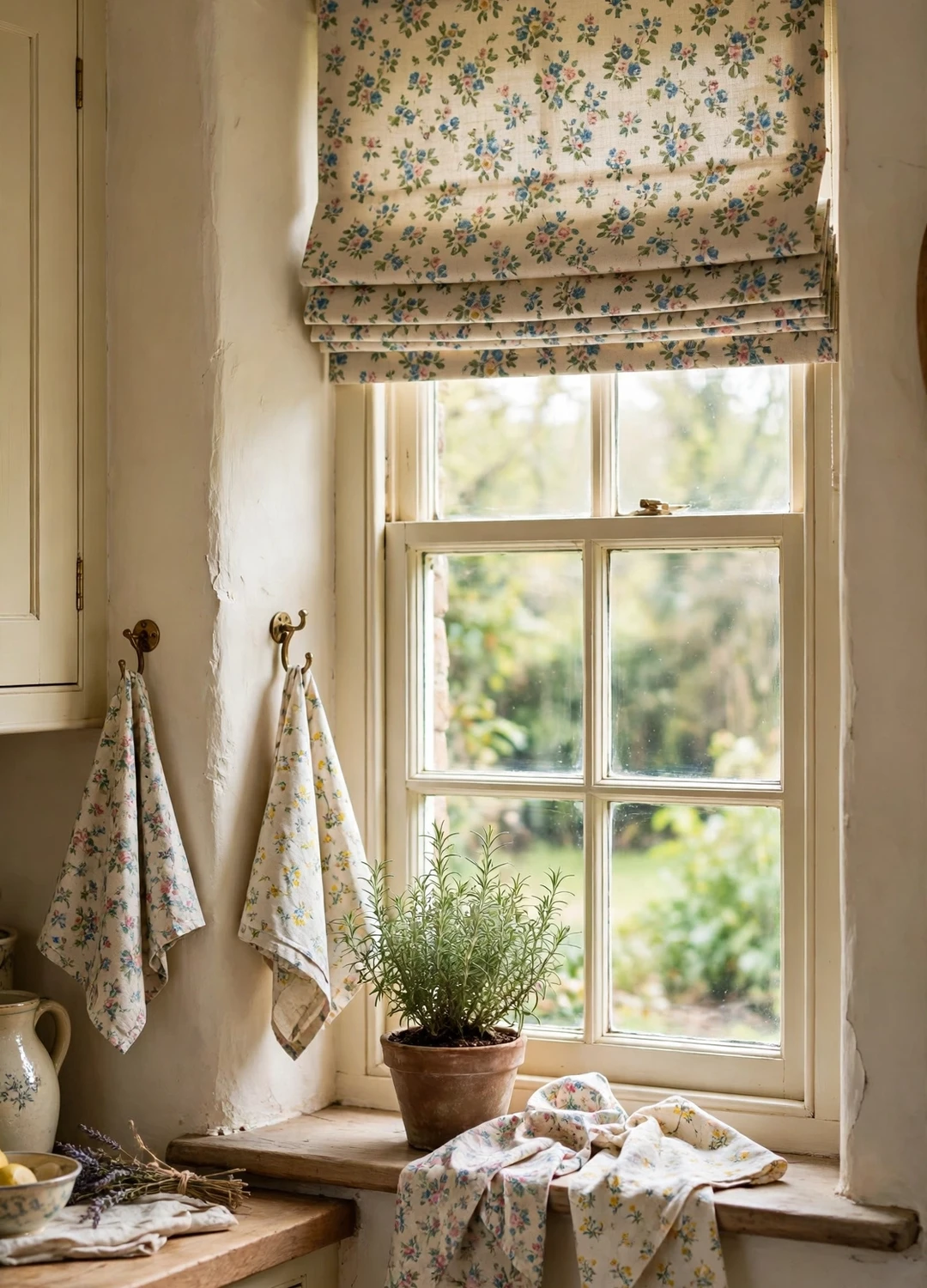
Keep the walls soft cream, and let the colour come from fabric. A floral roman blind or simple curtains at the sink window, tea towels and cushions in small floral prints, and a tablecloth that has seen a few summers — these are the soft touches that make a cottage kitchen feel like home. The window itself matters too: small panes, a deep sill, and light and scent from the garden close by.
Why It Works
Soft walls and floral fabric are the cottage combination. The cream walls bounce the light around a small room, and the small prints add colour without shouting. Fabric is also the easiest thing to change — swap the blind or the tea towels and the whole room feels new.
Best for
Any kitchen with a window over the sink, and anyone who wants colour without repainting. A floral blind is the single quickest cottage touch you can add.
Styling Tips
Choose a small-scale floral in colours that match the cabinets, and keep the rest of the fabric plain so the print stands out. Put a potted herb on the sill — basil in summer, rosemary all year — so the window smells as good as it looks. For more on cottage fabrics and colour, see our English cottage style post.
11. Warm, Low Lighting
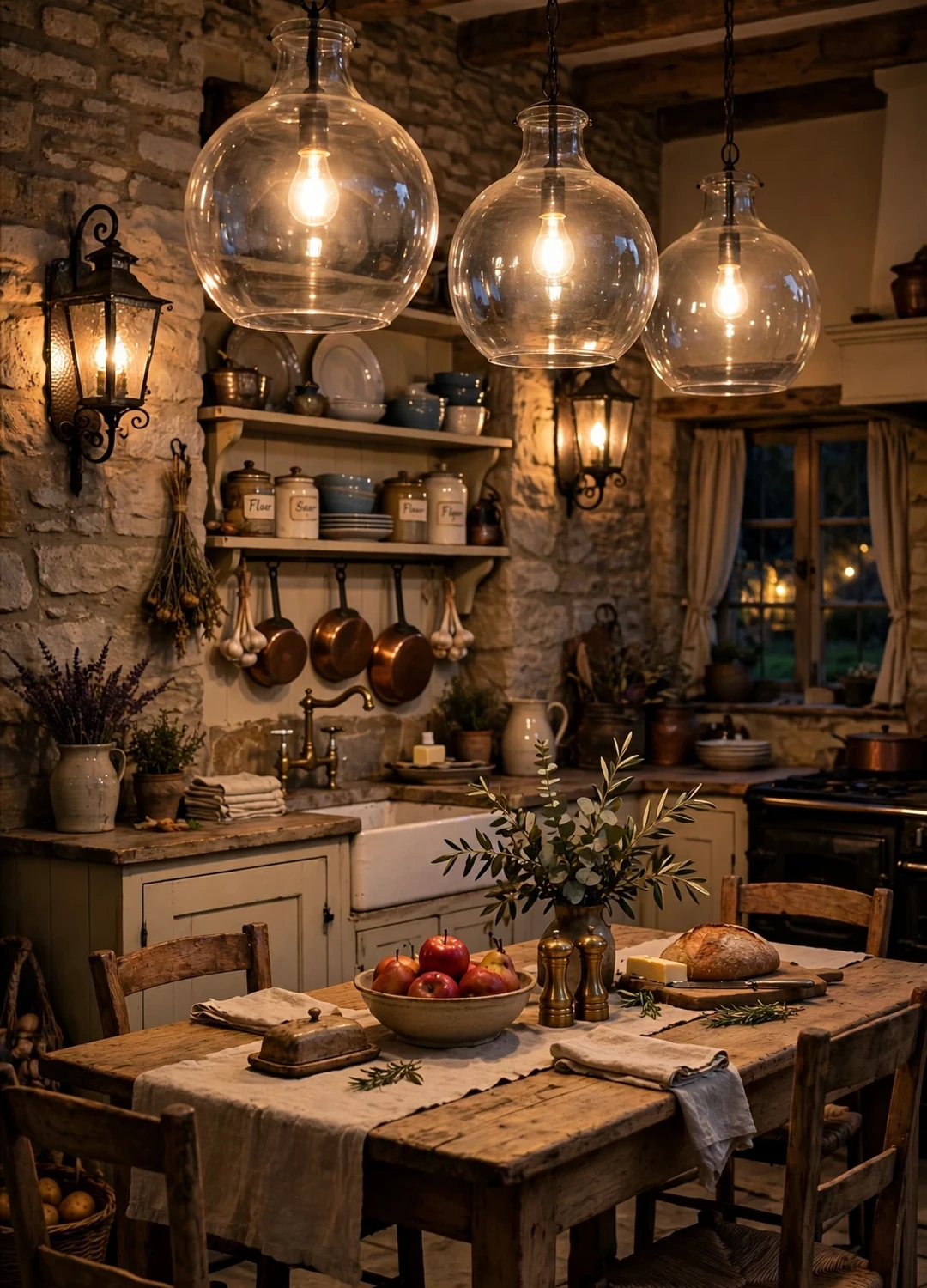
Light the kitchen warm and low. Oversize glass pendant lights over the table or island, seeded glass and knurled brass for texture, plus hammered-iron sconces on the walls — warm light, not bright white, so the room feels cosy after dark. Add a small lamp on a shelf or the dresser for a soft pool of light in the corner.
Why It Works
Warm light is what makes a cottage kitchen feel cosy in the evening. Bright white downlights make a kitchen feel like a surgery; low, warm light makes it feel like a room where people linger. Pendants also give the room a shape overhead, which a plain ceiling never does.
Best for
Evening cooks and anyone who eats in the kitchen. Put the pendants on a dimmer so you can turn them down for dinner and up for chopping.
Styling Tips
Use warm-white bulbs (around 2700K) everywhere in the kitchen, and mix two heights of light — pendants above, sconces or a lamp below — so the room glows at more than one level. Keep the pendants clear glass so the bulb and the filament show. For more on warm cottage lighting through the house, see our cozy cottage living room ideas.
12. A Cosy Corner and a Place for Herbs
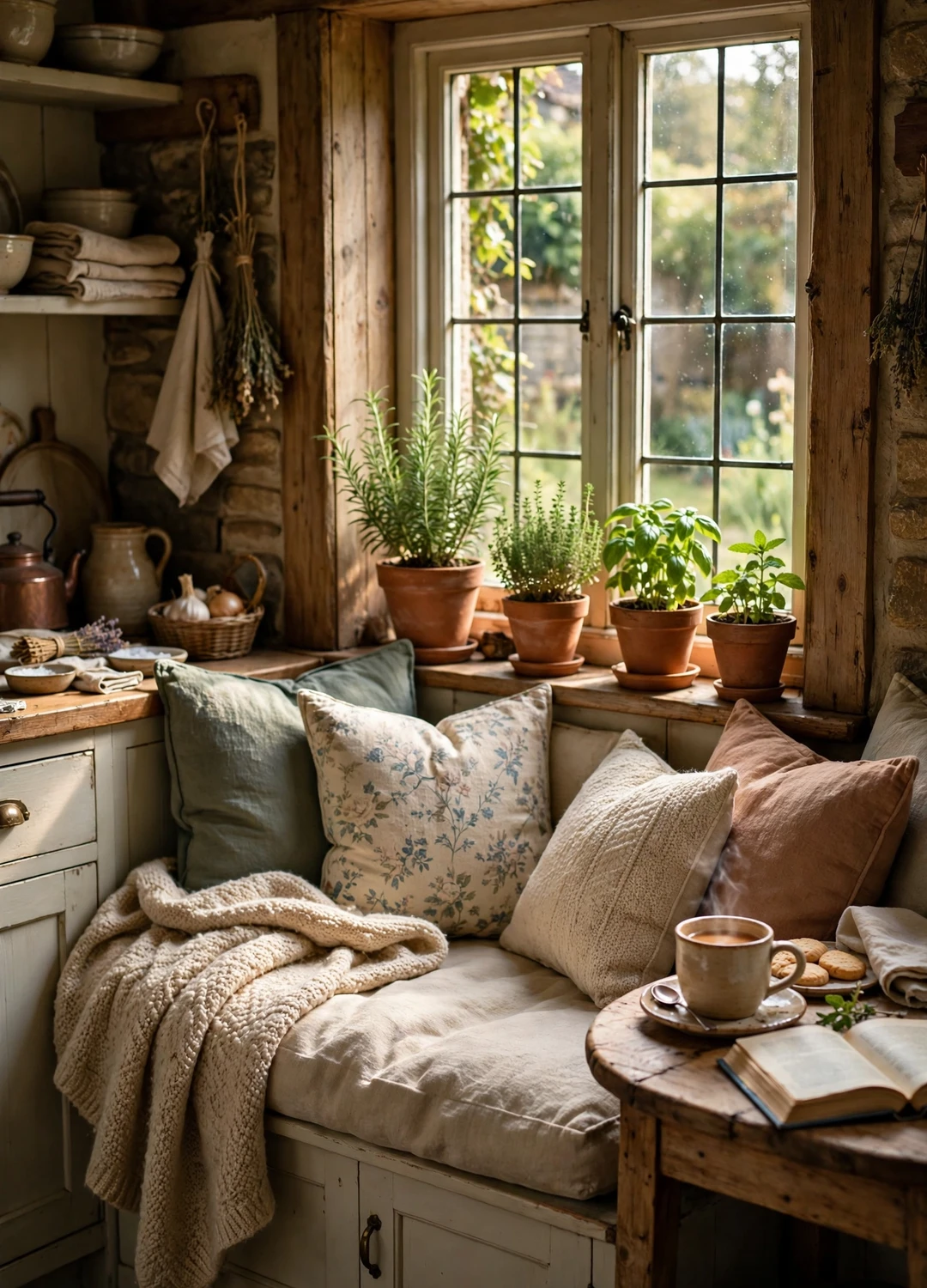
Finish with the corner that makes the kitchen a place to stay. A window seat or a small breakfast nook under a window, with cushions and a pot of herbs on the sill — parsley, chives, and basil within reach of the chopping board. In a larger home, add a scullery or back kitchen: extra prep space and a second sink hidden away when you are entertaining.
Why It Works
A seat in the kitchen turns it from a workspace into a living room. Someone can sit with a cup of tea while you cook, and the herbs on the sill mean the garden is always part of the room. A scullery keeps the mess out of sight when guests arrive, so the pretty kitchen stays pretty.
Best for
Any kitchen with a spare window or a wide sill, and larger homes with room for a back kitchen. Even a single stool by the window and one pot of basil counts.
Styling Tips
Build the window seat with storage underneath for tablecloths and baking trays, and keep the herbs in terracotta pots that match the floor. Snip herbs little and often — it keeps them bushy and it puts fresh flavour in your cooking. For the garden side of the herb habit, see our English cottage garden plan, which includes a herb corner.
Start with the Cabinets, Then Let the Room Grow
An English cottage kitchen is not built in a weekend — and that is the point. Start with one feature from this list: paint the cabinets, fit a Belfast sink, or hang a floral blind at the window. Live with it for a season, and add the next touch when you are ready. The kitchen will tell you what it wants next: a bare wall where a peg rail could go, a corner where a table could sit, a window that needs a pot of basil. That slow, steady growth is how the great cottage kitchens were made — one piece, one season, one idea at a time.
More Cottage Ideas
Frequently Asked Questions
What makes a kitchen an English cottage kitchen?
Painted wooden cabinets in soft, muted colours, a deep Belfast farmhouse sink, natural materials like wood and stone, open shelves, a range cooker in an alcove, and furniture-style pieces like a Welsh dresser or a farmhouse table. The room should feel collected over time, not fitted all at once.
Can I get the English cottage kitchen look in a small or modern kitchen?
Yes. Paint the cabinets a soft colour, swap a few wall cabinets for open shelves, add a plate rack and a peg rail, and hang a floral blind at the window. Those four changes carry the look in any size of kitchen, and a small kitchen suits the cottage style especially well because it is naturally cosy.
Do I need an Aga or range cooker for a cottage kitchen?
No. A cast-iron range in an inglenook alcove is the classic cottage look, but a modern range cooker in the same alcove gives you the same feeling without the cost of running a traditional Aga all day. The alcove, the mantle, and the brick or stone behind it matter as much as the cooker itself.
What colours work best in an English cottage kitchen?
Soft, muted colours: sage green, warm cream, dusty pink, pale blue, and deep forest green. Keep the walls soft cream and let the cabinets carry the colour. These tones suit grey English light, hide the marks of daily cooking, and look better as they age.