
Fairytale English Cottage Garden
12 Fairytale English Cottage Garden Ideas for a Storybook Garden
A fairytale English cottage garden is a garden that feels like it came out of a storybook. Roses climb over a little arched doorway, a winding path disappears behind the flowers, and somewhere in the green there is a hidden seat, a tiny bridge, or a gate you half expect to lead somewhere magical. These 12 ideas show you how to bring that storybook feeling into your own garden.
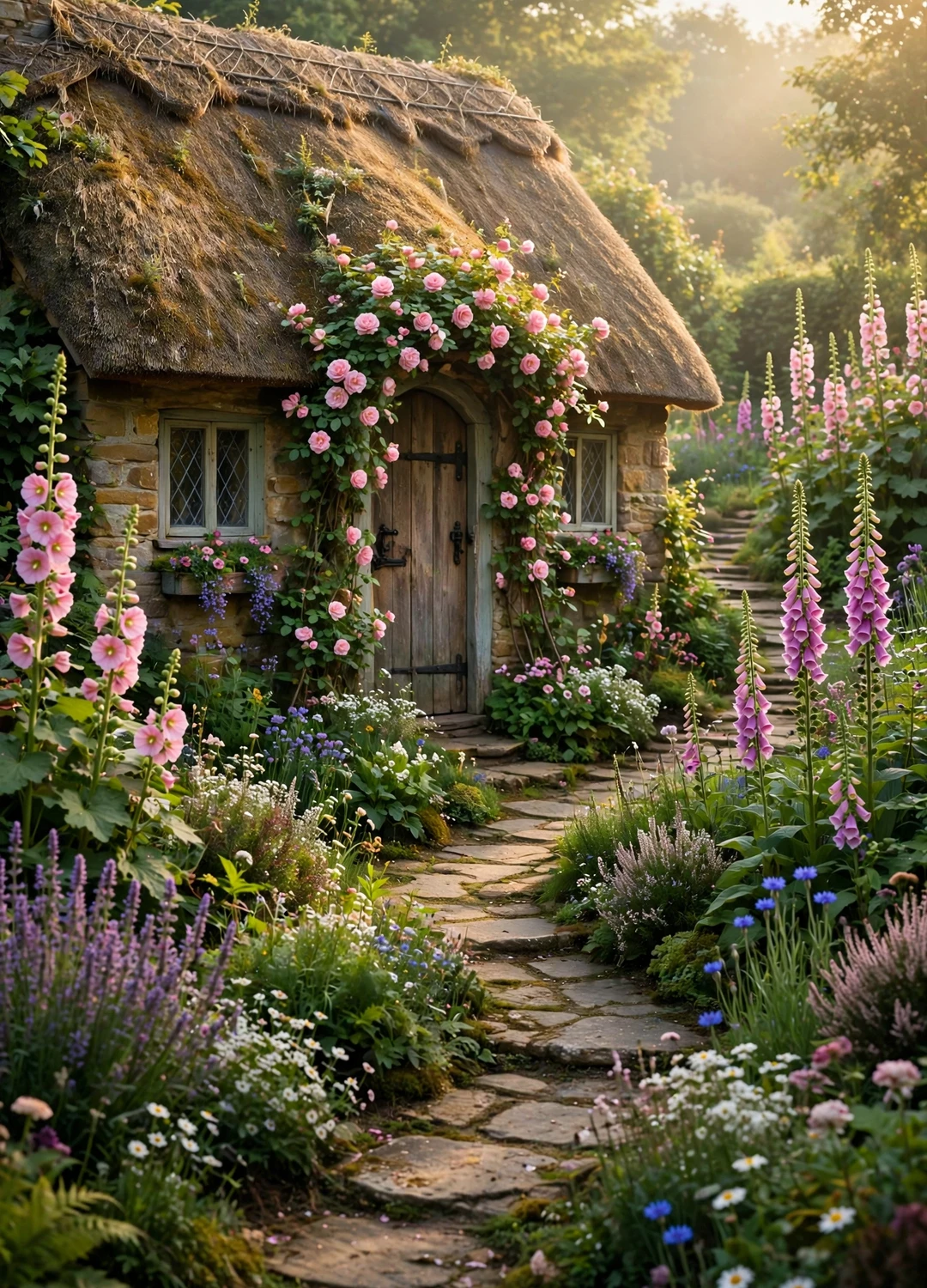
Roses over the door, foxgloves along the path — the storybook cottage garden.
The fairytale cottage garden is not a different kind of garden from the English cottage garden — it is the same garden, seen through a storybook lens. The flowers are taller, the paths wind more, the corners are a little more hidden, and everything feels as if it has been there for a hundred years. It is the garden of the storybooks: the thatched cottage with tiny windows, the rose-covered gate, the seat you only find if you know where to look. The 12 ideas below are the touches that turn a pretty cottage garden into a fairytale one. You do not need all of them — start with one, and let the story grow.
1. A Storybook Cottage as the Backdrop
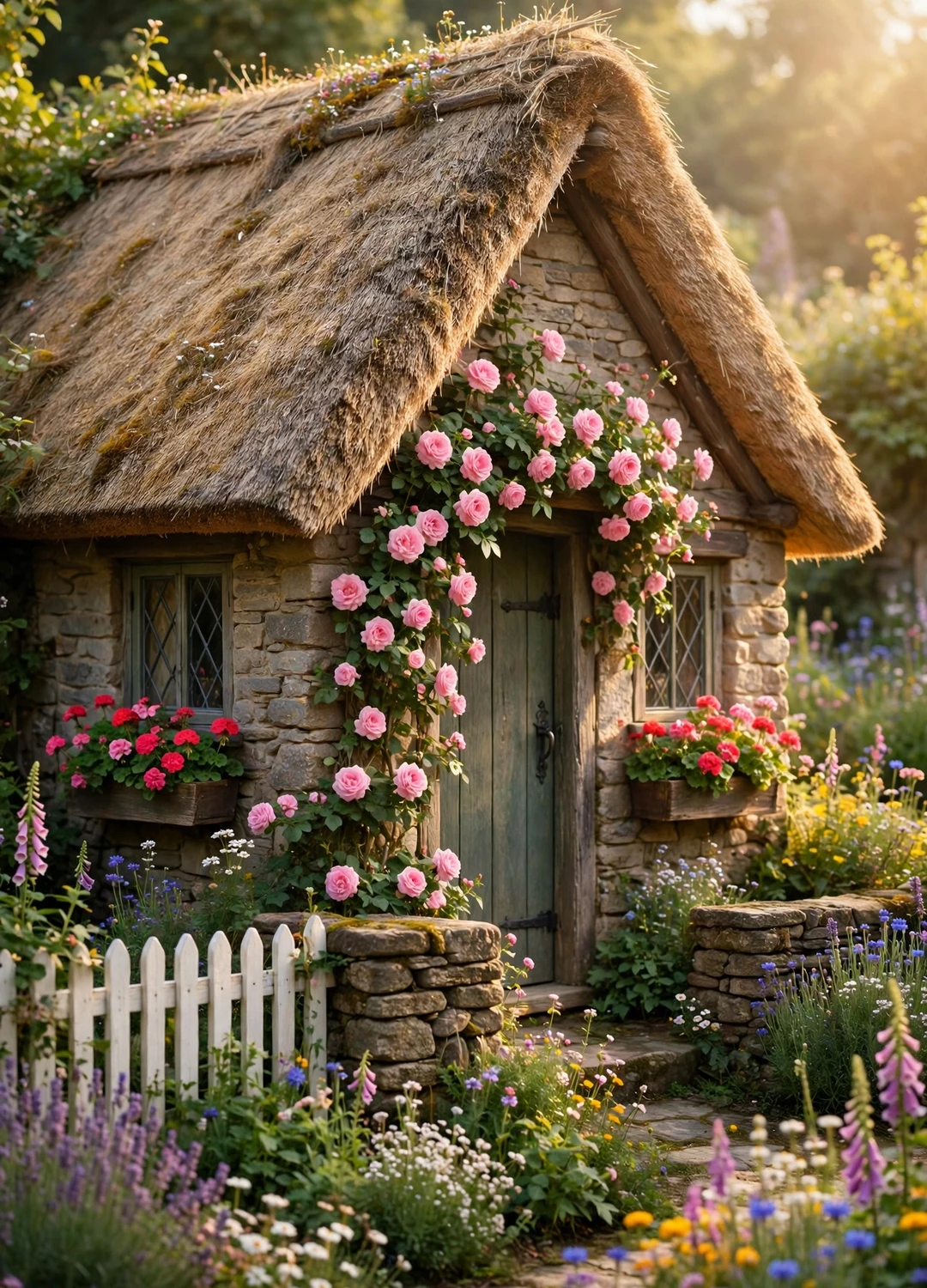
Every fairytale garden needs its cottage. You may not have a thatched roof or tiny leaded windows, but you can still give your house the storybook treatment: roses and honeysuckle climbing around the door, window boxes full of geraniums, and a low stone wall or picket fence in front. The house and the garden should feel like one place, not two — the garden climbs onto the cottage, and the cottage settles into the garden.
Why It Works
The cottage is what makes the garden feel like a fairytale instead of just a flower garden. When the house itself is softened by climbers and flowers, the whole plot reads as a scene from a storybook. It also gives the garden its scale: low eaves, small windows, and a little door make the flowers feel tall and the garden feel enchanted.
Best for
Any cottage-style house, and any house with a front door you can plant around. Even a modern home gains the storybook feel from a rose by the door and a winding path to it.
Styling Tips
Plant a climbing rose on one side of the door and honeysuckle on the other, so the doorway is framed in flowers and scent. Keep the paintwork soft — cream, pale green, or a dusty blue — and let the climbers do the rest. For the full cottage look inside and out, see our English cottage post.
2. A Rose-Covered Arbour to Walk Under
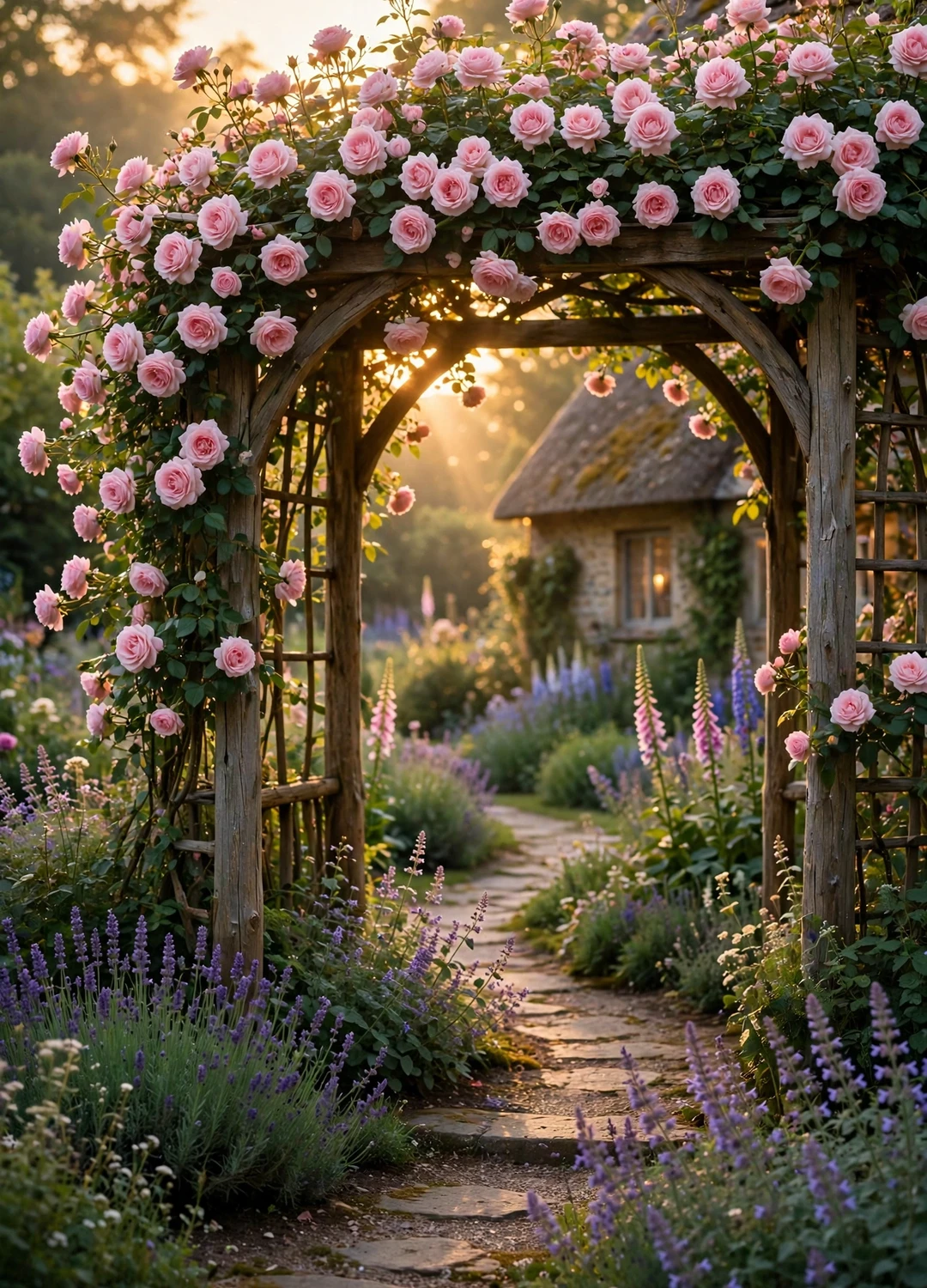
Nothing says "fairytale" like walking under a roof of roses. A simple wooden arbour over the path, covered in a climbing rose, turns an ordinary walk through the garden into a moment. Choose a repeat-flowering climber in soft pink or pale yellow, so the arbour is in flower from early summer into autumn, and underplant it with lavender or catmint for scent at ankle height.
Why It Works
An arbour gives the garden a doorway between one part and the next — from the front garden to the back, from the lawn to the flower borders. That sense of passing through something is what makes a garden feel like a story: you walk under the roses, and the next chapter begins. It also gives the garden height and a frame for the view beyond.
Best for
The middle of a path, the entrance to the back garden, or the gate into a walled corner. A small arbour suits a small garden — it does not need to be grand to feel magical.
Styling Tips
Tie new rose stems to the arbour while they are young and flexible, and prune once a year in late winter. Add a clematis alongside the rose for a second flush of colour, and hang a small lantern from the top so the arbour glows at dusk. Our English cottage garden flowers post covers the best roses and climbers for the job.
3. A Hidden Gate in the Hedge
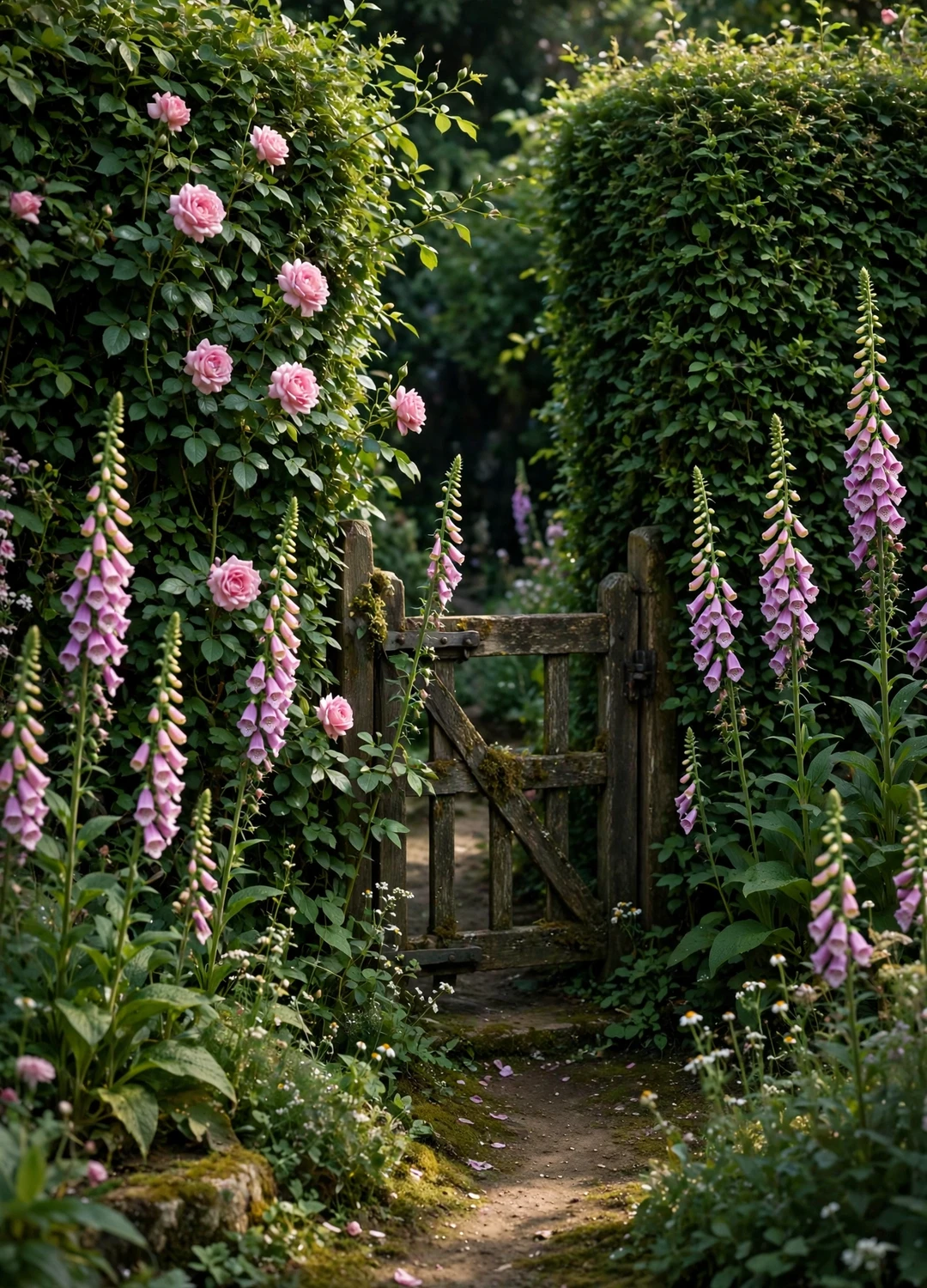
A fairytale garden always has a secret. A small wooden gate set into a tall hedge — half hidden by roses and foxgloves — is the classic one. It does not need to lead anywhere grand. It might open onto a vegetable patch, a compost corner, or a neighbour's lane. What matters is the feeling: behind this gate, something is waiting to be found.
Why It Works
A hidden gate gives the garden mystery, and mystery is the heart of the fairytale look. A garden you can see all at once is a garden you understand in a glance. A garden with a gate you cannot quite see through is a garden you want to explore — and that is exactly how a storybook garden should feel.
Best for
A hedge between the front and back garden, the end of a long border, or the corner where the garden meets a lane. A simple wooden gate with a black iron latch looks the part.
Styling Tips
Let a climbing rose or honeysuckle grow over the gate so it is half hidden in summer, and plant foxgloves on either side to frame it. Keep the path through the gate narrow — just wide enough for one person — so it feels like a secret passage. For the wider layout of boundaries and entrances, see our English cottage garden plan.
4. A Winding Path That Disappears Behind the Flowers
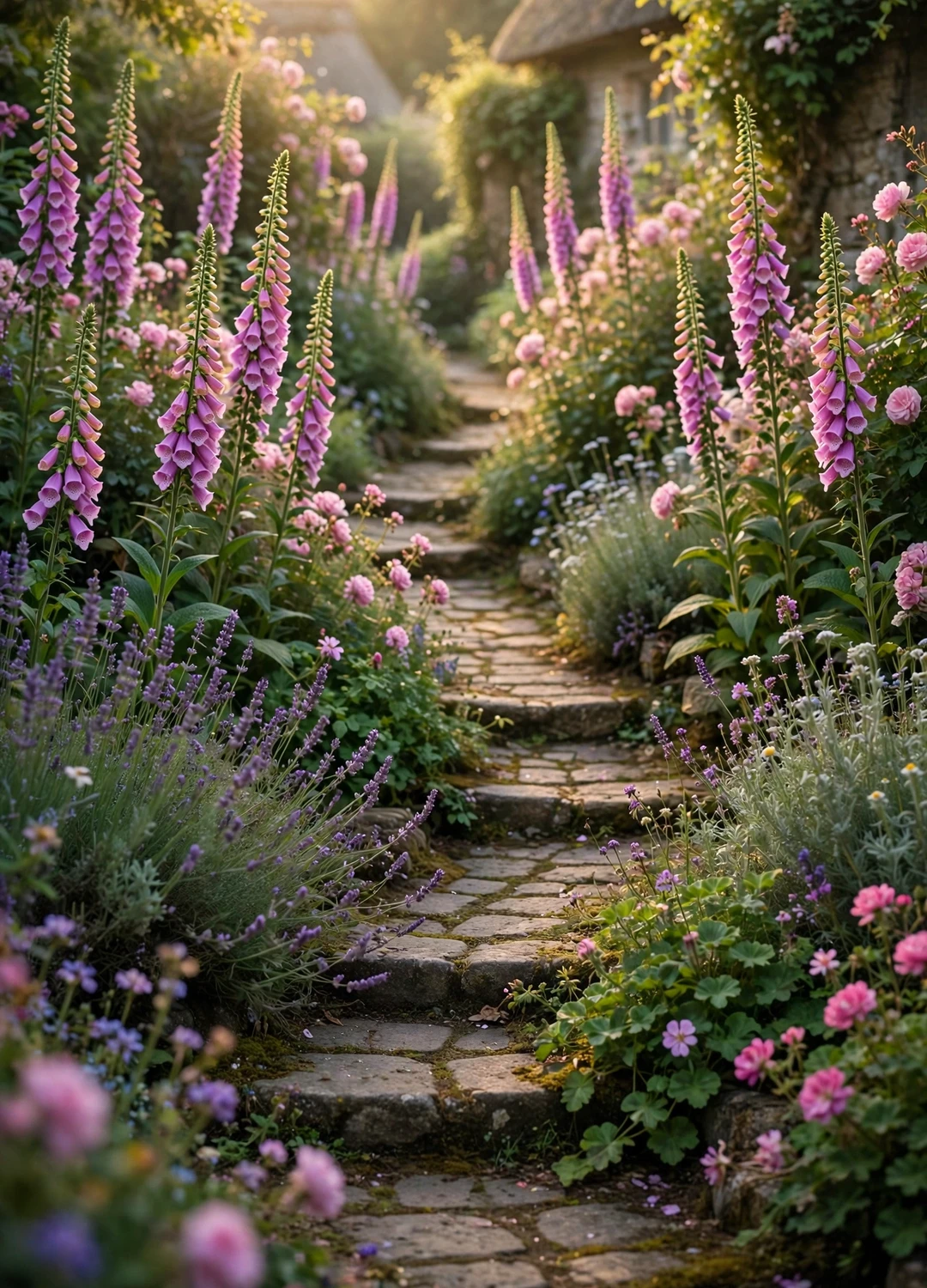
In a fairytale garden, the path never runs straight. It curves gently between tall borders, so you cannot see where it ends — it disappears behind the foxgloves, and you have to follow it to find out. Use old stone slabs, worn bricks, or gravel, and let lavender, thyme, and hardy geraniums spill over the edges. The path should look as if it has been walked for a hundred years.
Why It Works
A path that disappears makes a garden feel bigger and more mysterious, because the eye follows the curve instead of stopping at the end. It also slows you down. A straight path says "walk through"; a curving one says "wander and look around", which is exactly how a fairytale garden is meant to be enjoyed.
Best for
Gardens of any size. Even a short path from the gate to the door can curve once or twice and change the whole feel of the garden.
Styling Tips
Make the path wide enough for one person to walk comfortably — about 60 to 90 cm — or it will feel like a corridor. Plant tall flowers on the outside of the bends, so the path really does vanish behind them. Keep the surface slightly uneven and natural; a perfectly level, modern path fights the storybook look.
5. A Wishing Well or Old Stone Trough
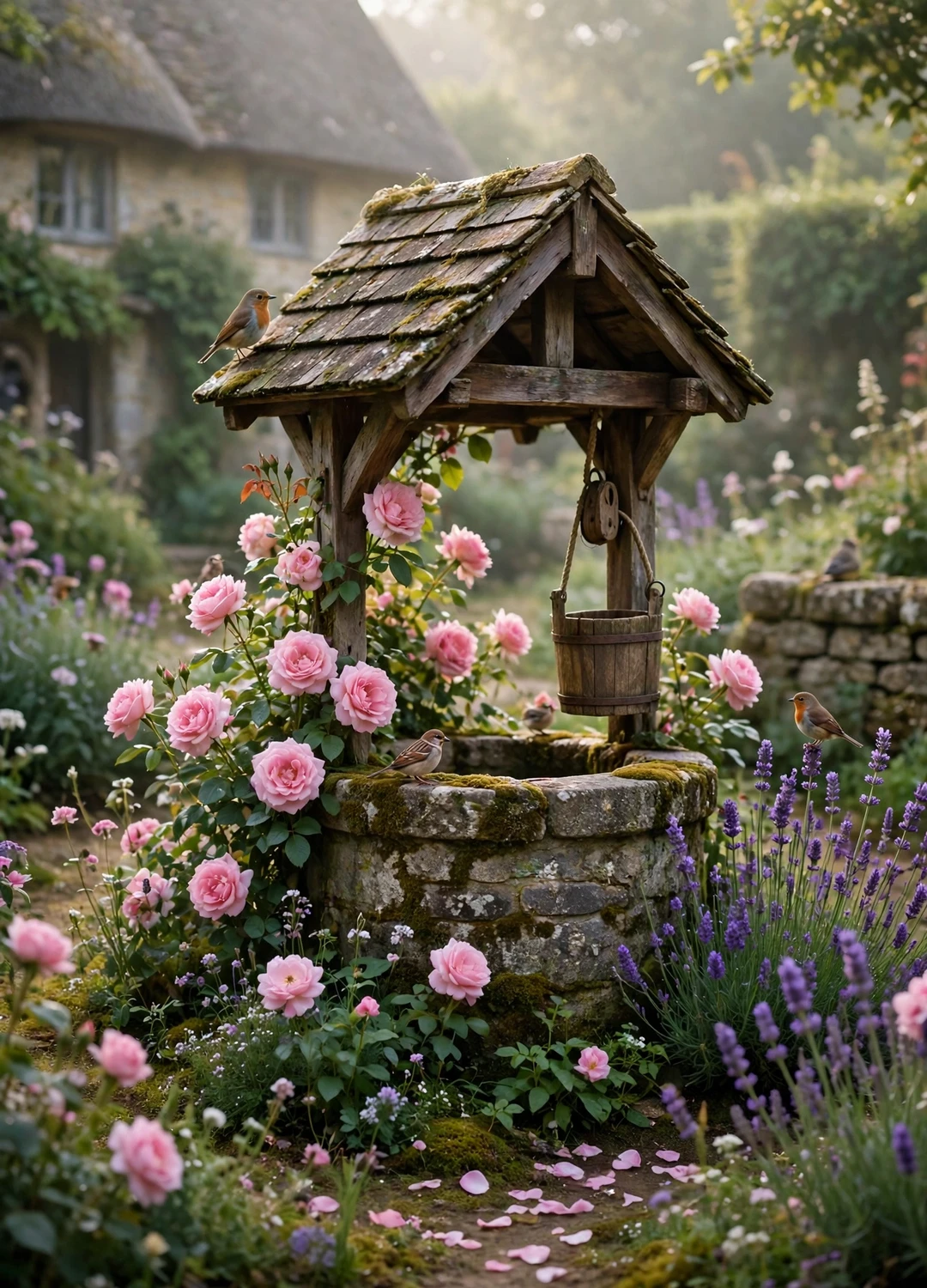
A wishing well is the most storybook object a garden can hold. A small stone well with a little wooden roof, tucked among the roses, needs no real water to work its magic — it is a piece of the fairytale itself. An old stone trough or a half-barrel pond does the same job: a small, old, watery thing that looks as if it has always been there.
Why It Works
A well or trough gives the garden a focal point with a story attached to it. People stop, look, and smile — and children will invent a wish on the spot. It also adds the sound and sparkle of water, and a place for birds to drink, which brings the garden to life.
Best for
A sunny spot in the middle of the garden, or at the end of a path where the eye naturally lands. A small well suits a small garden; it should feel like a discovery, not a monument.
Styling Tips
Surround the well with low, soft plants — lavender, thyme, and small geraniums — and let a climbing rose grow up the little roof. If you use a trough or barrel as a pond, add a water lily and a few stones for bees to land on. Never use chemicals in garden water — the birds and frogs are the point.
6. Fairy Lights in the Trees and Over the Path
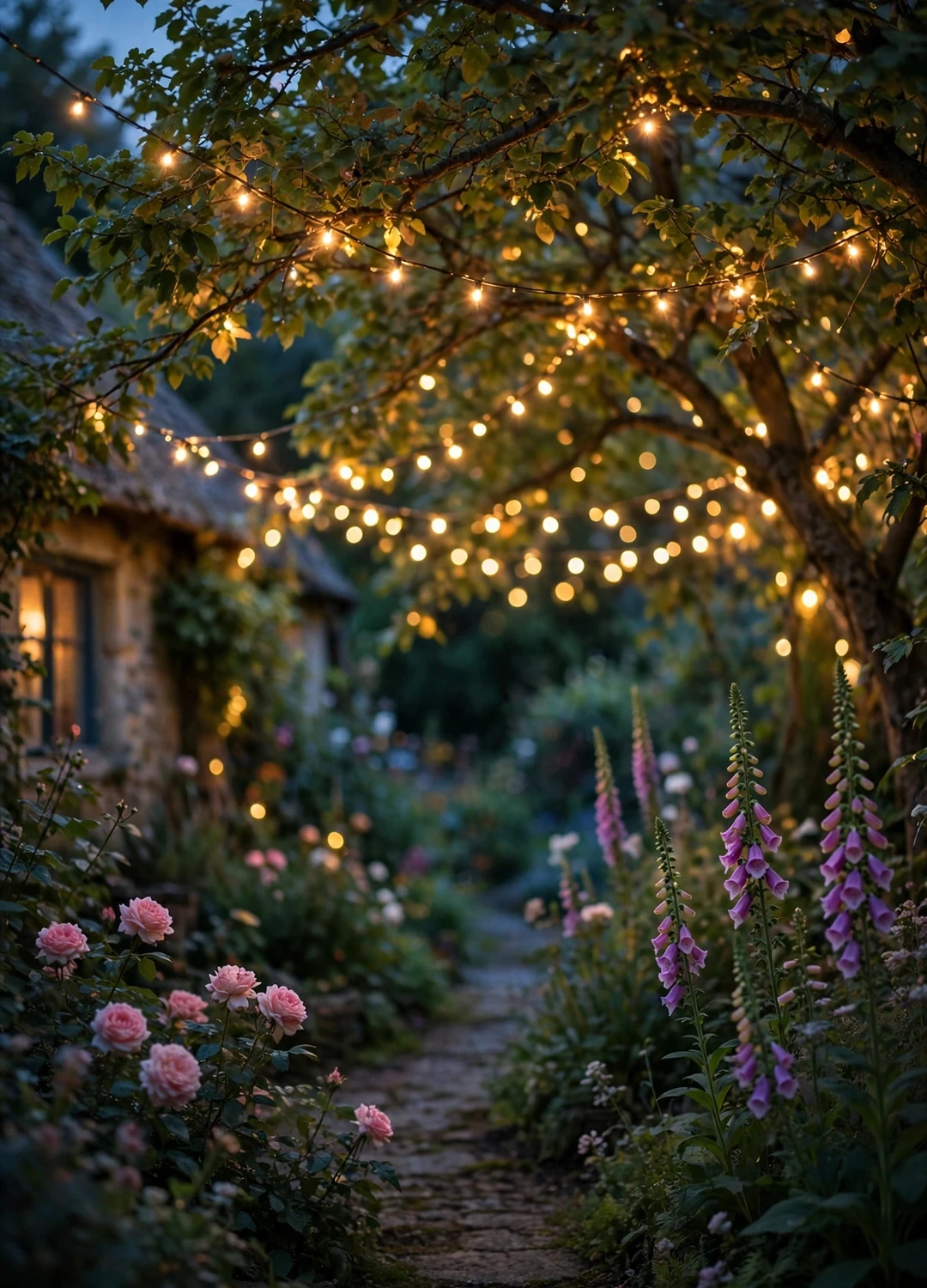
A fairytale garden does not go to sleep at dusk — it lights up. Warm fairy lights strung through a tree, along a fence, or over the path turn an ordinary summer evening into something magical. Choose warm white lights, not bright white, and let them glow softly among the leaves. Solar-powered strings work well and need no wiring.
Why It Works
Lights change the garden after dark, when the flowers are only shadows and the scent of honeysuckle is at its strongest. A softly lit garden feels enchanted in a way no daylight garden can match. It also stretches the time you spend outside — dinner in the garden, a glass of something cold, and the lights coming on as the sky darkens.
Best for
A tree over the seating area, the arbour over the path, or the fence along the back border. A few well-placed strings beat a whole garden full of lights — the magic is in the glow, not the brightness.
Styling Tips
Hide the wire among the branches so the lights seem to float, and use a timer so they come on at dusk by themselves. Pair them with candles in jam jars on the table for a soft, flickering light at ground level. For warm light inside the cottage too, see our English cottage style ideas.
7. A Little Bridge Over a Stream or Rill
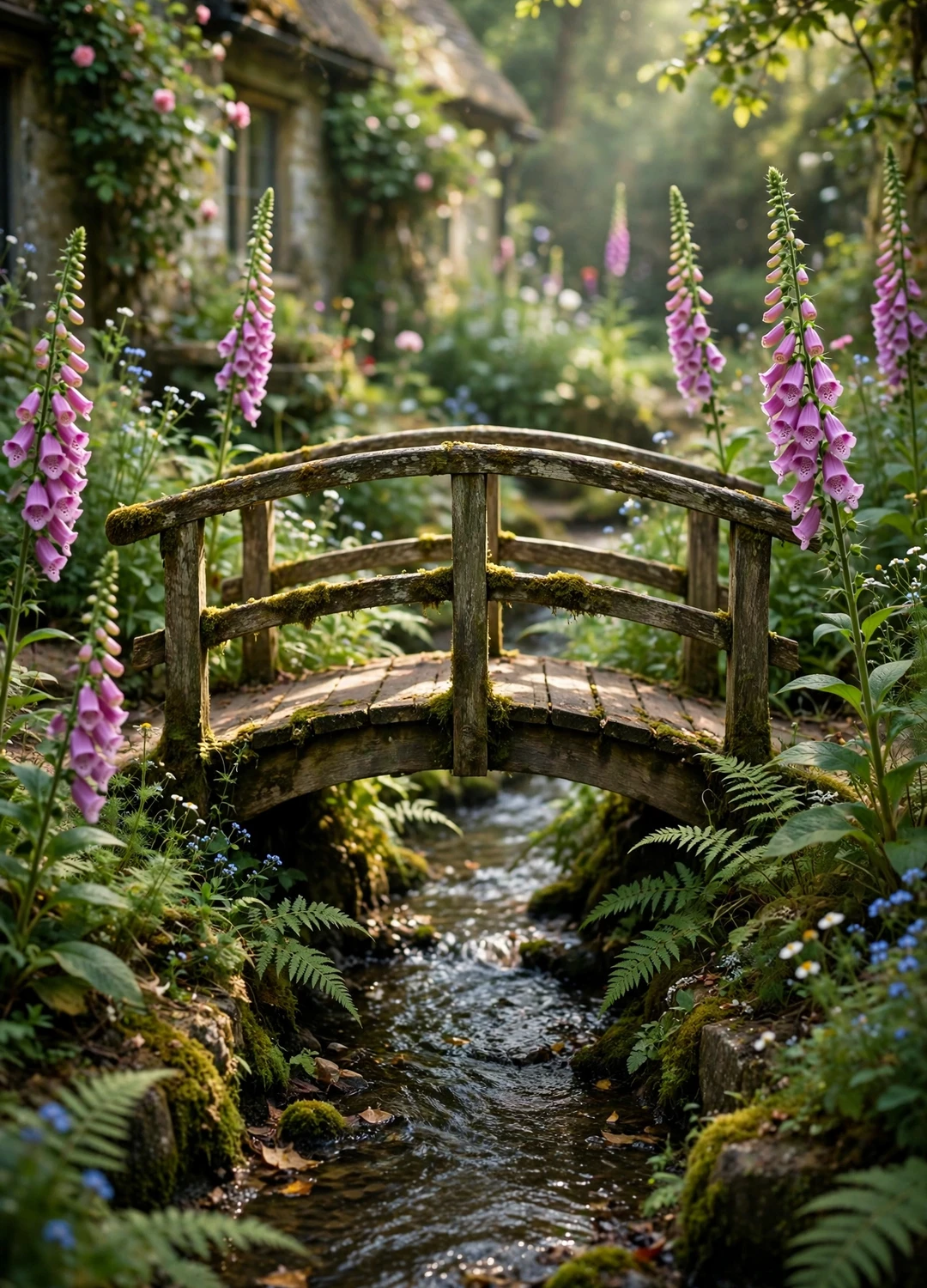
If your garden has even a narrow stream, a ditch, or a dry hollow, a little arched bridge turns it into a fairytale. A simple wooden bridge — just a few planks over a rill, with a low rail — is the kind of thing you find in storybooks, and it works just as well in a real garden. No stream at all? A dry gravel "stream" with a bridge over it gives the same feeling.
Why It Works
A bridge gives the garden a crossing, and a crossing is a story: you go from one side to the other, from the known part of the garden to the unknown. It also adds height and a view — stand on the bridge and you see the garden differently. The sound of water underneath, even a small trickle, makes the whole garden feel calm.
Best for
Any low, damp spot, or anywhere you can run a narrow rill or a gravel stream bed. A small bridge suits a small garden; it should feel handmade, not grand.
Styling Tips
Plant ferns, hostas, and moisture-loving plants on the banks, and let moss grow on the bridge itself — moss is what makes it look old. Keep the bridge low and simple: weathered wood, no paint, and a rail you can lean on. If you build a real pond nearby, give it a shallow, sloping side so frogs can climb out.
8. Toadstools and a Mossy Woodland Corner
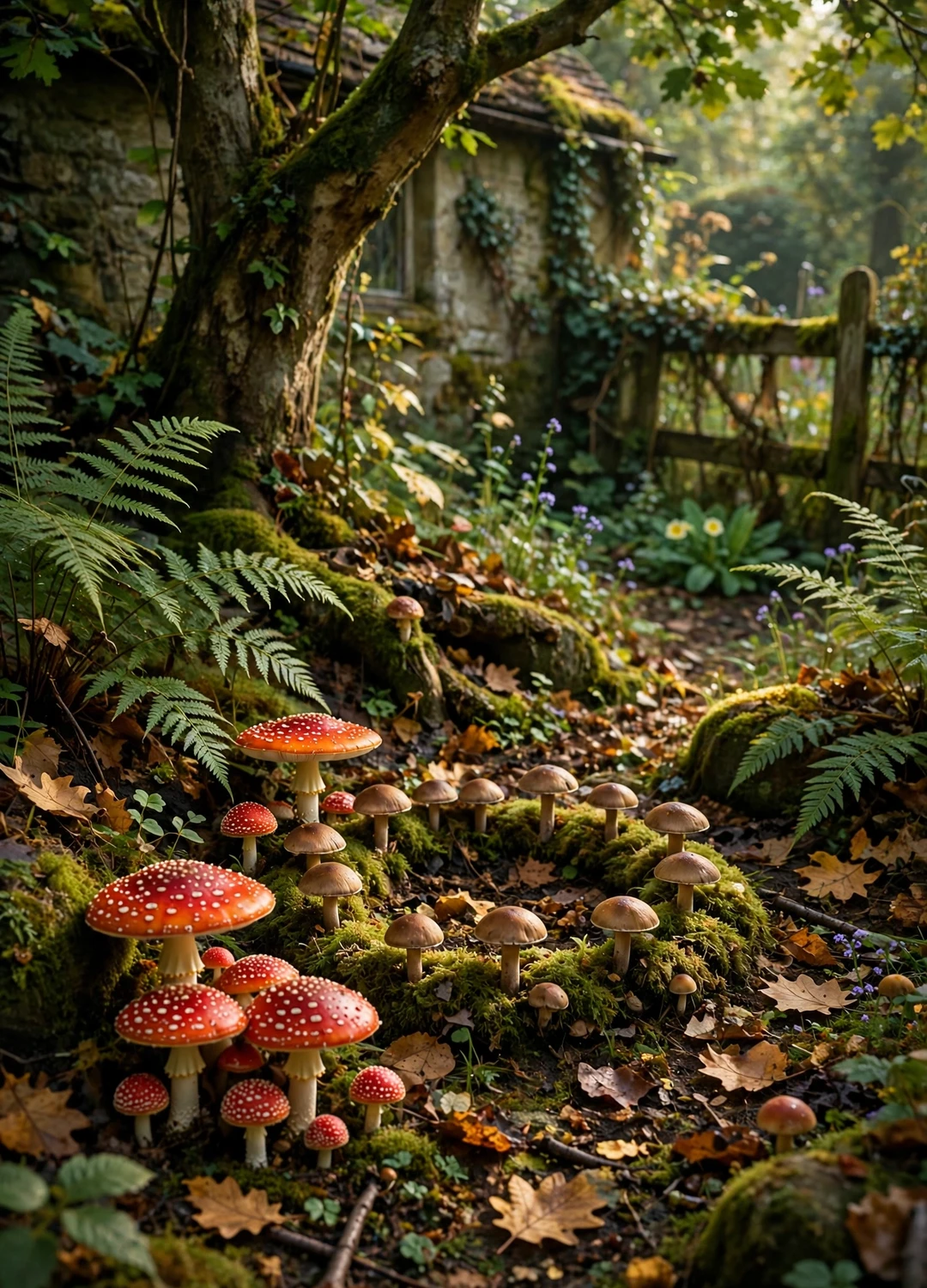
Every fairytale garden needs one corner that belongs to the fairies. A shady, mossy spot under a tree, with ferns, a log or two, and a few toadstools — real ones in autumn, or small stone or ceramic ones all year — is that corner. It costs almost nothing, it takes no work, and children (and grown-ups) will love it.
Why It Works
The woodland corner gives the garden its wild, enchanted side. The tidy borders look even better next to one patch that is allowed to be free and a little bit mysterious. It is also genuinely good for wildlife: logs shelter beetles, moss holds moisture, and ferns give frogs somewhere cool to hide.
Best for
A shady corner under a tree, behind the shed, or at the far end of the garden. It does not need to be big — even a square metre of moss, ferns, and toadstools is enough.
Styling Tips
Let the moss grow and leave fallen leaves where they fall — they are shelter, not mess. Tuck a few small toadstools among the ferns, and add a tiny stone seat or a bird box on the tree above. Resist the urge to tidy the corner in autumn; much of the wildlife is sleeping in there.
9. A Secret Seat or Reading Nook
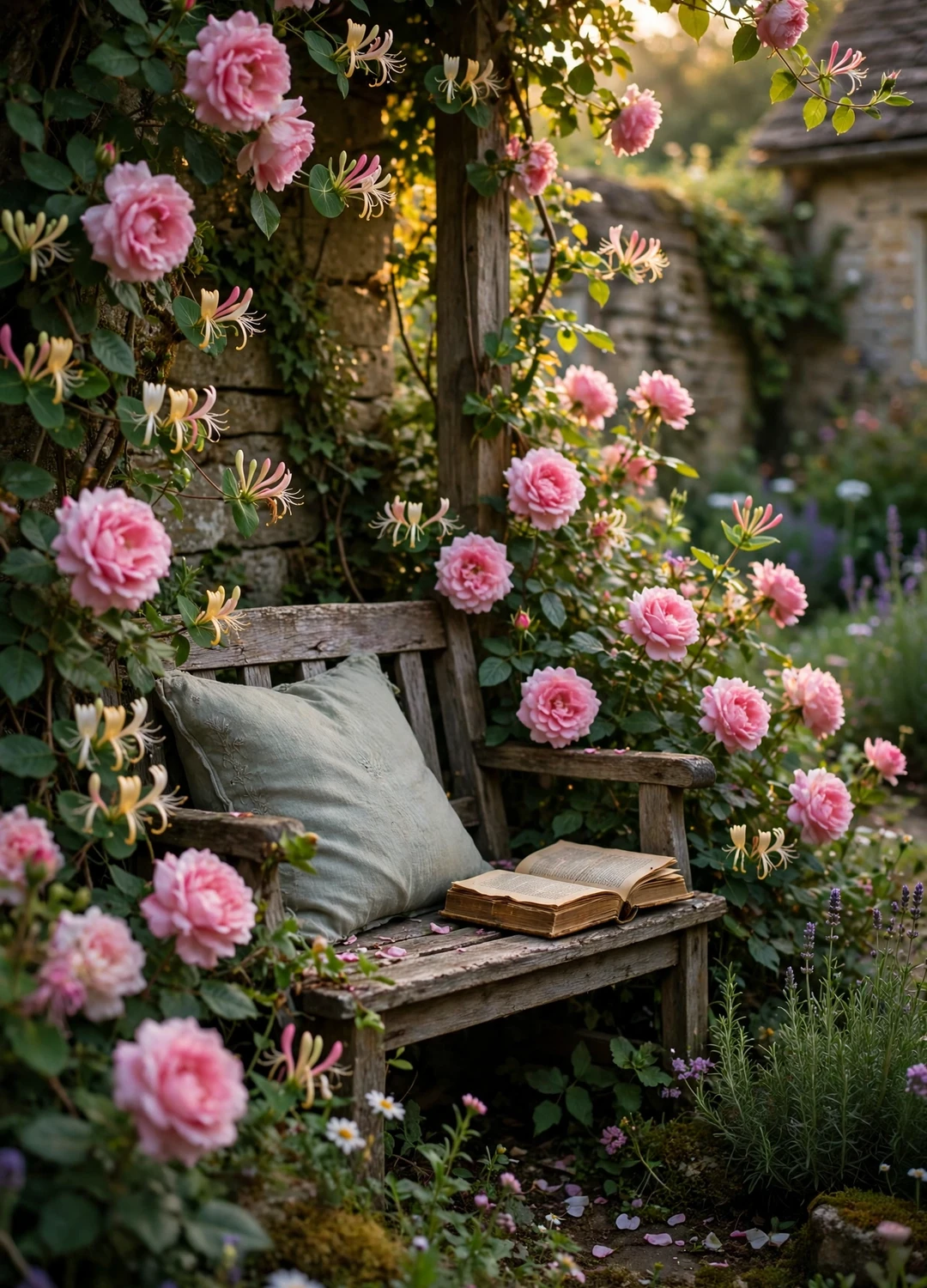
A fairytale garden needs somewhere to sit that feels like a secret. A small wooden bench or an old iron chair, tucked behind tall roses or under a tree, half hidden from the house, is the perfect reading nook. Put it where the view is best — facing the cottage, the roses, or the evening sun — and let the plants grow around it so it feels discovered rather than placed.
Why It Works
A hidden seat turns the garden from something you look at into somewhere you spend time — and somewhere that feels like yours alone. It also gives the garden a destination: a bench at the end of a winding path draws the eye and gives the whole layout a place to arrive at.
Best for
A sunny corner at the end of a path, under a tree, or against a wall with roses above it. A seat that is slightly hidden is always more magical than one in the middle of the lawn.
Styling Tips
Choose wood or wrought iron, not plastic — the material matters as much as the shape. Add a cushion in a floral outdoor fabric and a small side table for a book and a cup of tea. Leave the bench to weather naturally; a little silver-grey on old wood suits a storybook garden perfectly. For more on choosing and styling cottage garden features, see our English cottage garden post.
10. Climbing Roses and Honeysuckle Over the Door
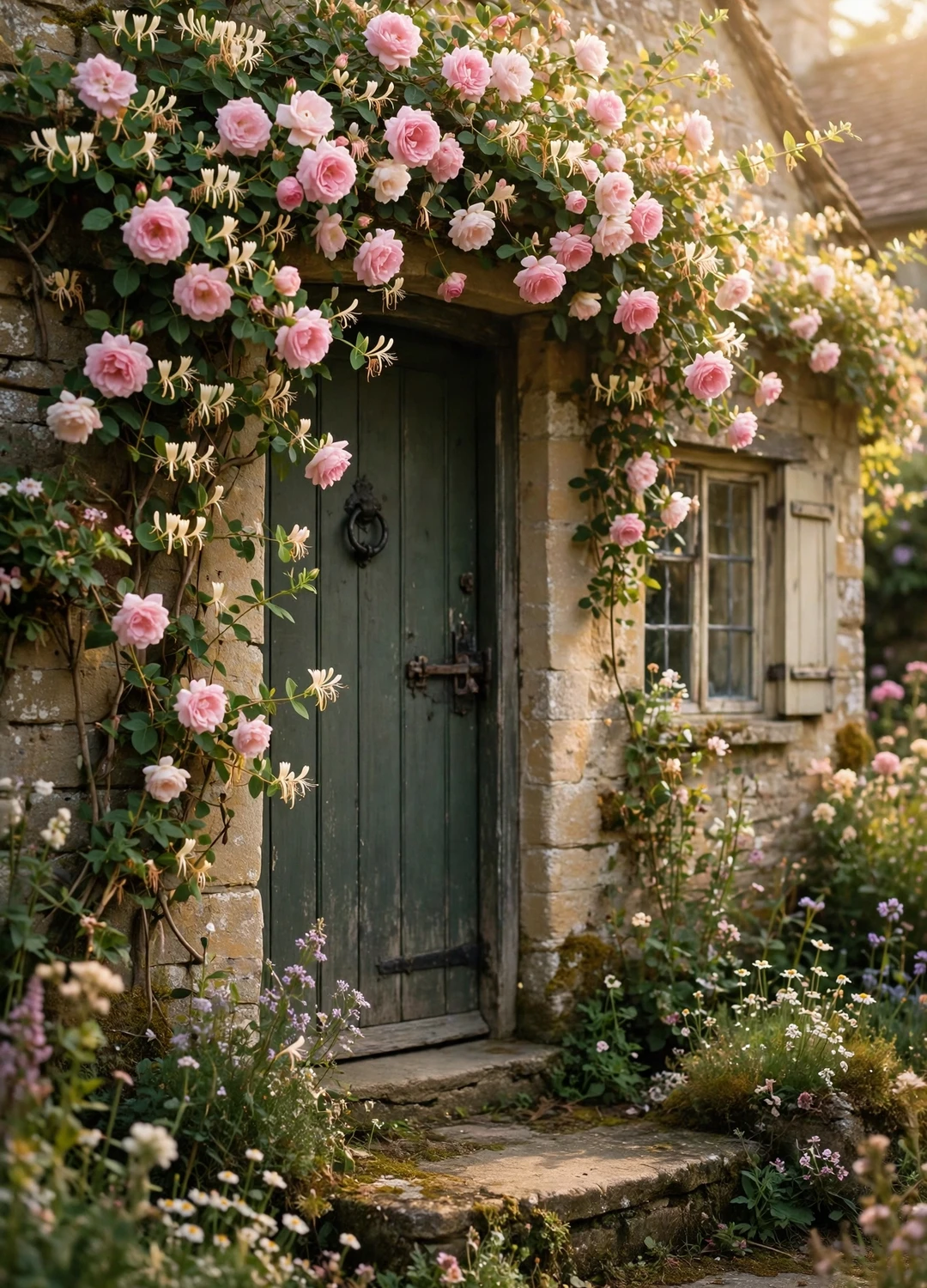
Roses over the door are the single most loved image of the English cottage garden — and they are the fairytale in miniature. A climbing rose on one side of the door and honeysuckle on the other frames the entrance in flowers and scent, so every arrival and every goodbye happens under roses. Choose a repeat-flowering rose in soft pink or cream, and a honeysuckle that fills the evening air with scent.
Why It Works
The doorway is the first thing you see and the last thing you leave, so it sets the tone for the whole garden. Roses over the door blur the line between house and garden, and they give the cottage its storybook face. Honeysuckle adds the scent that makes summer evenings unforgettable.
Best for
Any sunny doorway. Roses want sun and air, so give them a trellis or wires to climb on and room to breathe.
Styling Tips
Plant climbers at least 30 cm out from the wall, where the rain can reach them, and water well in the first year. Prune roses after flowering and honeysuckle in late winter. If you want the full list of cottage climbers and flowers, our plants for an English cottage garden post lists 12 classics that suit a rose-covered doorway.
11. A Wildflower Meadow Edge
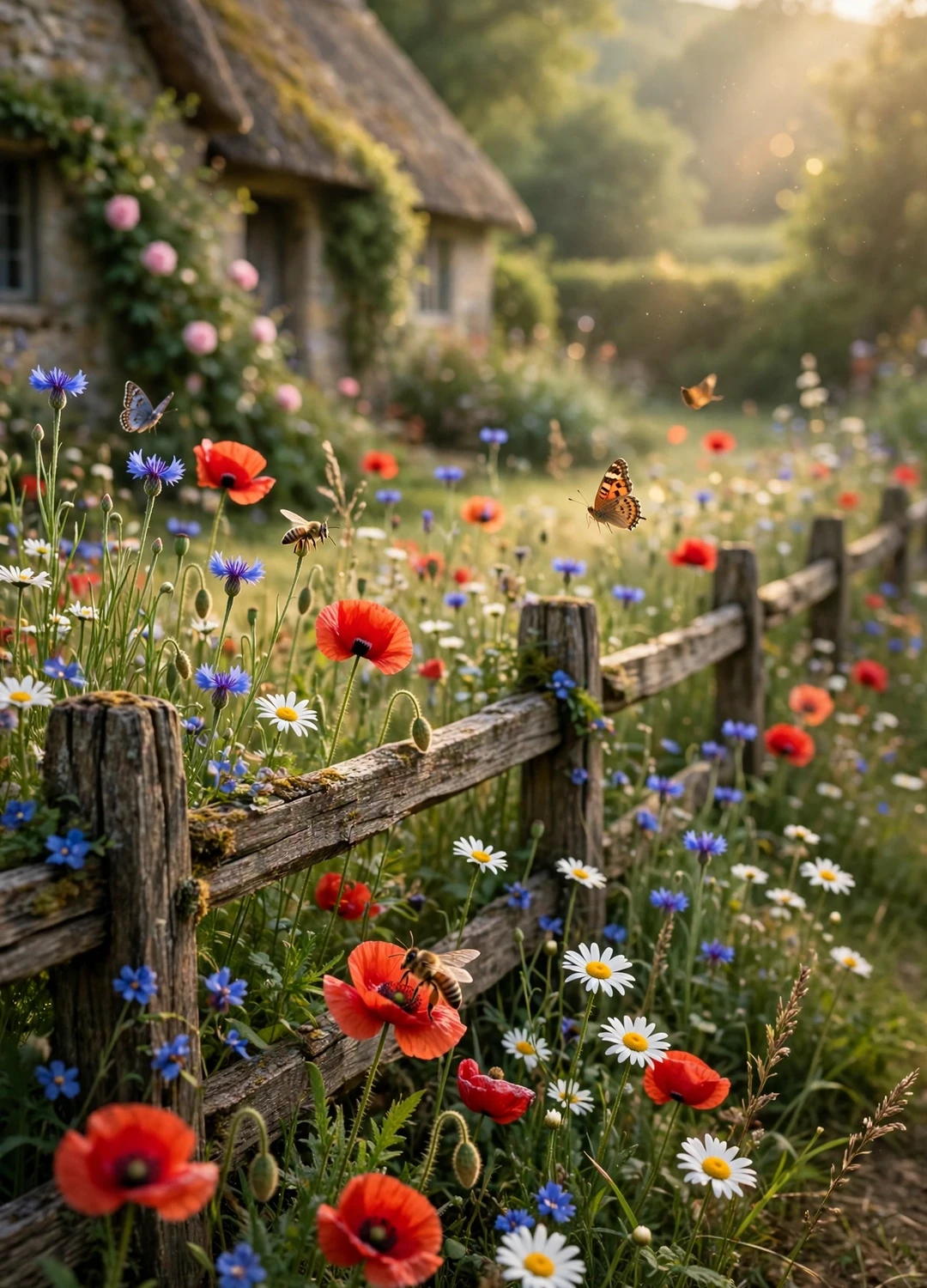
At the far edge of the fairytale garden, the flowers stop being planted and start being wild. A strip of wildflowers — poppies, cornflowers, oxeye daisies, and buttercups — along a fence or at the bottom of the garden gives the plot its storybook ending: the garden dissolving into meadow. It is the easiest part of the garden to grow and the best for bees and butterflies.
Why It Works
A wildflower edge makes the garden feel like it belongs to the countryside, not just to the house. It brings in pollinators, it changes every year as different flowers take their turn, and it costs almost nothing — a packet of seed scattered on bare soil in autumn or spring is all it takes.
Best for
A sunny strip along a fence, the bottom of the garden, or anywhere the lawn meets the hedge. Even a metre-wide strip carries the look.
Styling Tips
Sow on poor, bare soil — wildflowers do badly in rich soil, where grasses take over. Cut the strip once a year, in late summer, and leave the cuttings for a week so the seed drops before you clear them. Leave a few seed heads standing over winter for the birds.
12. Lanterns, Candles and Dusk Magic
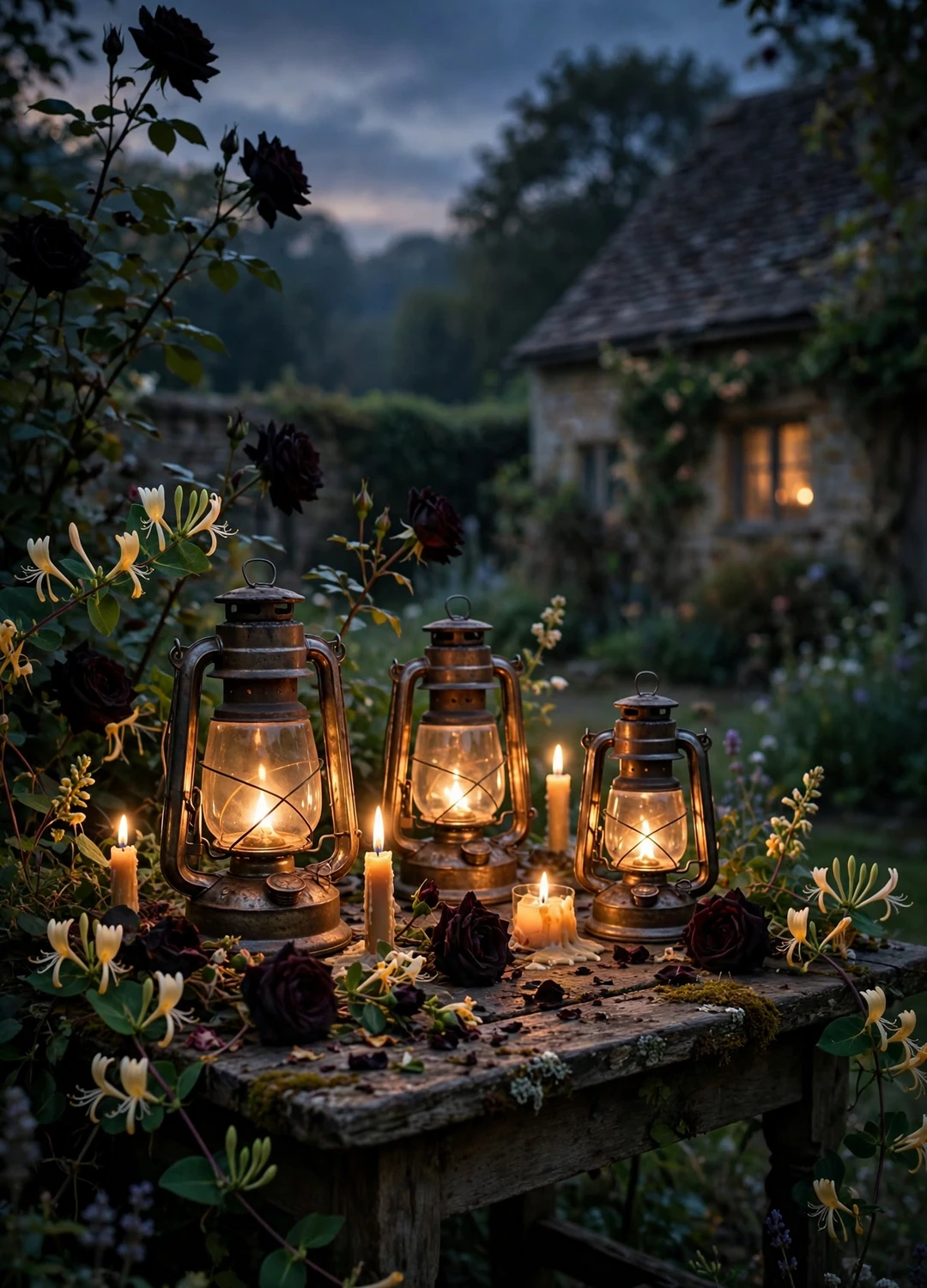
The fairytale garden comes alive at dusk. Old lanterns on the table, candles in jam jars along the path, and a hurricane lamp by the door turn an ordinary summer evening into a scene from a storybook. The light is soft and low, the roses are dark against the sky, and the honeysuckle smells stronger than it does all day.
Why It Works
Low, warm light is what makes a garden feel enchanted. Bright lights kill the magic; a few small flames and glowing lanterns make it. Dusk is also when the garden's scent peaks and the moths and bats come out — the fairytale garden is a garden for the evening as much as for the day.
Best for
The seating area, the path from the door to the garden, and the table where you eat outside. A few lanterns in the right places beat a whole garden full of lights.
Styling Tips
Use real candles in jars with lids, or battery candles if the wind is strong, and keep them away from dry leaves. Pair the lanterns with the fairy lights in the trees for a soft glow at two heights — low on the table, high in the branches. And leave a lantern by the door, so the way home is always lit.
Start with One Storybook Touch, Then Let It Grow
A fairytale garden is not built in a weekend — and that is the point. Start with one touch from this list: a rose by the door, a winding path, or a bench hidden among the flowers. Plant it well, enjoy it for a season, and add the next touch when you are ready. The garden will tell you what it wants next: a gap where a rose could climb, a corner where a lantern could glow, a bare patch where wildflowers could go in autumn. That slow, steady growth is how the great storybook gardens were made — one plant, one season, one idea at a time.
More Cottage Ideas
Frequently Asked Questions
What is a fairytale English cottage garden?
A fairytale English cottage garden is a storybook-style cottage garden: a small cottage softened by climbing roses, winding paths that disappear behind tall flowers, hidden gates and seats, and touches like a wishing well, fairy lights, and lanterns at dusk. It is the same informal, flower-filled English cottage garden, with a little more mystery and magic.
How do I make my garden look like a fairytale cottage garden?
Start with the doorway: climbing roses and honeysuckle over the door, and a winding path to it. Add tall, romantic flowers like roses, foxgloves, and hollyhocks, a hidden seat or gate, and warm lights for the evening. Let the plants spill over the path and keep the lines soft — nothing straight, nothing tidy.
What plants are best for a fairytale cottage garden?
Climbing roses, honeysuckle, foxgloves, hollyhocks, lavender, delphiniums, peonies, clematis, and hardy geraniums are the classics. Mix them with wildflowers like poppies and cornflowers at the edges, and let a few self-seed each year so the garden feels as if it planted itself.
Can I create a fairytale cottage garden in a small space?
Yes. A fairytale garden works in a tiny plot or even in pots. A rose in a large pot by the door, a few foxgloves and lavender, a small bench tucked in a corner, and a string of fairy lights are enough to carry the look. Use the walls for climbers so the ground stays free for flowers.