12 English Cottage Garden Flowers
English Cottage Garden
12 English Cottage Garden Flowers
A cottage garden is really a garden of flowers. The roses climb, the foxgloves tower, and the paths disappear under clouds of sweet peas and cosmos. These 12 flowers give you that look — colour from spring to frost, scent in the air, and plenty to cut for the house.
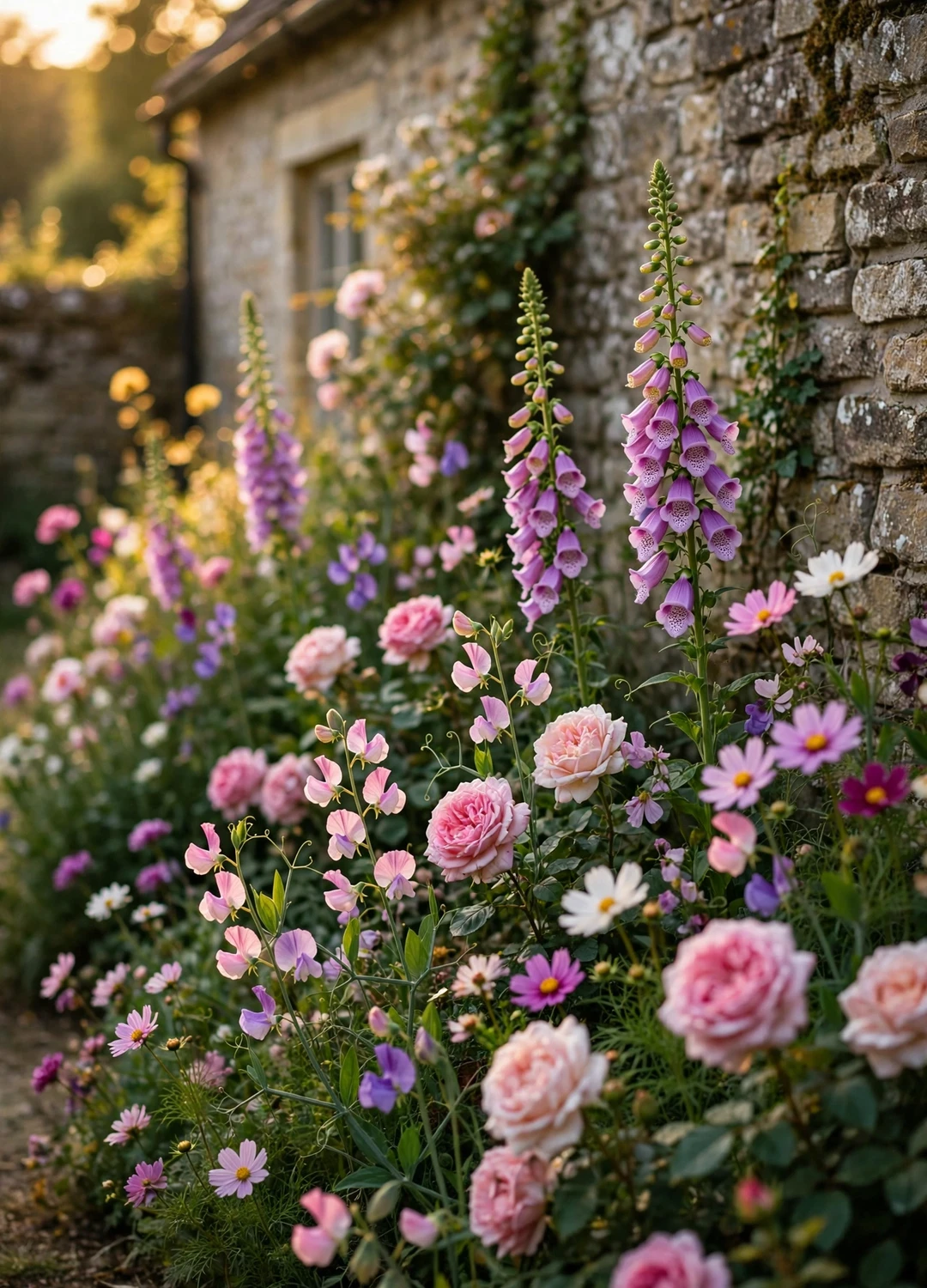
Roses, foxgloves and sweet peas — the flowers that make a cottage garden.
The trick with cottage garden flowers is mixing the long-lived ones with the quick ones. Perennials and biennials like roses, foxgloves, and hollyhocks give you the backbone that comes back every year. Annuals like cosmos, poppies, and cornflowers fill the gaps, flower for months, and sow themselves for next year. Put the two together and the garden never has a dull week. Most of the flowers below want full sun and soil that drains well, and nearly all of them are loved by bees.
1. Roses
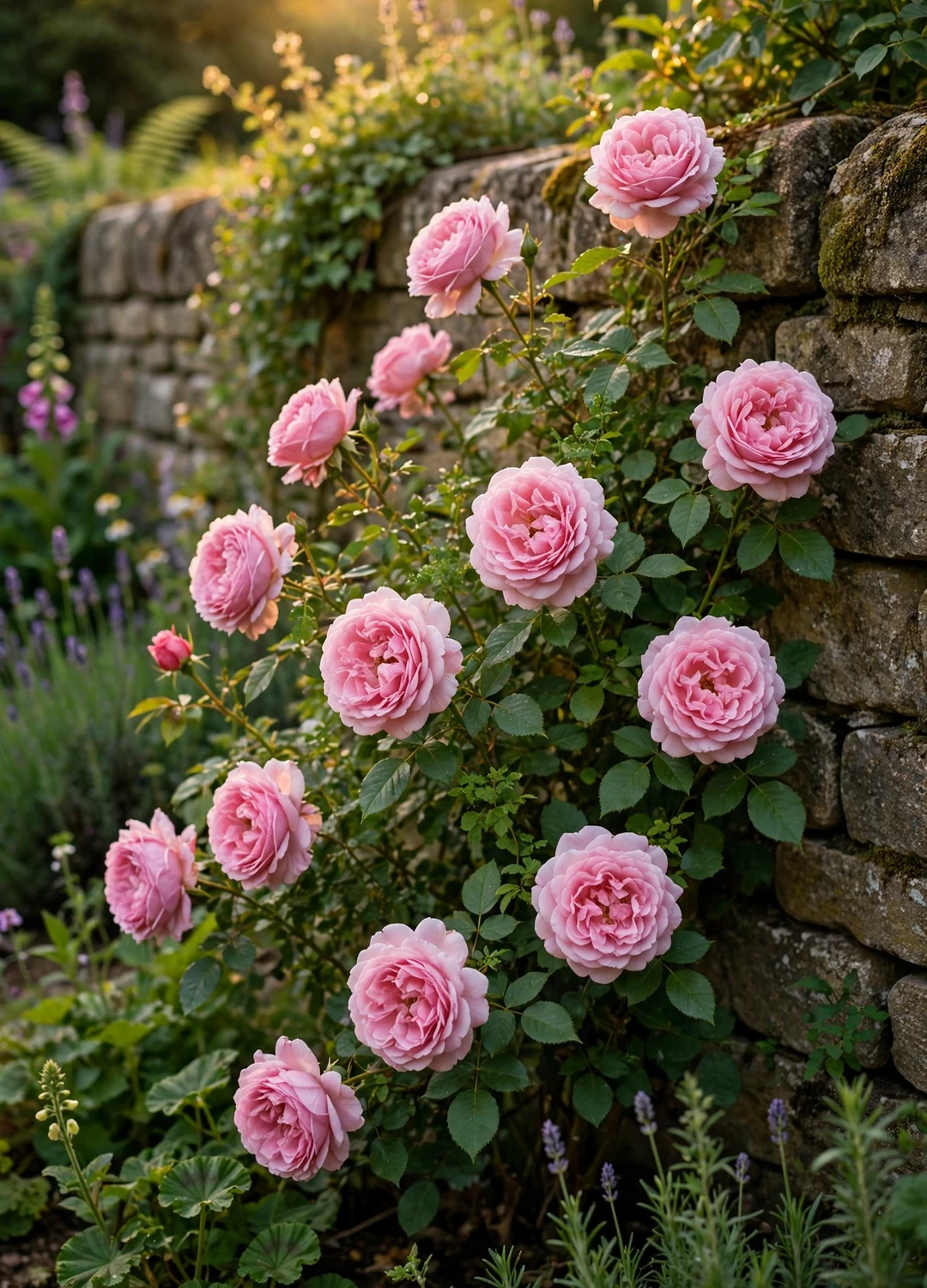
Roses are the heart of the cottage garden flower show. Old-fashioned shrub roses and climbers open cup-shaped, scented blooms from early summer into autumn, and no other flower gives you that same mix of romance and perfume. David Austin English roses like 'Gertrude Jekyll' were bred for exactly this look — full, old-fashioned flowers with a strong scent.
Why It Works
Roses flower for months, smell wonderful, and look right against old brick, wood fences, and stone walls. They are also the best cottage flower for cutting — a few stems in a jug on the kitchen table is the whole cottage look in miniature.
Best for
Full sun and well-drained soil. Grow shrub roses in the middle of the border and climbing roses over arches, doorways, and fences. They pair beautifully with lavender planted at their feet.
Styling Tips
Choose repeat-flowering varieties so you get blooms all summer, not just one flush. 'Gertrude Jekyll' (deep pink), 'Graham Thomas' (yellow), and 'Iceberg' (white) are all reliable. Cut stems in the morning for vases, and deadhead spent flowers to keep new ones coming.
2. Sweet Peas
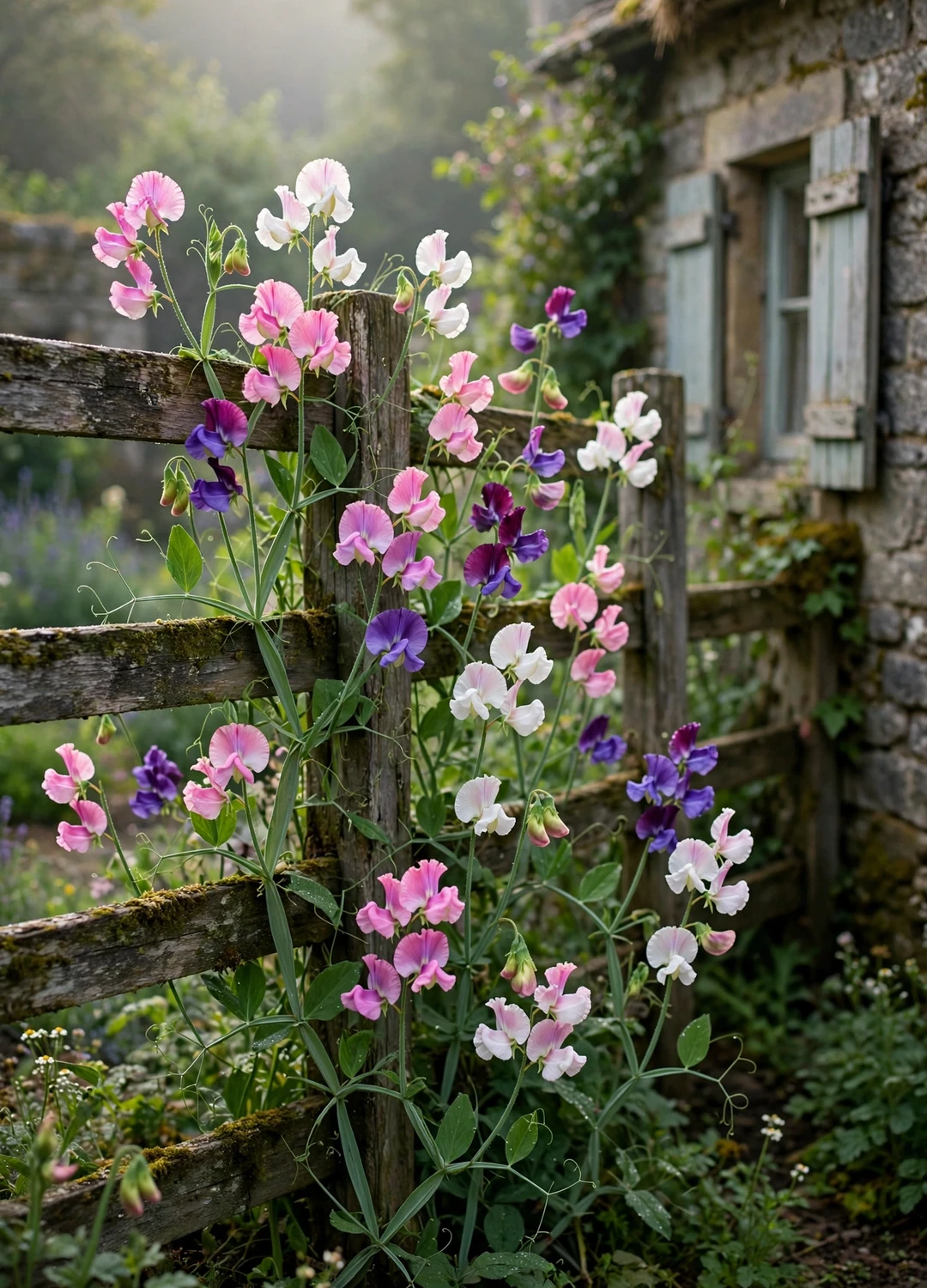
Sweet peas are the scent of a cottage garden in early summer. These climbing annuals produce clusters of ruffled flowers in white, pink, purple, and red, and their perfume is so strong you can smell it from the path. They are one of the easiest flowers to grow from seed, and they cost almost nothing.
Why It Works
Sweet peas give you height, colour, and scent in a few short weeks, and they flower better the more you pick them. A wigwam of sweet peas by the back door is a cottage garden classic.
Best for
Full sun and rich, moist soil. They like cool weather, so sow seed in autumn or early spring. Give them a wigwam, fence, or trellis to climb — they twine by themselves once they find a support.
Styling Tips
Pick flowers every few days and the plants will keep producing for weeks. 'Cupani' is the old, strongly scented variety, and 'Spencer Mix' gives you big ruffled blooms in soft colours. Grow them where you walk past often, so you catch the scent.
3. Foxgloves
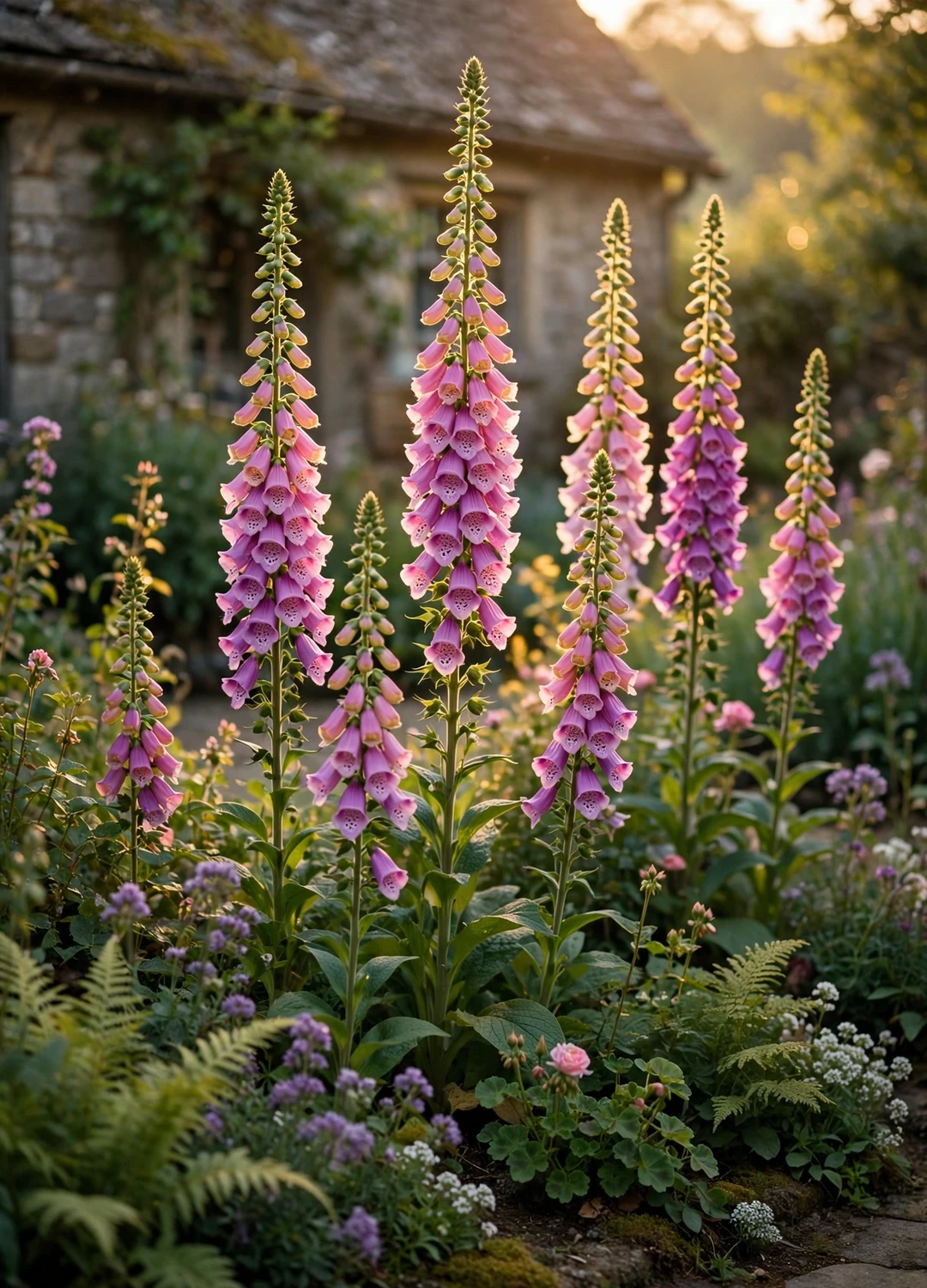
Foxgloves are the spires of the cottage garden. Their tall stems of bell-shaped flowers in pink, purple, white, and apricot rise above everything else in late spring and early summer. They are biennials, which means they flower in their second year — but they seed themselves so freely that once you have them, you have them forever.
Why It Works
Foxgloves add height and drama without taking up much ground space. They fill gaps between shrubs and bring a wild, woodland feel to the border.
Best for
Partial shade or dappled light, though they cope with sun too. They like moist, rich soil and look best scattered through the middle and back of the border rather than planted in stiff rows.
Styling Tips
Leave a few spent flower spikes standing so they drop seed — that is how you get foxgloves next year. Cut others back to encourage side shoots. One caution: every part of the foxglove is toxic, so wear gloves when you handle it and keep it away from curious children and pets.
4. Hollyhocks
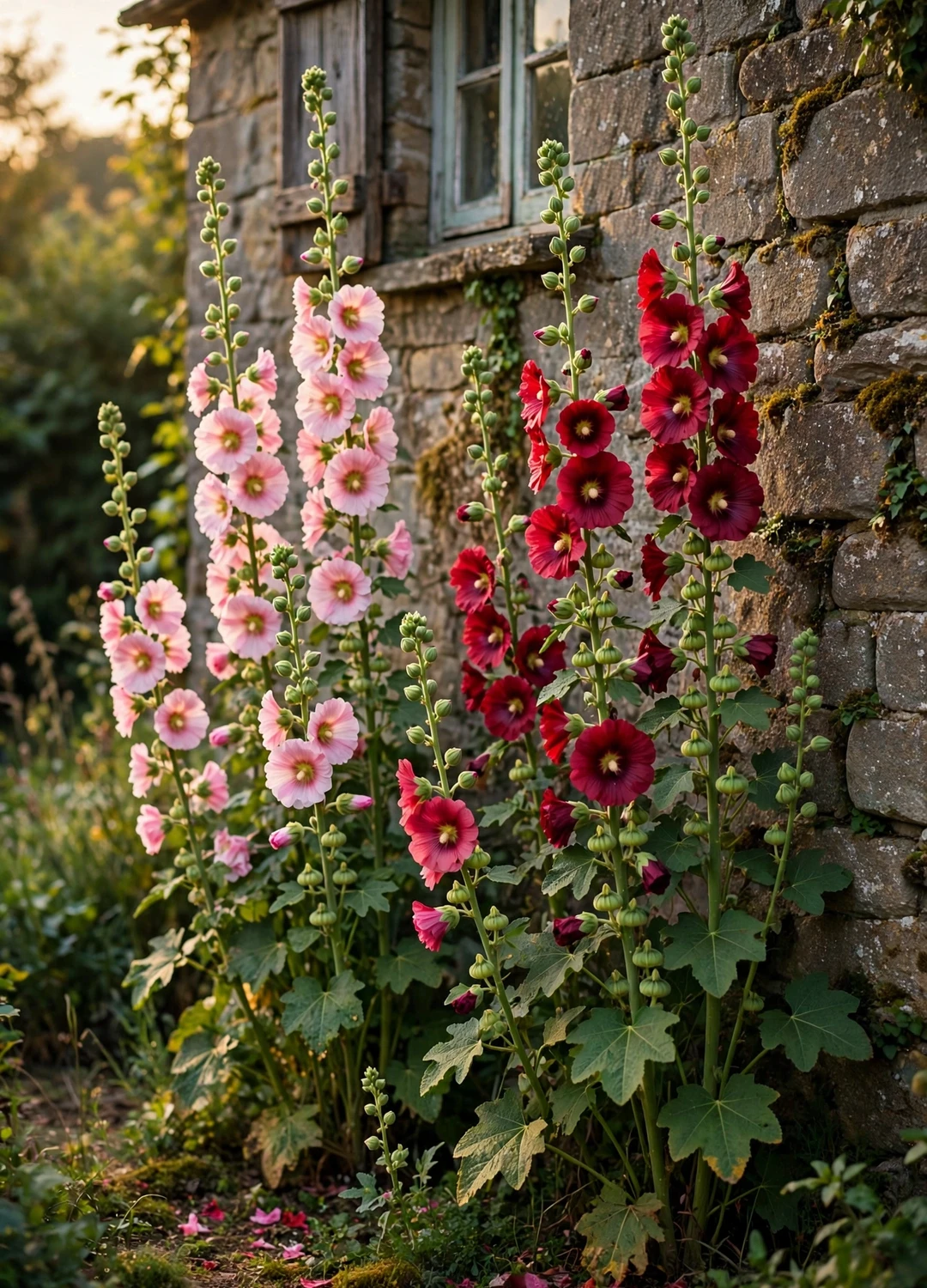
Hollyhocks are the flower towers of a cottage garden. Their stems grow 1.8 to 2.4 metres tall, covered in open flowers from near-black to soft pink and lemon yellow. Planted against a wall or fence, they turn a plain boundary into a wall of flowers.
Why It Works
Nothing else gives you that much height with so little effort. Hollyhocks frame the garden and make even a small plot feel grand.
Best for
Full sun, against walls and fences where they get shelter from wind. They are short-lived perennials that behave like biennials, but they self-seed happily, so new plants appear on their own.
Styling Tips
Choose single-flowered heritage types rather than frilly doubles — singles are tougher, resist rust better, and feed the bees. Give them space for air to circulate, and stake tall stems in exposed spots.
5. Cosmos
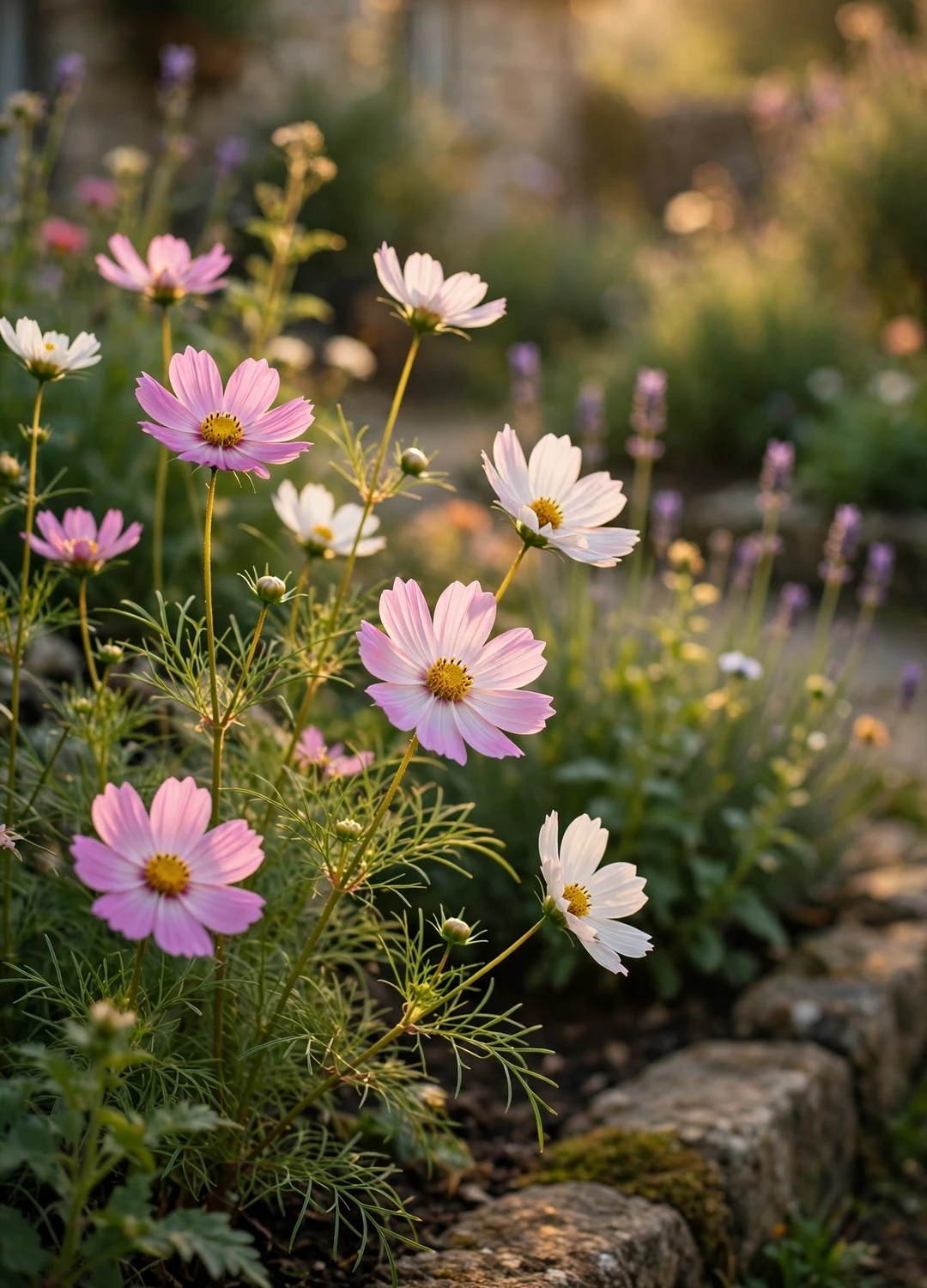
Cosmos are the easy annuals that keep a cottage garden flowering until the first frost. Their feathery foliage and daisy-like flowers in pink, white, and red float above the border on thin stems, and they ask for almost nothing — poor soil and full sun suit them fine.
Why It Works
Cosmos flower from midsummer right through autumn, long after most cottage flowers have finished. They fill gaps, soften the edges of the border, and make wonderful cut flowers.
Best for
Full sun and poor, well-drained soil — rich soil gives you leaves and few flowers. Sow seed in spring where you want them to grow, and they will often sow themselves the next year.
Styling Tips
Deadhead spent flowers and cosmos will keep blooming for months. Let a few plants set seed at the end of the season if you want them back next year. Their airy stems look best weaving through sturdier plants like roses and salvias.
6. Poppies
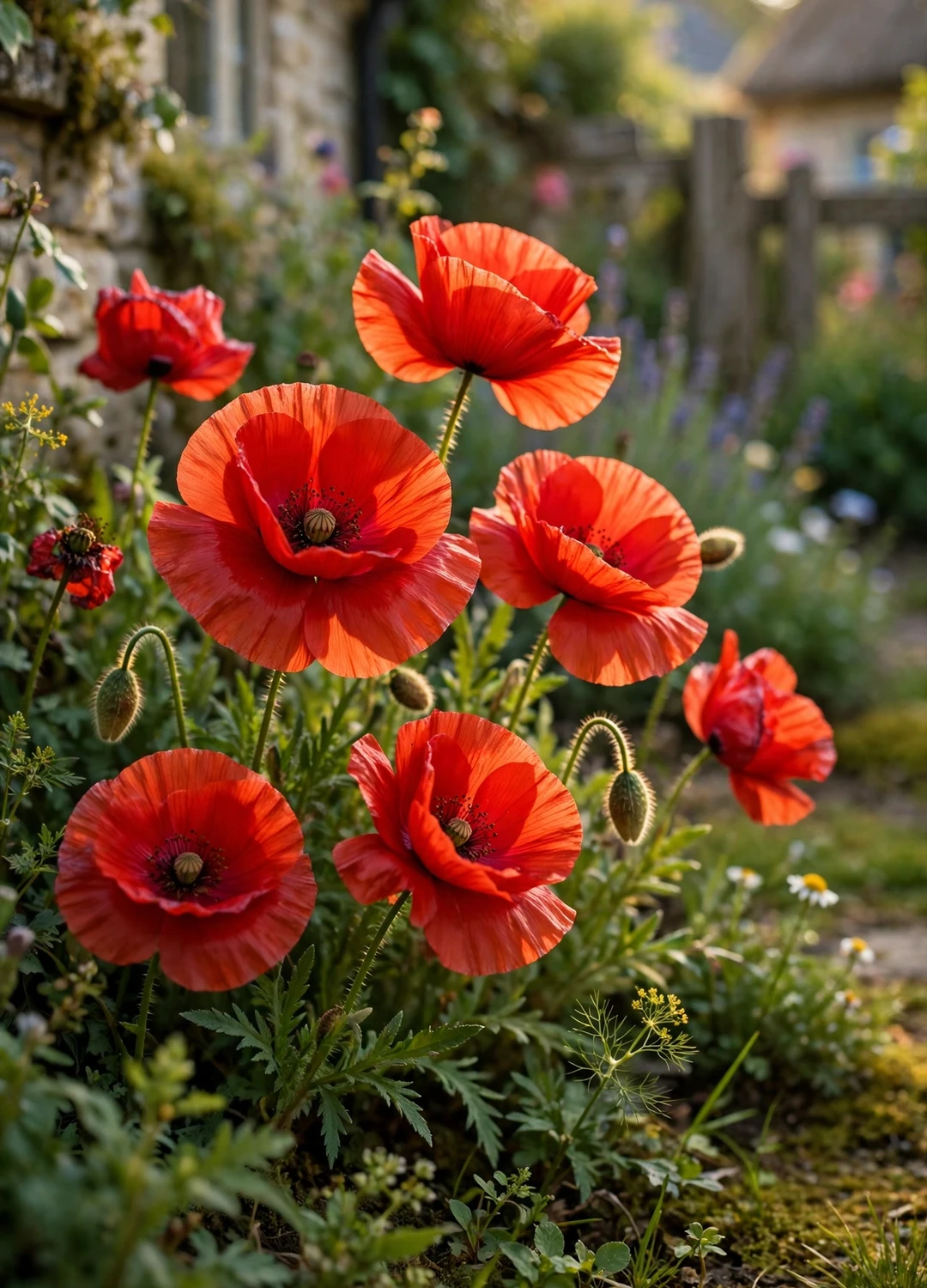
Poppies bring the wildest colour to a cottage garden. Their silky, tissue-paper petals in red, pink, orange, and white open in the sun and close at night, and each flower lasts only a day or two — but a patch of poppies keeps producing new ones for weeks.
Why It Works
Poppies add that loose, meadow feeling that makes a cottage garden look natural instead of planted. Bees love them, and they self-seed so freely that a single packet can fill a border for years.
Best for
Full sun and well-drained soil. Sow seed in spring or autumn where they are to grow — poppies hate being moved, so do not try to transplant them.
Styling Tips
Scatter seed thinly over bare soil and barely cover it — poppies need light to germinate. Let the seed heads dry on the plant if you want them to self-sow, or shake the seeds into a paper bag for sowing elsewhere.
7. Wallflowers
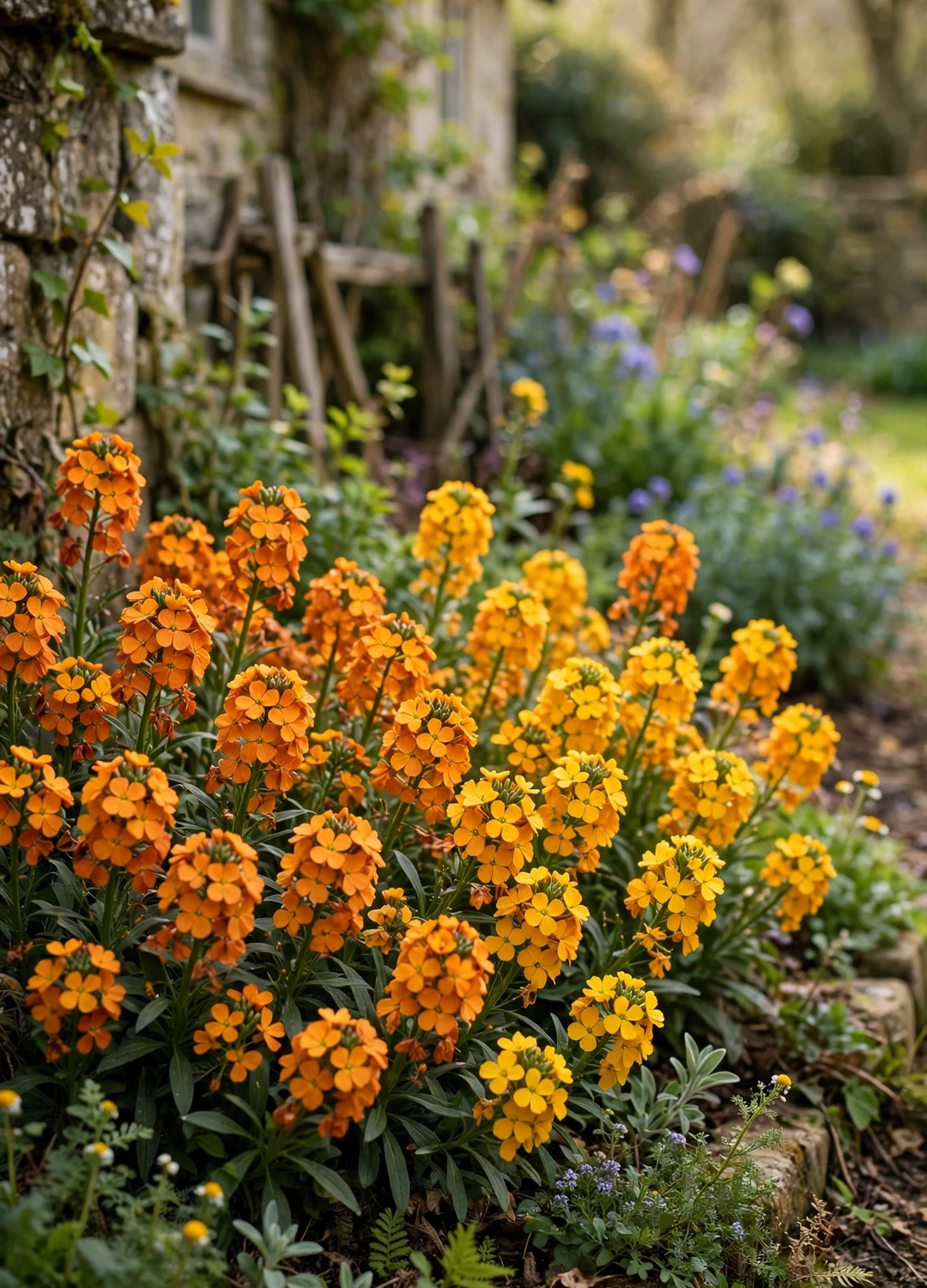
Wallflowers are the first big colour of the cottage garden year. Their clusters of four-petalled flowers in yellow, orange, red, and purple open in spring, and their sweet, spicy scent fills the garden just when you start spending time outside again.
Why It Works
Wallflowers bridge the gap between spring bulbs and summer flowers. They are cheap, cheerful, and they flower for weeks when little else is out.
Best for
Full sun and well-drained soil. They are biennials, so sow seed in summer for flowers the following spring. They look wonderful planted in drifts along the front of a border or in pots by the door.
Styling Tips
Plant wallflowers where spring bulbs are finishing — the bulbs' leaves die back just as the wallflowers hit their peak. Mix warm orange and yellow types with purple honesty for a classic spring combination.
8. Phlox
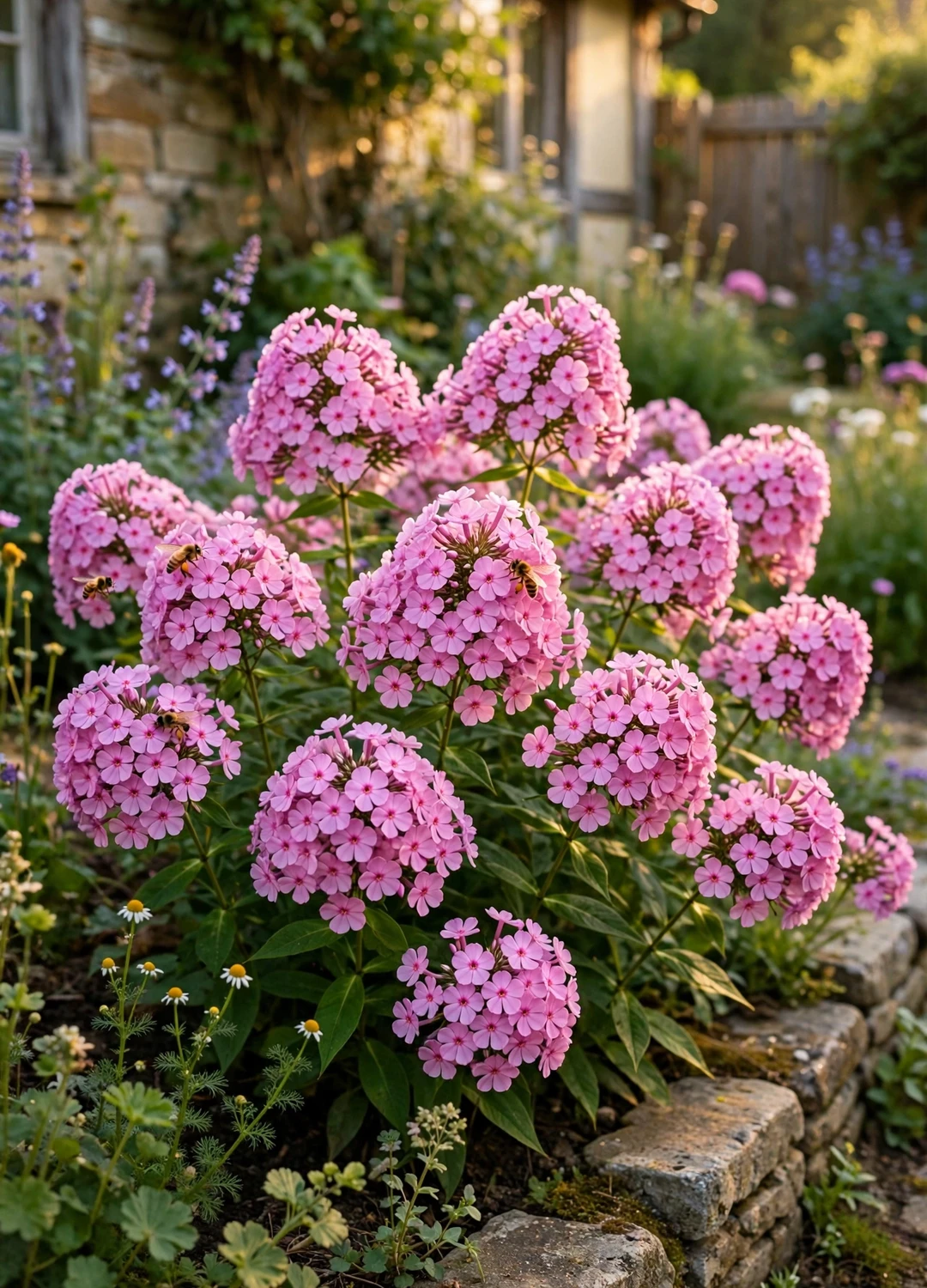
Garden phlox is the midsummer workhorse of the cottage border. Its big clusters of pink, white, purple, or red flowers open in July and August, smell sweet in the evening, and draw bees and butterflies all day long.
Why It Works
Phlox flowers for weeks at the height of summer, right when the spring flowers are over and the roses are between flushes. Its tall, sturdy stems fill the middle of the border with colour.
Best for
Full sun or light shade, in rich, moist soil. Give plants room for air to move around them — phlox can suffer from mildew if it is crowded or starved of water.
Styling Tips
Water at the base, not over the leaves, and thin out crowded clumps in spring. Deadhead spent flower heads to keep the display going, and cut stems for the house — phlox lasts well in a vase.
9. Alliums
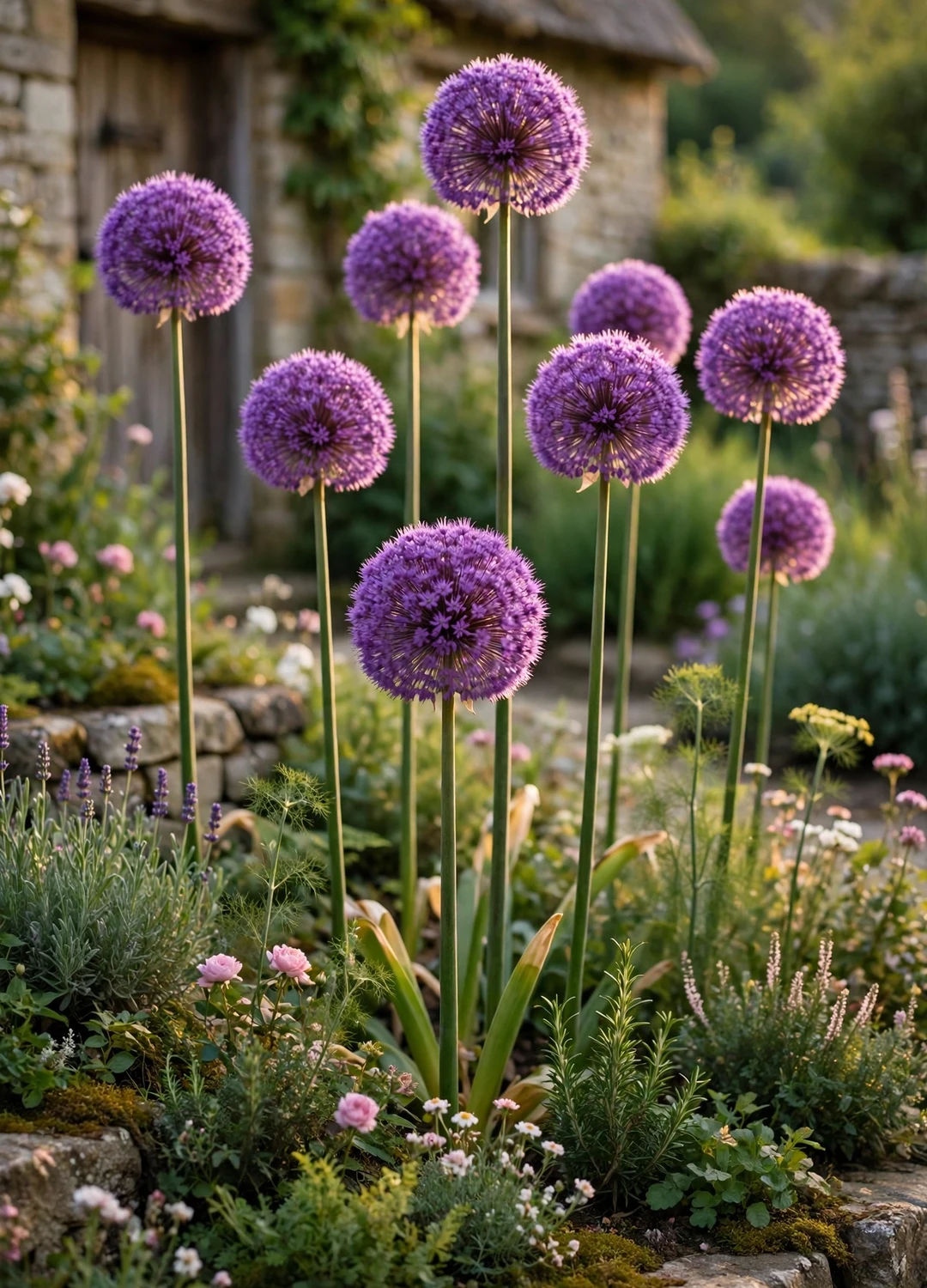
Alliums are the purple globes that float above the cottage border in late spring. Their tall, straight stems hold perfect balls of tiny star-shaped flowers, and they look almost unreal — like something from a storybook garden.
Why It Works
Alliums flower in May and June, just as the spring bulbs finish and the summer flowers are still getting going. Their round heads are a completely different shape from everything else in the border, which is what makes them stand out.
Best for
Full sun and well-drained soil. Plant bulbs in autumn, about three times their own depth. 'Purple Sensation' is the classic cottage variety, with deep violet globes on stems about 90 cm tall.
Styling Tips
Plant alliums in groups of five or more through the middle of the border, so their stems rise between other plants and hide their untidy leaves. Leave the dried seed heads standing — they look wonderful in winter, and birds eat the seeds.
10. Aquilegia
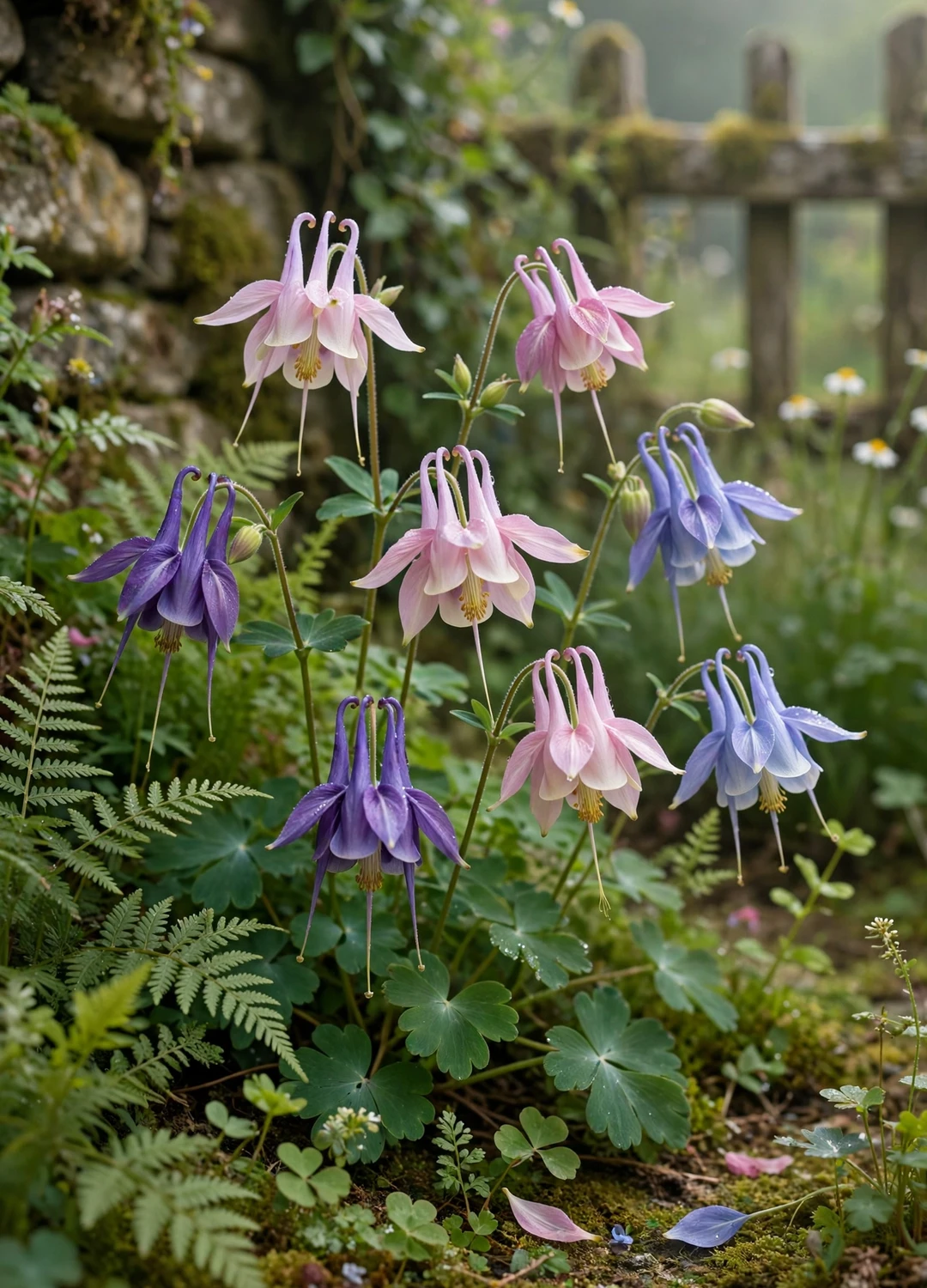
Aquilegia, or columbine, is the fairy-tale flower of the cottage garden. Its delicate, bell-shaped flowers with long spurs nod on thin stems in spring, in shades of pink, purple, blue, white, and yellow. They pop up in the most unexpected places — between paving stones, at the foot of walls, and in the cracks of old steps.
Why It Works
Aquilegia flowers in late spring, when the border is still waking up, and its soft, ferny leaves look good all season. It self-seeds everywhere, so the garden fills itself with new plants in new colour combinations every year.
Best for
Sun or partial shade, in any reasonable soil. It copes with the shade at the foot of a wall or hedge better than most cottage flowers.
Styling Tips
Let aquilegia seed where it likes — the seedlings are easy to move or pull out if they land in the wrong place. Grow it near foxgloves and wallflowers for a soft spring picture, and cut the foliage back after flowering if it gets scruffy.
11. Verbena bonariensis
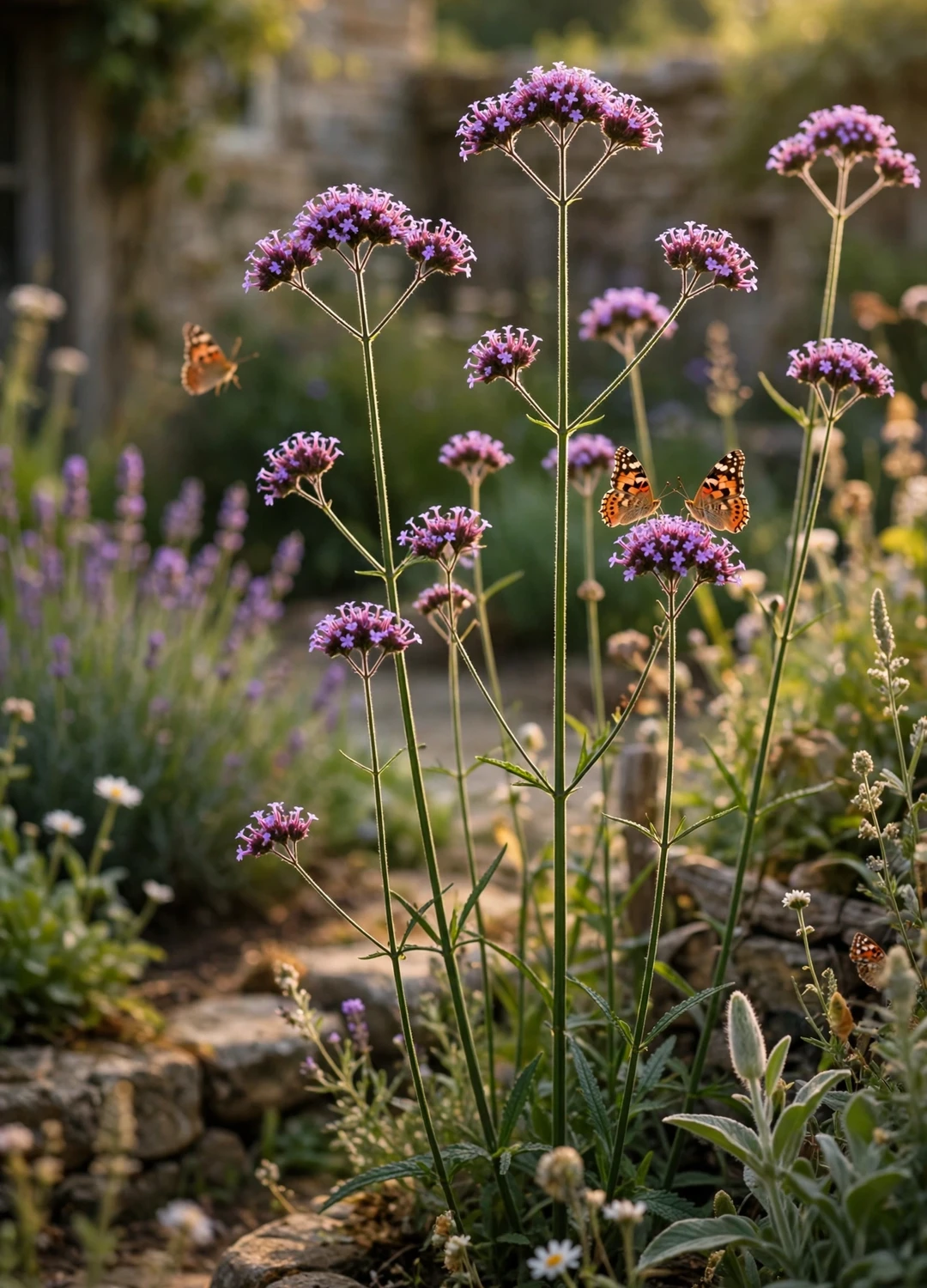
Verbena bonariensis is the airy purple flower that seems to float above the border. Its tall, wiry stems carry clusters of tiny lilac-purple flowers from midsummer until the first frost, and butterflies visit it constantly.
Why It Works
Verbena adds height without bulk — you can see through it to the plants behind, so it never blocks the view. It flowers for months and needs almost no care once it settles in.
Best for
Full sun and well-drained soil. It is a short-lived perennial in mild areas and grown as an annual where winters are cold, but it self-seeds freely, so new plants appear on their own.
Styling Tips
Plant verbena in drifts through the middle of the border, where its see-through stems soften the plants around it. Pair it with roses, cosmos, and salvias for a late-summer picture, and leave some seed heads standing for the birds.
12. Cornflowers
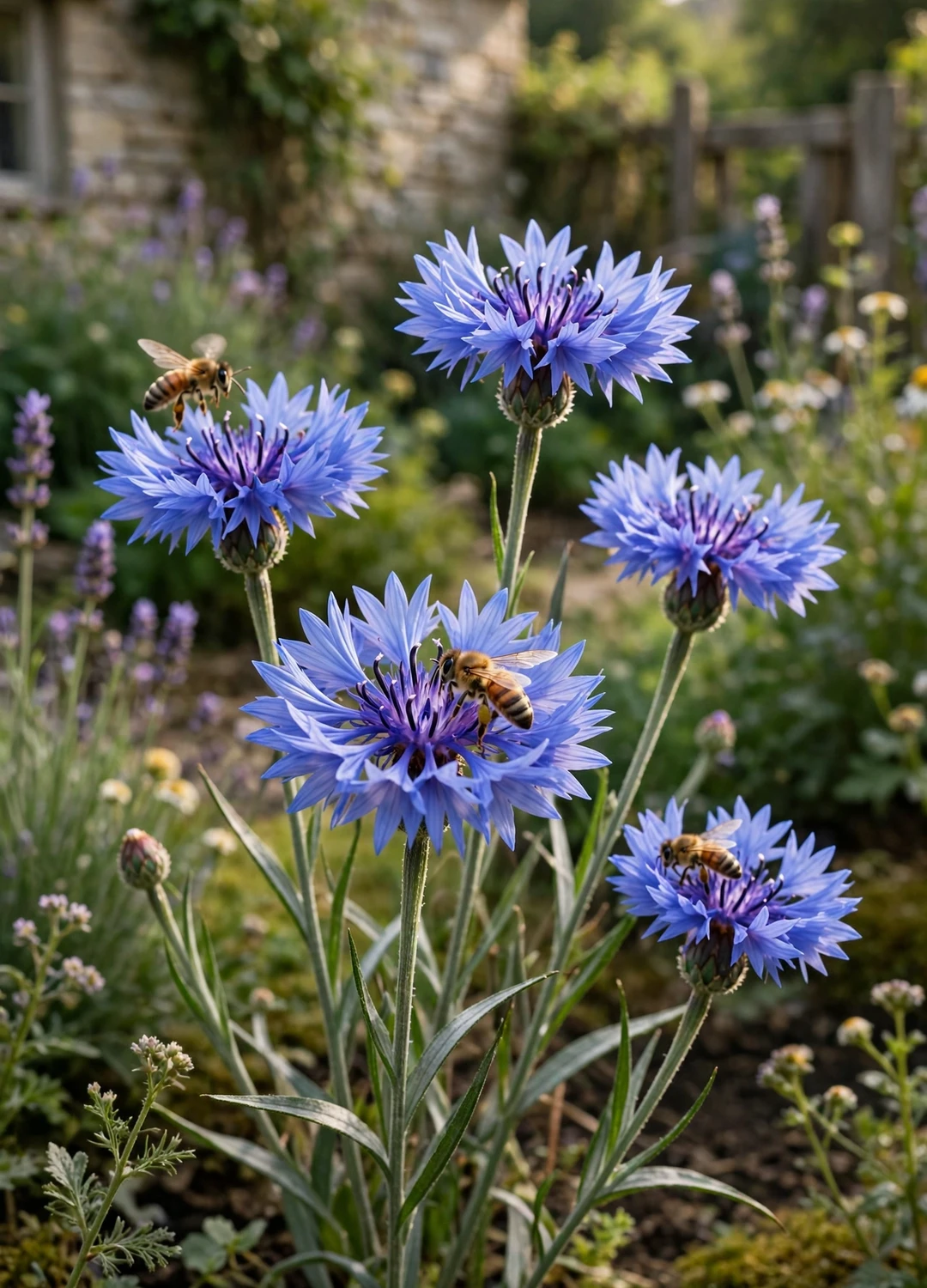
Cornflowers are the classic blue of the cottage garden. Their fringed, sky-blue flowers open on slender grey-green stems all summer, and they are one of the best flowers you can grow for bees.
Why It Works
True blue is rare in flowers, and cornflowers give it to you for almost no effort. They flower for months, cost pennies from seed, and their colour makes pinks and purples beside them look even better.
Best for
Full sun and well-drained soil. Sow seed in spring where they are to grow, and thin seedlings to about 20 cm apart so each plant has room to bush out.
Styling Tips
Mix cornflowers with poppies and calendula for a cottage meadow feel. Deadhead regularly to keep the flowers coming, and cut stems for jam jars on the windowsill — they last well in water.
Flowers for Every Season
A cottage garden should never have a bare month. Start the year with wallflowers, alliums, and aquilegia in spring. Let roses, foxgloves, sweet peas, and hollyhocks take over in early summer. Then hand the garden to phlox, cosmos, verbena, and cornflowers for late summer and autumn. That simple handover — spring, early summer, late summer — is what keeps the colour going from March to October.
And do not forget the flowers that come back year after year. Our plants for an English cottage garden post covers the perennials that anchor the whole garden — peonies, delphiniums, lavender, and more. Pair those plants with the flowers above and the garden almost looks after itself. If you are still planning the cottage itself, our English cottage floor plans post shows how the house and garden sit together, with space for borders, paths, and a proper front garden.
More Cottage Ideas
Frequently Asked Questions
What are the best flowers for an English cottage garden?
Roses, foxgloves, hollyhocks, and sweet peas are the essential four. Add cosmos, poppies, cornflowers, and verbena for months of extra colour.
Which cottage garden flowers are easiest for a beginner?
Cosmos, poppies, cornflowers, and sweet peas are the easiest. Sow them from seed in spring, give them sun and well-drained soil, and they look after themselves.
When should I sow cottage garden flowers?
Sow hardy annuals like poppies, cornflowers, and wallflowers in autumn or early spring. Sow half-hardy annuals like cosmos and sweet peas in spring after the last frost. Plant allium bulbs in autumn for flowers the following May.
Which cottage garden flowers are best for cutting?
Roses, sweet peas, cosmos, phlox, and cornflowers all last well in a vase. Cut stems in the morning, strip the lower leaves, and change the water every couple of days.
How do I keep a cottage garden flowering all summer?
Mix perennials with annuals, and deadhead spent flowers regularly. Deadheading tells the plant to make more flowers instead of seed, which keeps roses, cosmos, cornflowers, and phlox blooming for months.