
English Cottage Garden
12 English Cottage Garden Ideas for a Romantic, Flower-Filled Garden
An English cottage garden is the opposite of a tidy, formal garden. It is soft, full, and a little bit wild: roses spilling over a fence, foxgloves standing tall behind low geraniums, and a winding path you can barely see for flowers. These 12 ideas show you the features that make the look — and how to bring them into a garden of any size.
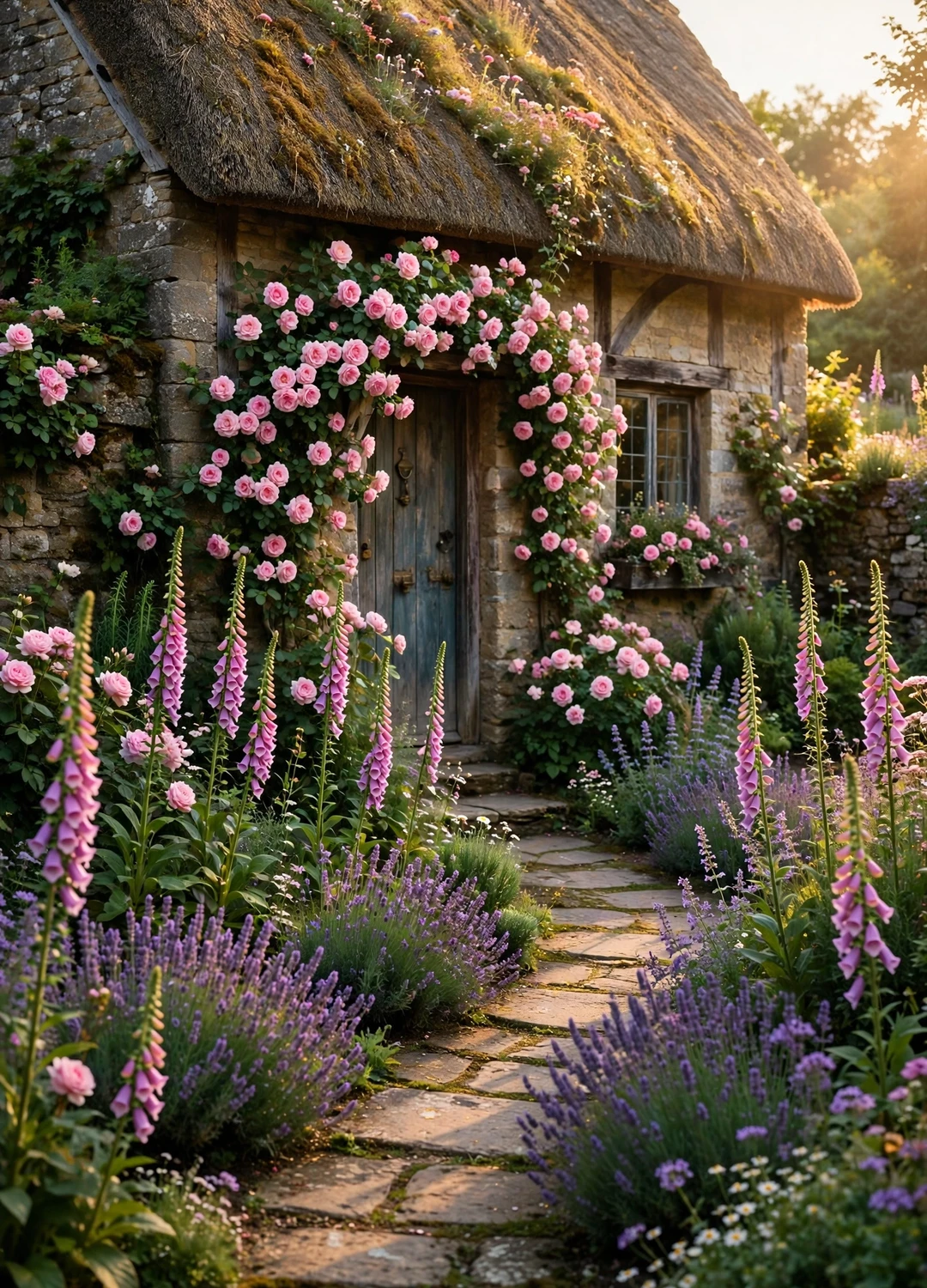
Roses, foxgloves and lavender spilling along the path — the classic English cottage garden.
The English cottage garden started in small country gardens where every bit of ground had to work hard. Flowers grew next to herbs, herbs next to vegetables, and nothing was planted in straight lines. That mix is still the heart of the look today. The garden feels full and generous, it changes through the seasons, and it welcomes bees and butterflies as much as people. The 12 ideas below are the features that make a cottage garden what it is. You do not need all of them — start with one or two, and let the garden grow into the rest.
1. An Overflowing Border, Not a Neat Bed
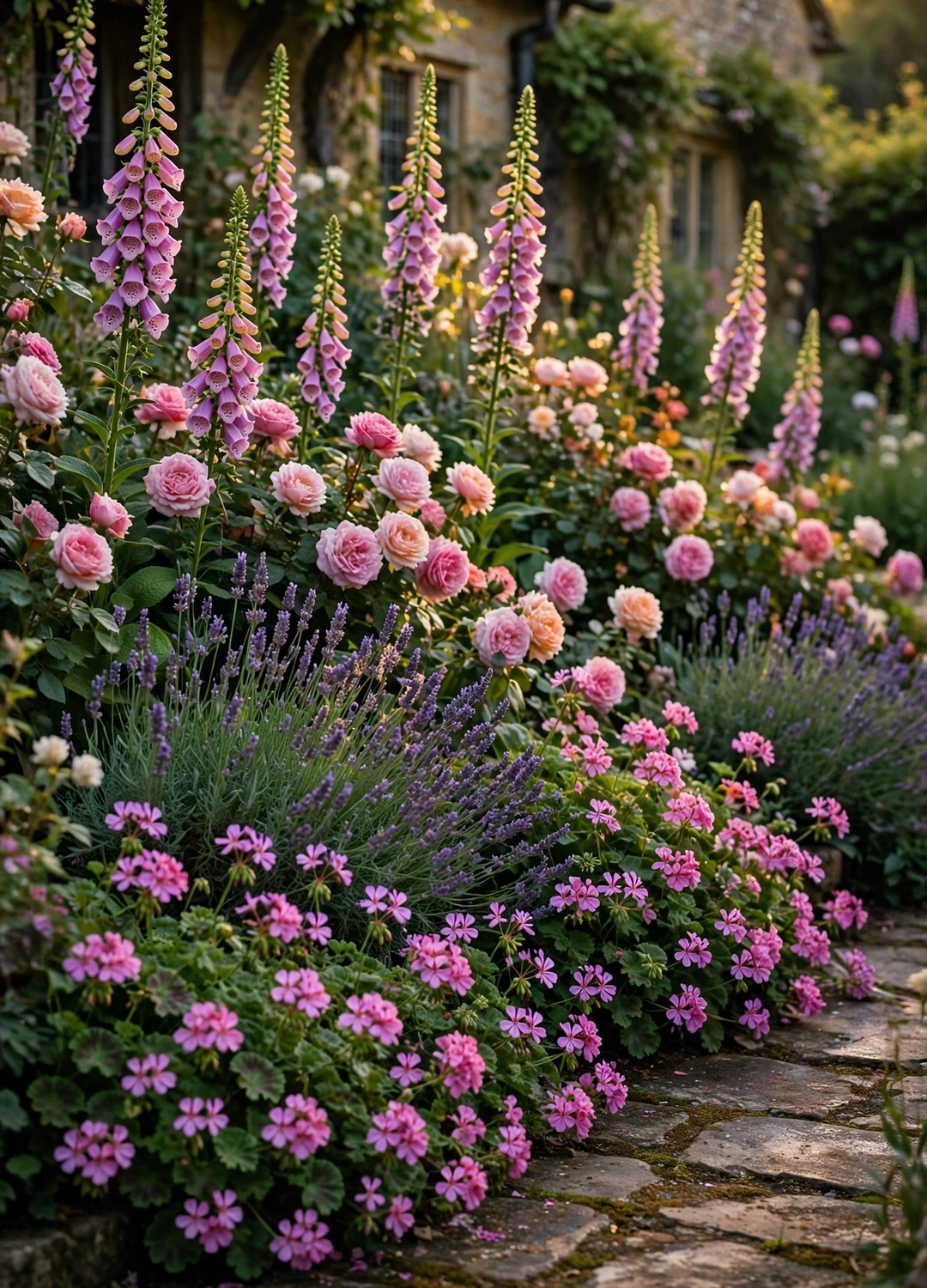
The heart of an English cottage garden is the border — and it is never neat. Tall plants stand at the back, medium plants fill the middle, and low plants spill over the front edge onto the path. Roses, foxgloves, hollyhocks, lavender, and hardy geraniums grow shoulder to shoulder, with no bare soil showing. The effect is a wall of flowers that looks like it planted itself.
Why It Works
A full border looks generous and romantic, and it is also practical. Packed plants shade the soil, keep weeds down, and hold moisture in dry weather. The layered heights give the garden depth, so even a small plot feels like a real garden rather than a strip of lawn with a few pots.
Best for
Any sunny wall, fence, or path edge. A border just 1 metre deep can carry the look if you plant in layers — tall at the back, low at the front.
Styling Tips
Plant in odd groups of three or five, and repeat the same plants along the border so it feels planned rather than random. Leave small gaps for self-seeders like foxgloves and aquilegia to fill in next year. For the plants themselves, our plants for an English cottage garden post lists 12 cottage classics that suit a full border.
2. A Rose Arch Over the Gate or Path
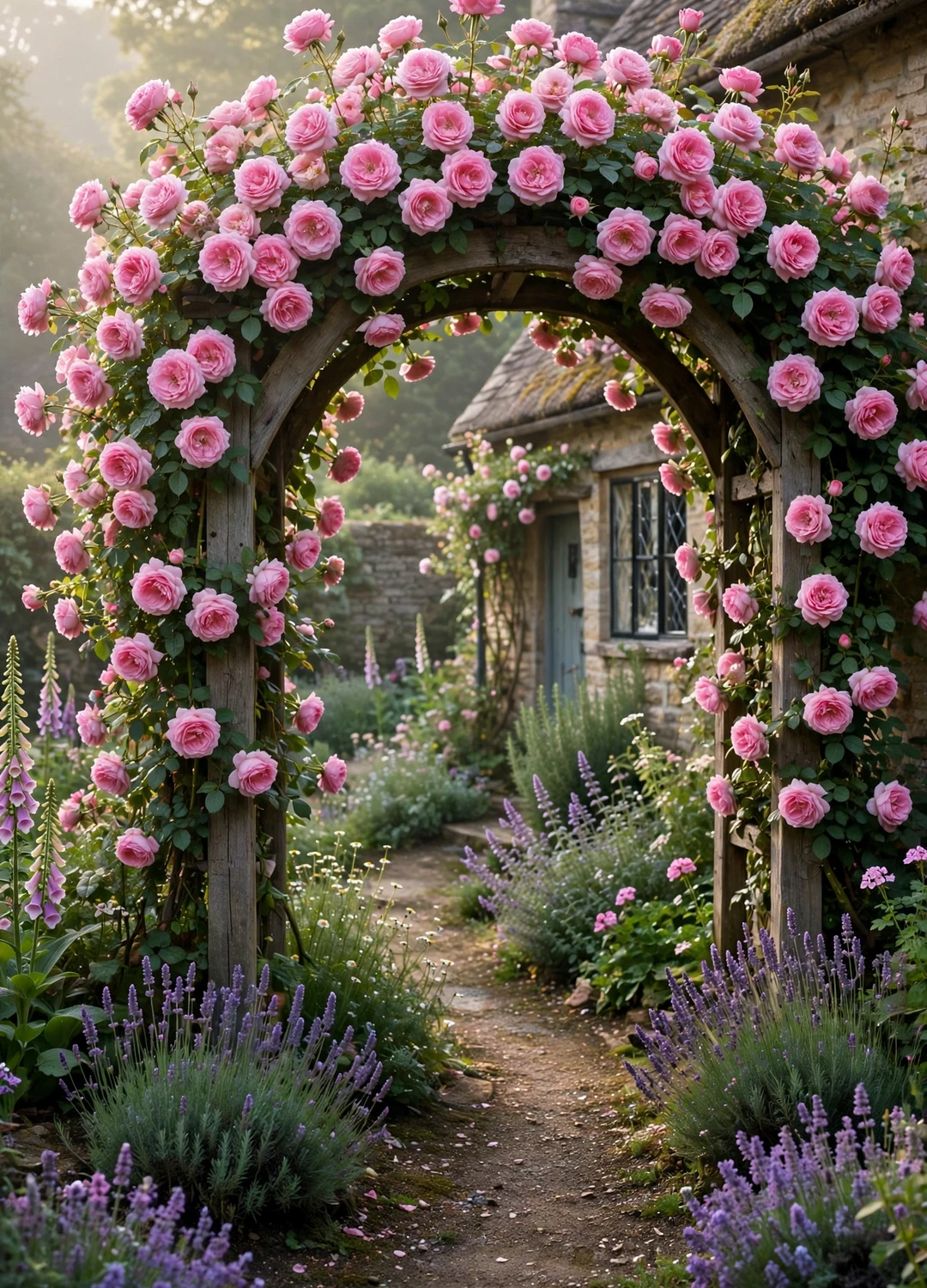
Few things say "cottage garden" like walking under a rose arch. A simple wooden or metal arch over the gate or the garden path, covered in a climbing rose, turns an ordinary entrance into a moment. Choose a repeat-flowering climber — a pink or soft red rose — so the arch is in flower from early summer into autumn. Underplant it with lavender or catmint for scent at ankle height.
Why It Works
An arch gives the garden height and a sense of arrival. It frames the view beyond it, so the garden feels bigger and more interesting than a flat plot. And roses over a doorway are the image most people picture when they think of an English cottage.
Best for
The front gate, the entrance to the back garden, or the middle of a long path. A small arch suits a small garden — it does not need to be grand to work.
Styling Tips
Tie new rose stems to the arch while they are young and flexible, and prune once a year in late winter. If your roses are the old-fashioned kind that flower once, add a clematis alongside for a second flush of colour. Our English cottage garden flowers post covers the best roses and climbers for the job.
3. A Low Picket Fence with a Gate
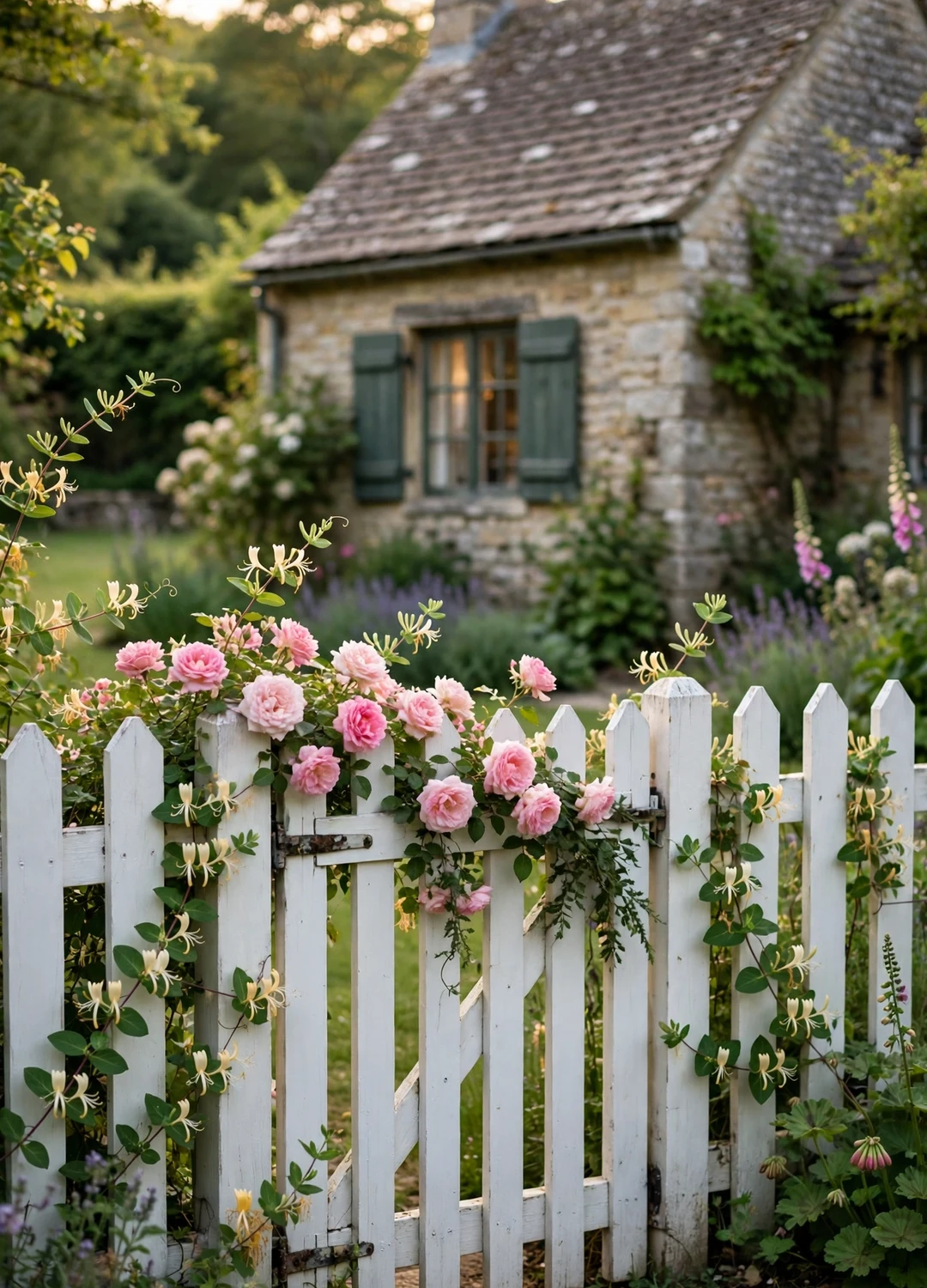
A low picket fence is the classic cottage garden boundary. It marks where the garden begins without shutting it off from the street — you can see the flowers over the top, and neighbours can see in. Paint it white, soft green, or a pale blue, and let roses and honeysuckle lean over it. A small gate with a simple latch completes the picture.
Why It Works
A low fence keeps the garden open and friendly, which is the whole spirit of the cottage garden. It also gives climbing plants something to grow on and gives the front garden a finished edge without the cost or the coldness of a wall.
Best for
Front gardens and the boundary between the garden and the lane. Keep it low — around 90 cm — so the flowers, not the fence, are what people notice.
Styling Tips
Plant tall flowers just inside the fence — hollyhocks, foxgloves, and delphiniums — so they rise above it in summer. If your fence is new wood, let it weather for a season before painting, or the paint will peel. For the wider layout of boundaries and entrances, see our English cottage garden plan.
4. A Winding Path Through the Flowers
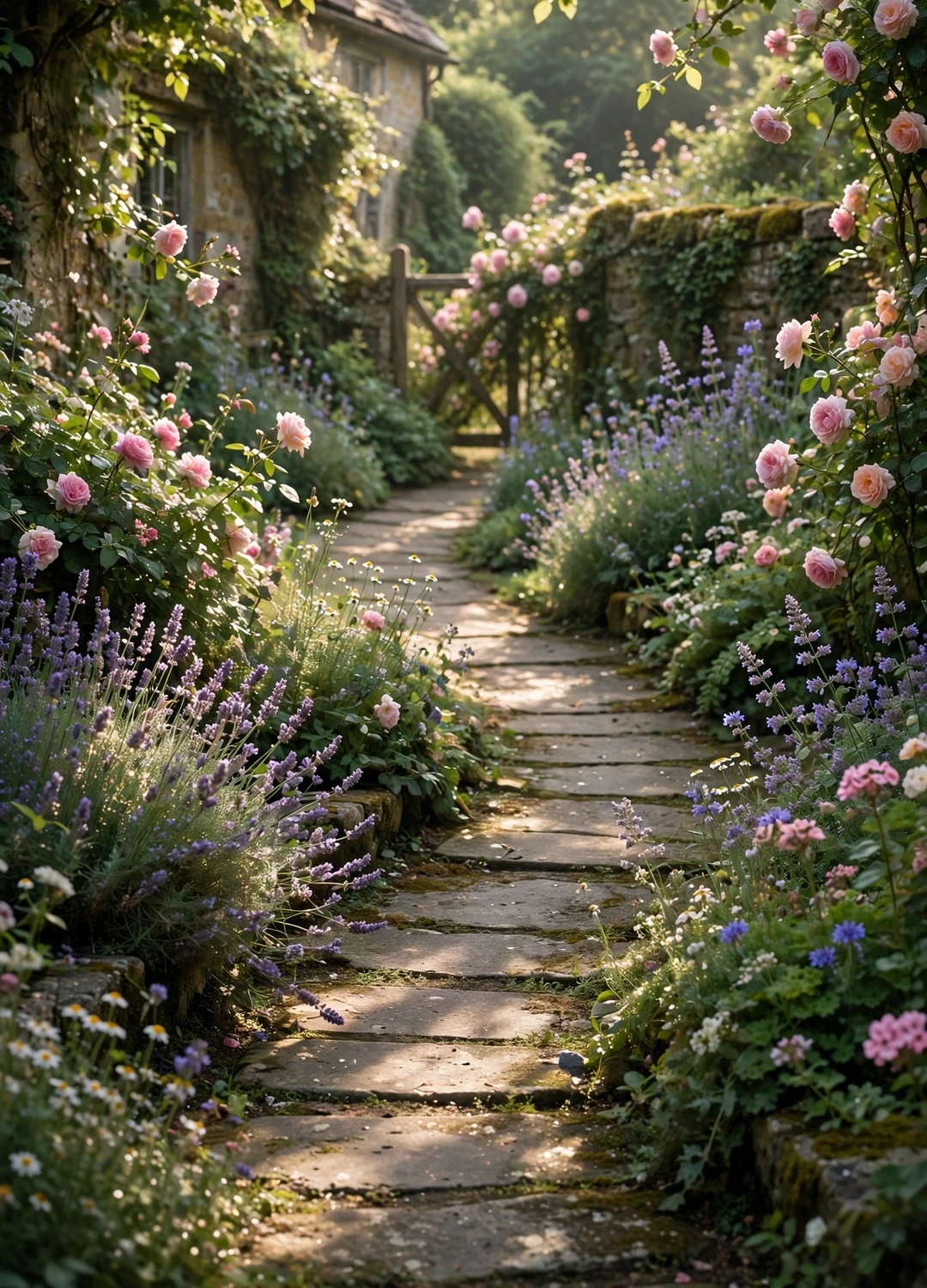
A cottage garden path never runs in a straight line. It curves gently between the borders, so you cannot see the whole garden at once and every turn shows you something new. Use stone slabs, old bricks, or gravel — materials that look like they have been there for years. Let low plants like lavender, thyme, and hardy geraniums spill over the edges and soften the line.
Why It Works
A winding path makes a small garden feel bigger, because the eye follows the curve instead of stopping at the end. It also slows you down. A straight path says "walk through"; a curved one says "wander and look around", which is exactly how a cottage garden is meant to be enjoyed.
Best for
Gardens of any size. Even a short path from the gate to the door can curve once or twice and change the whole feel of the front garden.
Styling Tips
Make the path wide enough for two people to walk side by side — about 90 cm — or it will feel like a corridor. Plant scented herbs like lavender and thyme along the edges so the path smells as good as it looks. Keep the surface slightly uneven and natural; a perfectly level, modern path fights the cottage look.
5. A Bench or Seat Tucked Among the Flowers
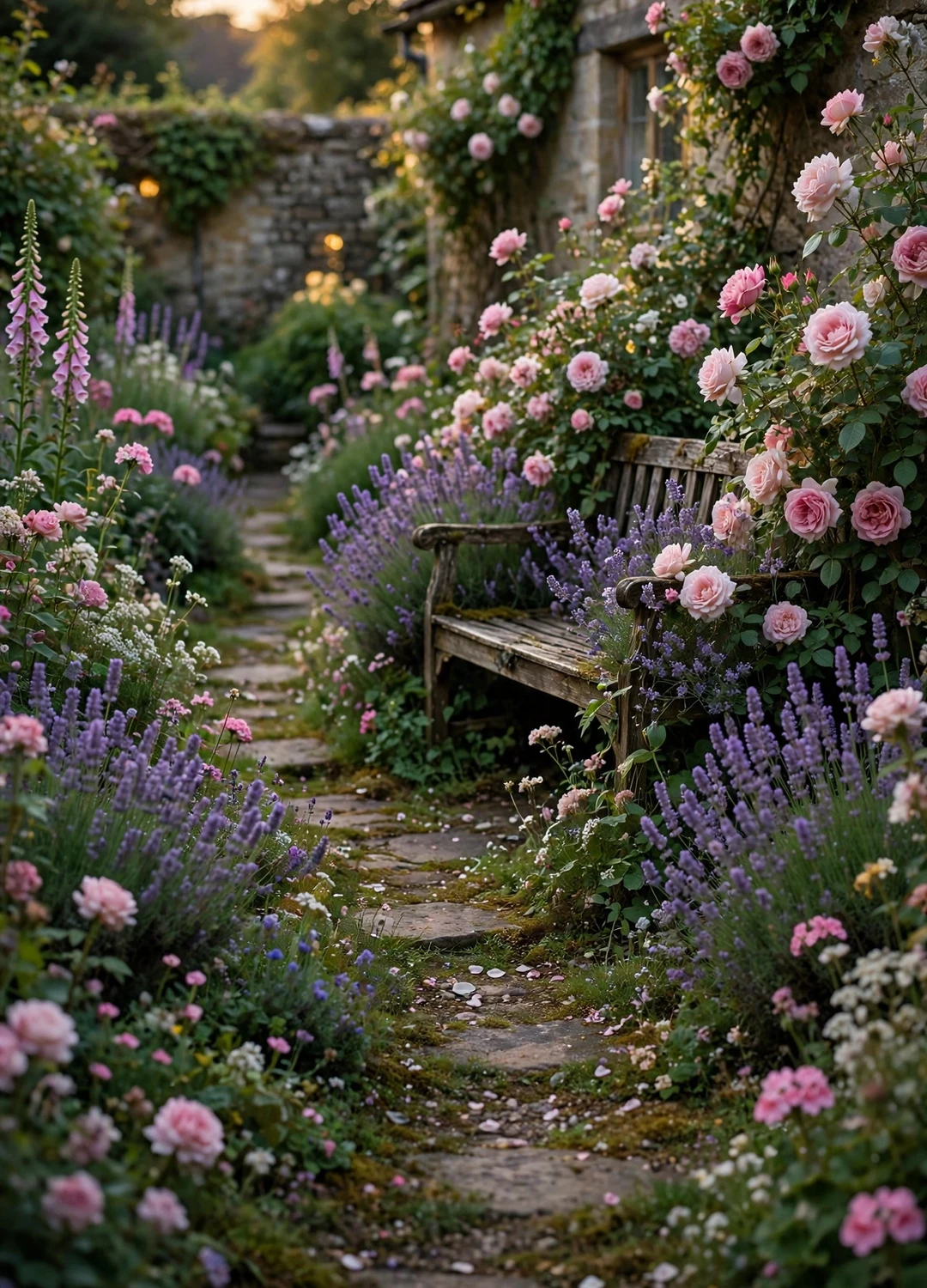
Every cottage garden needs somewhere to sit. A simple wooden bench, a small iron seat, or even an old chair set among the flowers gives you a place to rest, read, and look at what you have grown. Put it where the view is best — facing the house, the roses, or the evening sun — and half-hide it with plants so it feels discovered rather than placed.
Why It Works
A seat turns the garden from something you look at into somewhere you spend time. It also gives the garden a focal point: a bench at the end of a path draws the eye and gives the whole layout a destination.
Best for
A sunny corner, the end of a path, or under a tree. A bench against a wall with roses above it is the classic cottage garden seat.
Styling Tips
Choose wood or wrought iron, not plastic — the material matters as much as the shape. Add a cushion in a floral or striped outdoor fabric, and a small side table or an upturned pot for a cup of tea. Leave the bench to weather naturally; a little silver-grey on old wood suits a cottage garden perfectly.
6. A Small Water Feature — a Bird Bath or Tiny Pond
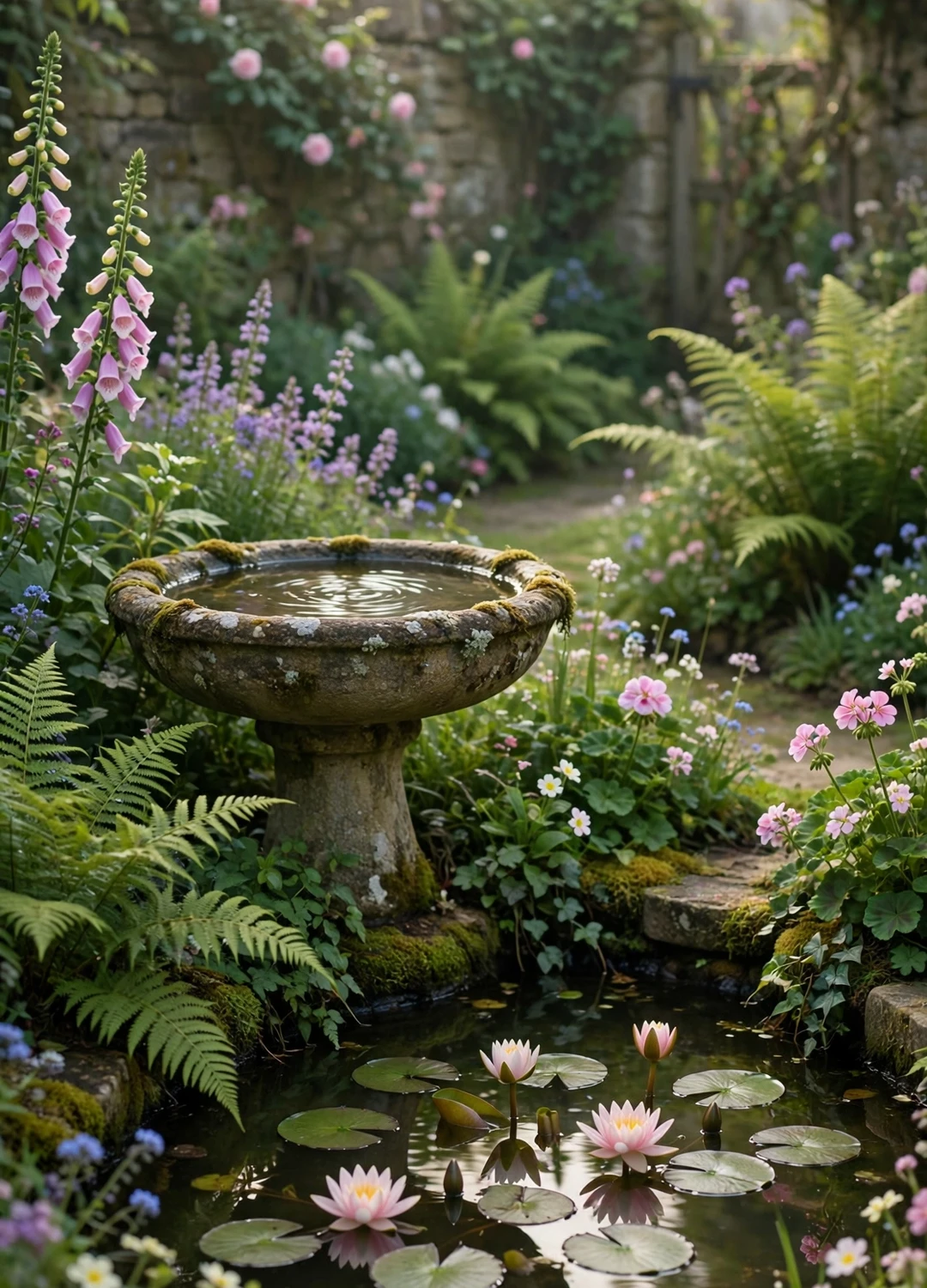
Water brings a cottage garden to life. A stone bird bath, a half-barrel pond with a water lily, or a tiny wildlife pond tucked at the back of a border adds sound, movement, and visitors — birds to drink, frogs to live in the pond, and bees stopping for a sip. You do not need a big pond or a pump. A shallow dish of water, refreshed daily, is enough to start.
Why It Works
Water reflects light and sky, so the garden feels brighter and deeper. It also invites wildlife, and a garden with birds and frogs feels alive in a way a garden without them never does. The sound of water, even a small trickle, makes a garden feel calm.
Best for
A sunny spot near the seating area, where you can watch the birds. Keep a bird bath low and stable, with a gently sloping edge so small birds can stand in it safely.
Styling Tips
Surround the water with moisture-loving plants like astilbe, hostas, and ferns, and let a few stones sit half in the water for bees to land on. If you build a small pond, give it a shallow, sloping side so frogs and hedgehogs can climb out. Never use chemicals in garden water — the wildlife is the point.
7. A Herb Patch by the Back Door
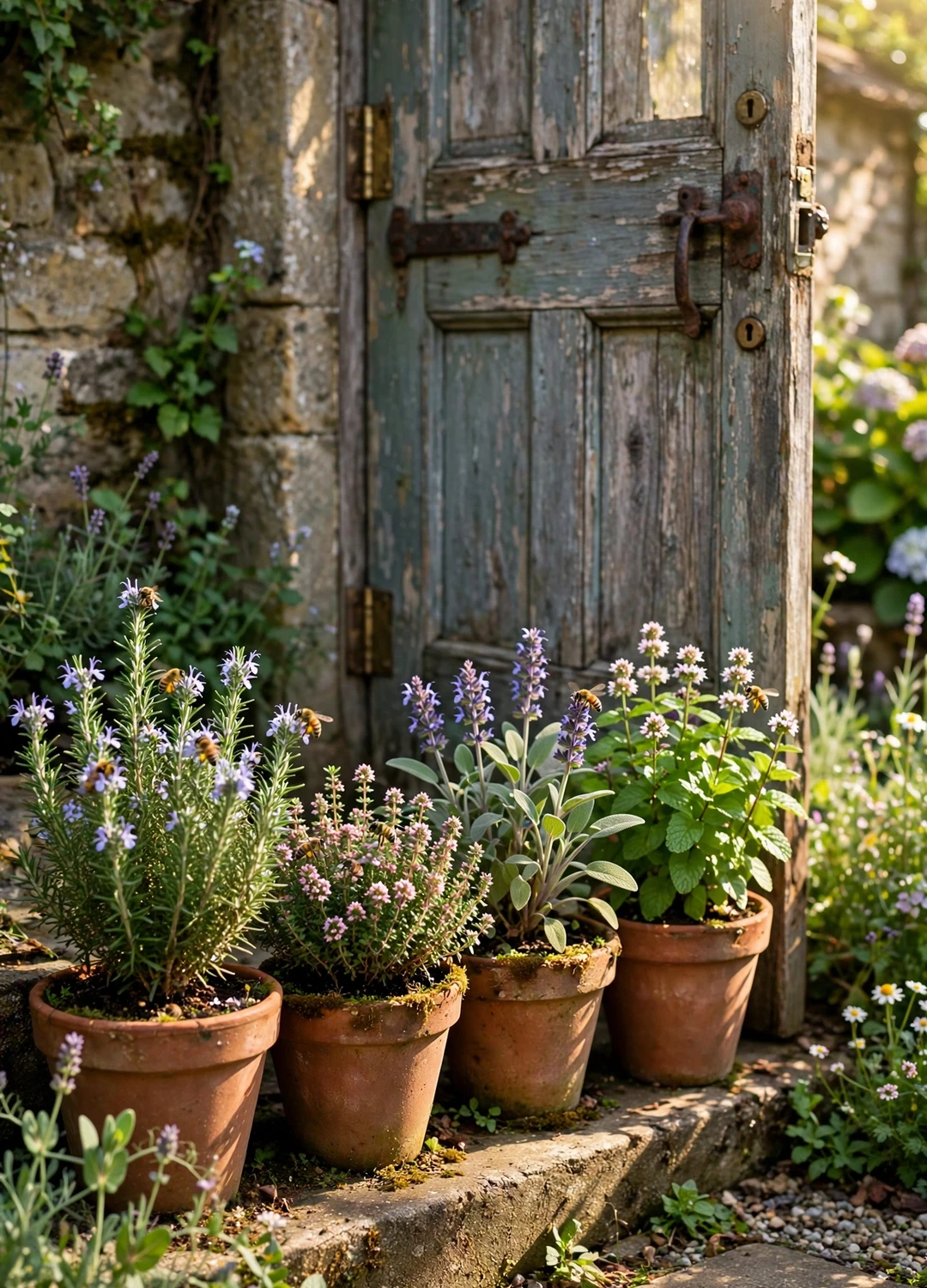
In the original cottage gardens, herbs grew by the door because they were used every day — for cooking, for medicine, and for scent. Keep that idea alive with a small herb patch or a few terracotta pots by the back door: rosemary, thyme, sage, mint, and chives. They are easy to grow, they smell wonderful when you brush past them, and they are always within reach when you are cooking.
Why It Works
Herbs make the garden useful as well as pretty, which is the cottage garden tradition. They also flower — thyme, sage, and rosemary all have small, bee-loved blooms — so the patch earns its place among the flowers too. And a herb patch by the door is one you will actually use, because it is right there.
Best for
The sunniest spot by the back or kitchen door. Most herbs want sun and free-draining soil, so a raised bed or pots work well if your soil is heavy.
Styling Tips
Grow mint in its own pot — it spreads fast and will take over a bed. Cut herbs little and often; regular picking keeps them bushy and stops them going woody. Label the pots with small wooden markers if you grow several kinds, so guests can help themselves too.
8. A Wildlife Corner That Is Left a Little Wild
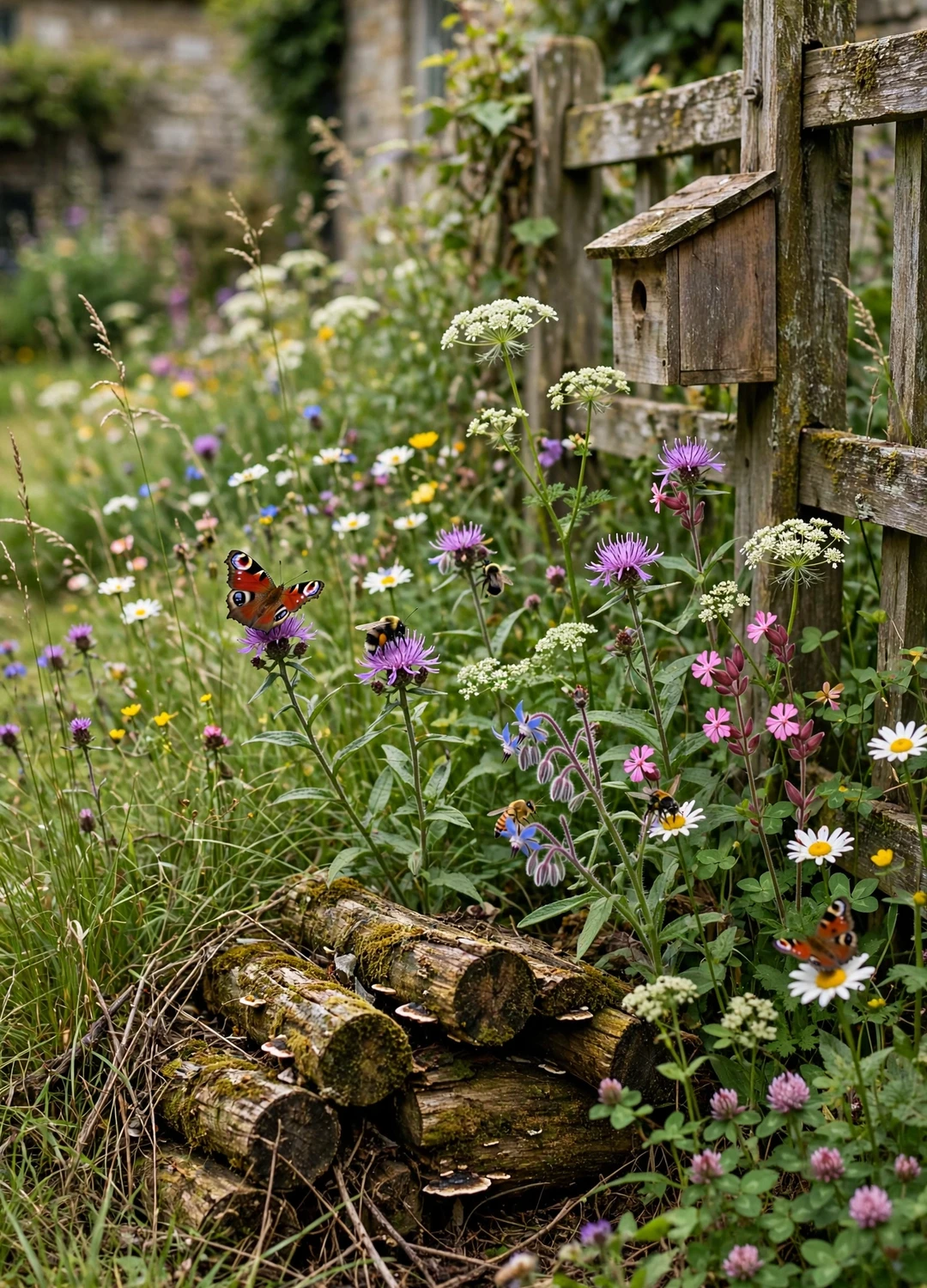
A cottage garden is not tidy everywhere. Leave one corner a little wild — a log pile for beetles, a patch of long grass, a few native wildflowers, and a bird box on the fence. It costs nothing, it takes no work, and it brings the garden to life. Bees, butterflies, frogs, and birds all need somewhere untidy to live, and a cottage garden has always made room for them.
Why It Works
Wildlife does the garden's work for free. Bees pollinate the flowers and the fruit, frogs and birds eat the slugs, and ladybirds eat the aphids. A garden that welcomes wildlife is healthier and needs fewer chemicals than one that does not. The wild corner also gives the garden contrast — the tidy borders look even better next to one patch that is allowed to be free.
Best for
A shady or awkward corner you do not use much — behind the shed, at the end of the garden, or along a fence. It does not need to be big; even a square metre helps.
Styling Tips
Stack logs loosely so creatures can hide between them, and leave fallen leaves in the corner over winter — they are shelter, not mess. Add a simple bird box and a shallow dish of water nearby. Resist the urge to tidy the corner in autumn; much of the wildlife is sleeping in there.
9. Climbing Plants Softening the Cottage Walls
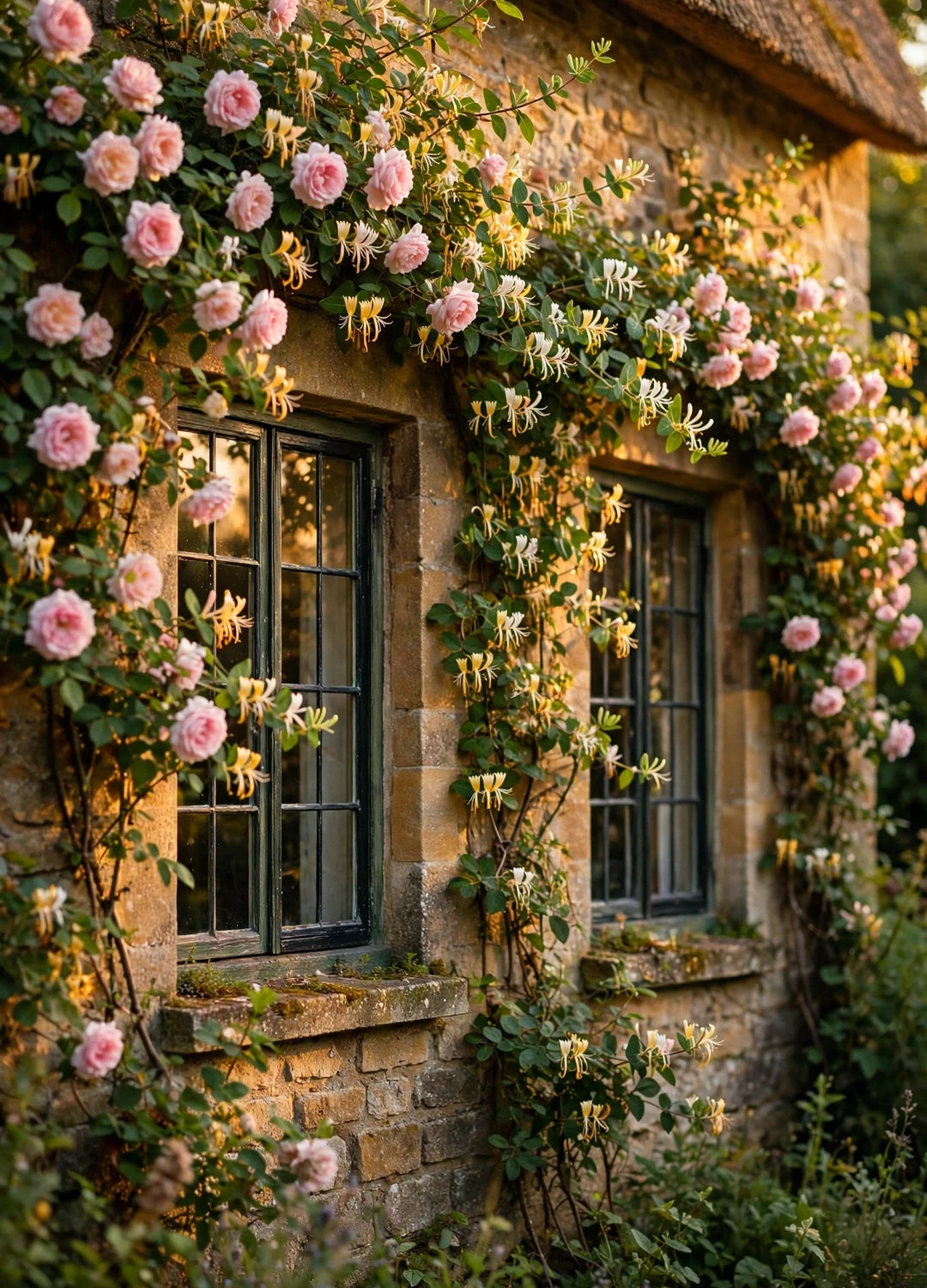
In a true cottage garden, the garden climbs onto the house. Roses, honeysuckle, clematis, and jasmine grow up the walls and around the windows, softening the stone or brick and tying the house to the garden. A climbing rose by the front door is the most loved cottage image of all, and honeysuckle by a bedroom window fills the room with scent on summer evenings.
Why It Works
Climbers blur the line between house and garden, so the whole plot feels like one place. They also add colour and scent at eye level and above, where borders cannot reach. A bare cottage wall looks hard; a wall with roses looks like home.
Best for
Sunny walls for roses and clematis; shadier walls for honeysuckle and ivy. Always give climbers a trellis or wires to hold on to — never let them grip the wall directly if the render is old or soft.
Styling Tips
Plant climbers at least 30 cm out from the wall, where the rain can reach them, and water well in the first year. Prune roses after flowering and honeysuckle in late winter. If you want the house itself to match the garden, our English cottage post shows how the classic cottage look works inside and out.
10. A Kitchen Garden Corner with Vegetables and Cut Flowers
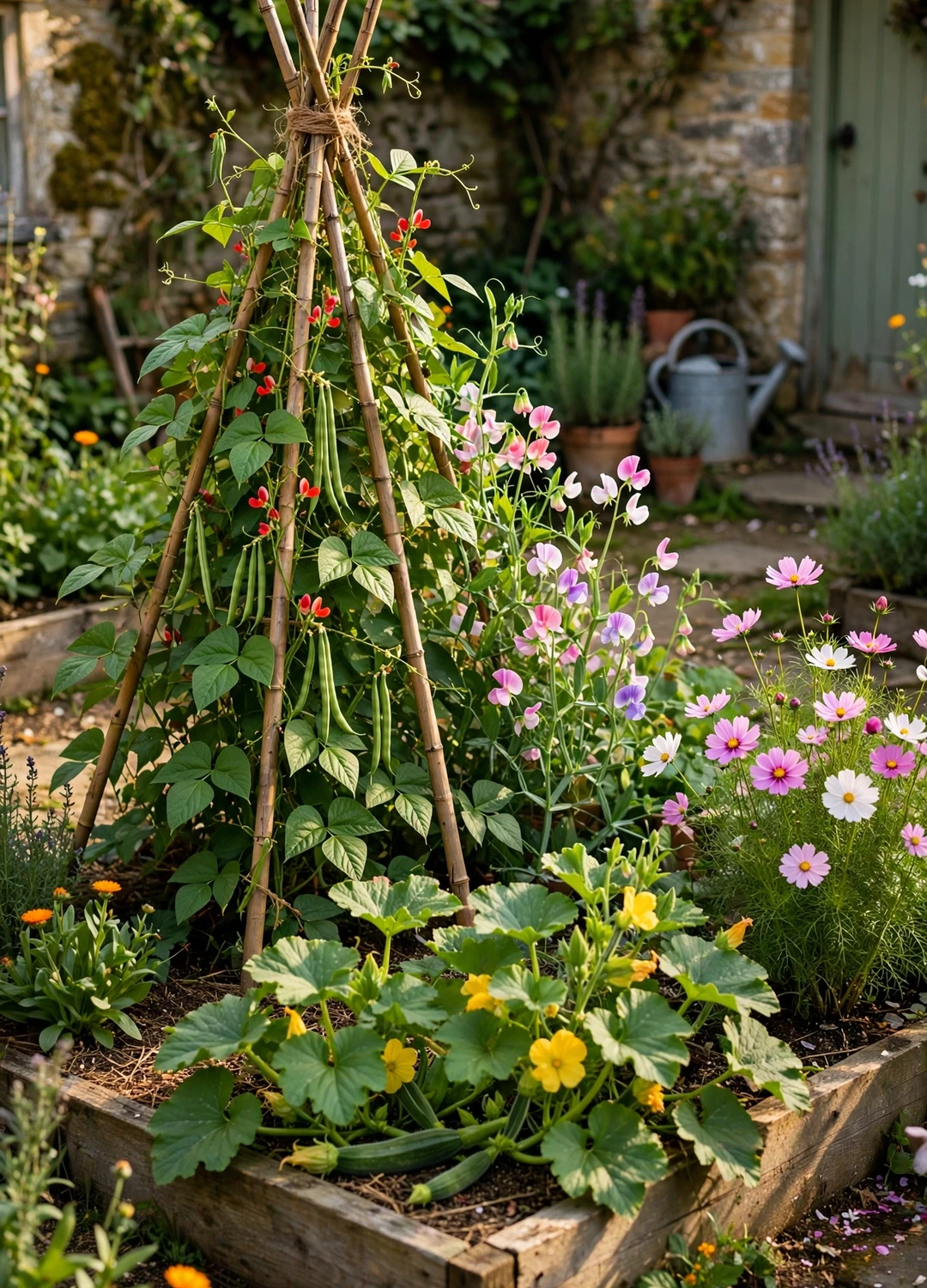
Cottage gardens never kept flowers and food apart. Runner beans climb a wigwam next to the sweet peas, courgettes sprawl beside the cosmos, and a row of lettuce grows under the roses. A small kitchen garden corner — even two raised beds — gives you fresh food and cut flowers from the same patch, and it looks far prettier than a separate vegetable plot.
Why It Works
Mixing food and flowers is the old cottage way, and it works. Flowers bring in the bees that pollinate the beans and courgettes, and strong-smelling herbs and marigolds help keep pests away. A kitchen garden corner also means the garden feeds the house, which is what cottage gardens were always for.
Best for
The sunniest part of the garden, near the kitchen door so you can pick as you cook. Raised beds suit small gardens and heavy soil.
Styling Tips
Grow tall things at the back — beans on wigwams, sweet peas on canes — and low things at the front, like lettuce and nasturtiums. Let a few vegetables flower; a courgette flower or a bolted lettuce is beautiful in its own right. Pick little and often, and the plants will keep producing all summer.
11. A Potting Shed or Garden Nook
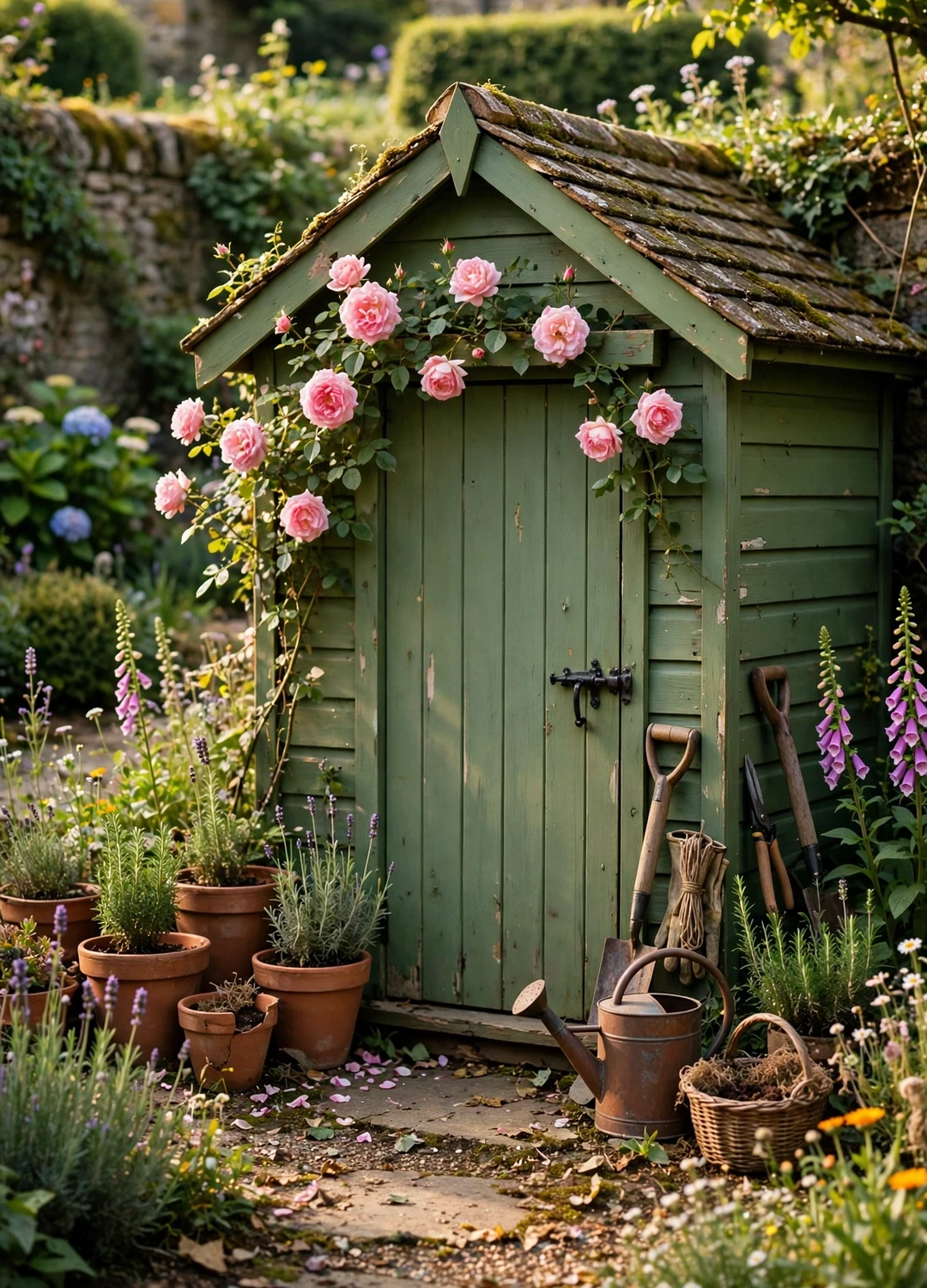
A small shed is part of the cottage garden picture — and part of how the garden gets made. A wooden potting shed with a window, a shelf for seed trays, and hooks for tools is a working room, not just storage. Paint it a soft green or cream, let a rose climb over the door, and put a couple of terracotta pots by the entrance. Even a tiny shed gives the garden a heart.
Why It Works
A shed keeps the tools, pots, and seeds where you need them, so gardening stays easy and the garden stays cared for. It also adds a second small building to the garden, which makes the whole plot feel like a little world of its own — house, shed, and garden together.
Best for
A corner that gets some sun, with a path to it. If a shed is too big for your garden, a small potting bench against a wall does the same job on a smaller scale.
Styling Tips
Keep the shed simple: wood, a pitched roof, and a window you can see through. Store tools on hooks so you can find them, and keep a trug or basket by the door for cut flowers. A rain barrel beside the shed is both useful and very cottage — the garden waters itself from the roof.
12. Colour in Every Season, Not Just Summer
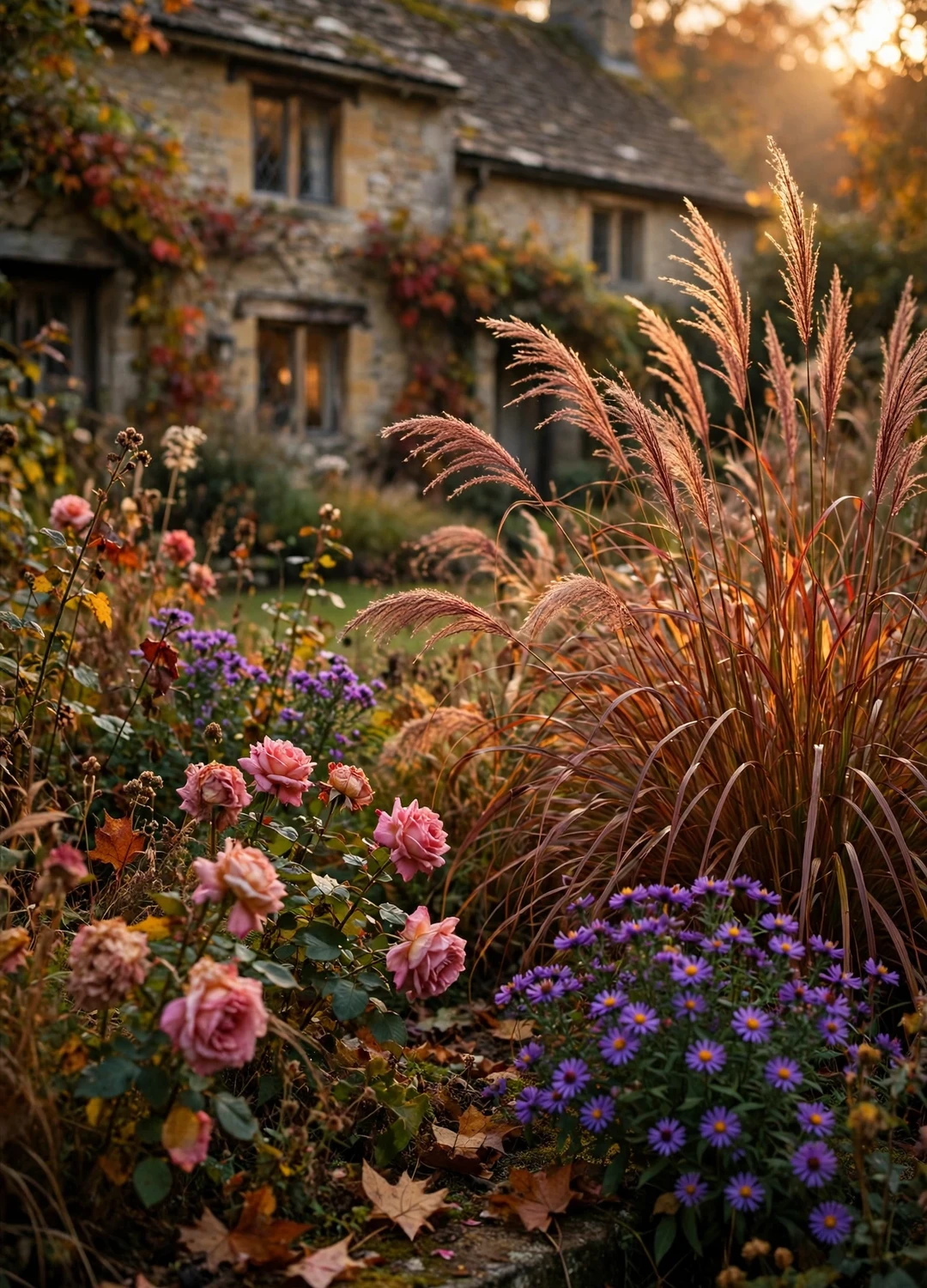
A great cottage garden does not end in August. Plan for colour in every season: snowdrops and crocus in late winter, tulips and wallflowers in spring, roses and foxgloves in summer, and asters, dahlias, and ornamental grasses in autumn. Even winter has its moments — red rose hips, evergreen rosemary, and the shape of bare branches against the cottage wall.
Why It Works
Succession planting means there is always something to look at and something for the bees. It also spreads the work: you plant bulbs in autumn, sow seeds in spring, and deadhead in summer, instead of doing everything at once. A garden with four seasons feels loved all year, not just for one summer month.
Best for
Every garden, however small. Even a few pots of spring bulbs and a late-flowering aster by the door will stretch your garden's season by months.
Styling Tips
Plant spring bulbs in autumn in groups of ten or more, tucked between the perennials so their dying leaves are hidden as the summer plants grow. Leave seed heads standing over winter — they look beautiful in frost and feed the birds. Cut everything back once, in late winter, and the garden starts again.
Start with One Feature, Then Let It Grow
An English cottage garden is not built in a weekend — and that is the point. Start with one feature from this list: a full border, a rose arch, or a bench among the flowers. Plant it well, enjoy it for a season, and add the next feature when you are ready. The garden will tell you what it wants next: a gap where a rose could climb, a corner where a bench would fit, a bare patch where bulbs could go in autumn. That slow, steady growth is how the great cottage gardens were made — one plant, one season, one idea at a time.
More Cottage Ideas
Frequently Asked Questions
What is an English cottage garden?
An English cottage garden is an informal, flower-filled garden in the style of old English country cottages. It mixes flowers, herbs, and vegetables together in full, overflowing borders, with winding paths, roses over the gate, and plants chosen for scent and colour rather than formal design. It looks a little wild, but it is planted with care.
How do I start an English cottage garden?
Start with one sunny border and plant it in layers — tall plants at the back, medium plants in the middle, and low plants spilling over the front edge. Add a winding path and a rose or honeysuckle by the door. Grow easy cottage plants like roses, foxgloves, lavender, and hardy geraniums, and let a few self-seed each year.
What plants are best for an English cottage garden?
Roses, foxgloves, hollyhocks, lavender, delphiniums, peonies, clematis, honeysuckle, catmint, and hardy geraniums are the classics. Mix them with herbs like rosemary and thyme and a few vegetables, and leave room for self-seeders like aquilegia and poppies to fill the gaps.
Can I have an English cottage garden in a small space?
Yes. A cottage garden works in a tiny plot or even in pots. A border just one metre deep, a rose in a large pot by the door, a few herbs, and a small bench are enough to carry the look. Choose compact varieties, plant in layers, and let climbers use the walls so the ground stays free for flowers.