
12 Plants for an English Cottage Garden
English Cottage Garden
12 Plants for an English Cottage Garden
A cottage garden is not neat and tidy. It is full, soft, and a little wild — roses over the door, lavender along the path, and tall foxgloves leaning over the fence. These 12 plants give you that look, and they are all proven cottage garden favourites.
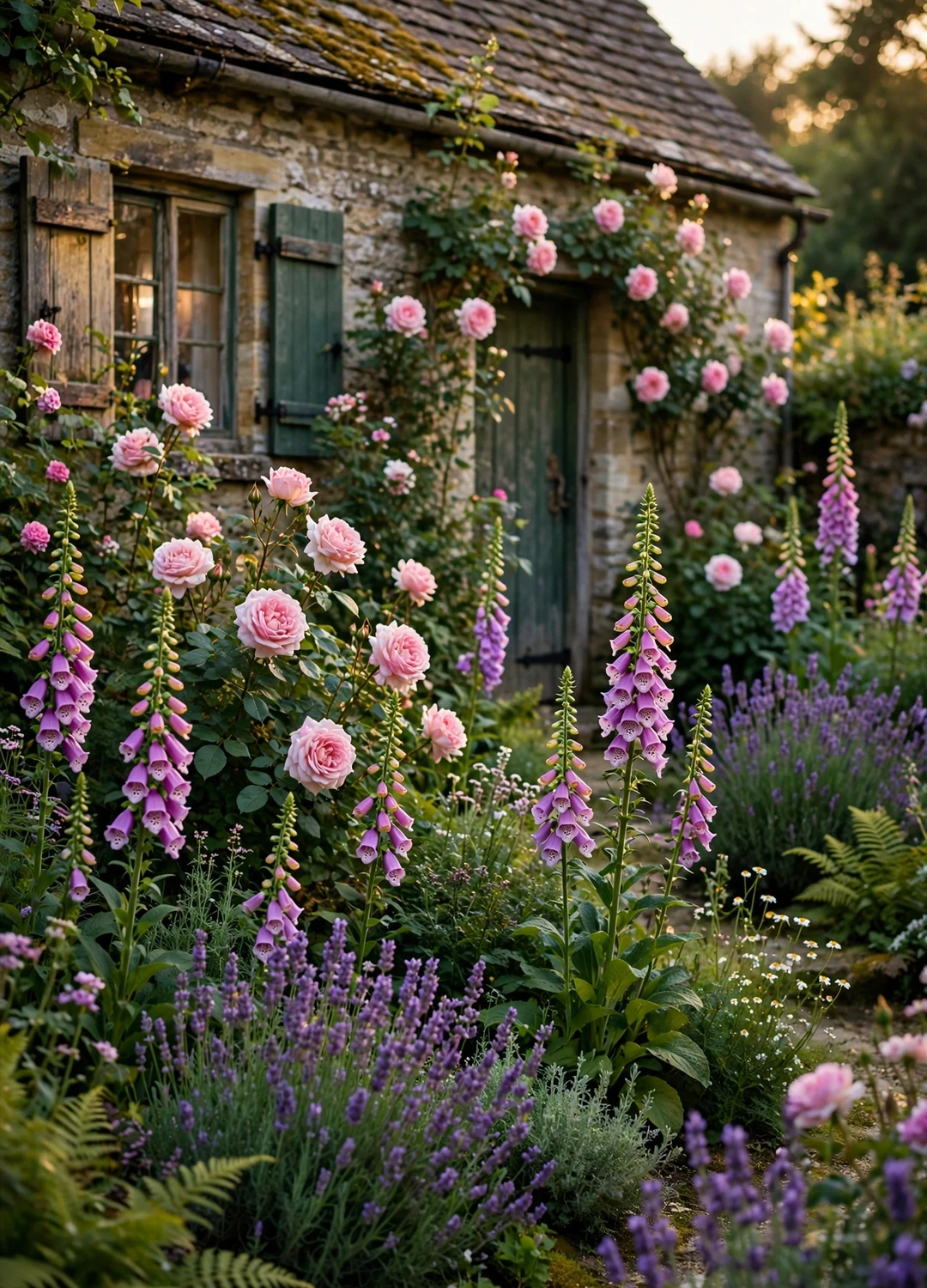
Roses, lavender and foxgloves — the classic cottage garden trio.
The secret of a cottage garden is layering. Tall plants stand at the back, medium plants fill the middle, and low plants edge the front. The plants below do that job naturally, and most of them look after themselves once they settle in. Plant them in full sun with soil that drains well, and give them room to breathe — cottage gardens look full because plants spill into each other, not because they are packed tight.
1. Roses
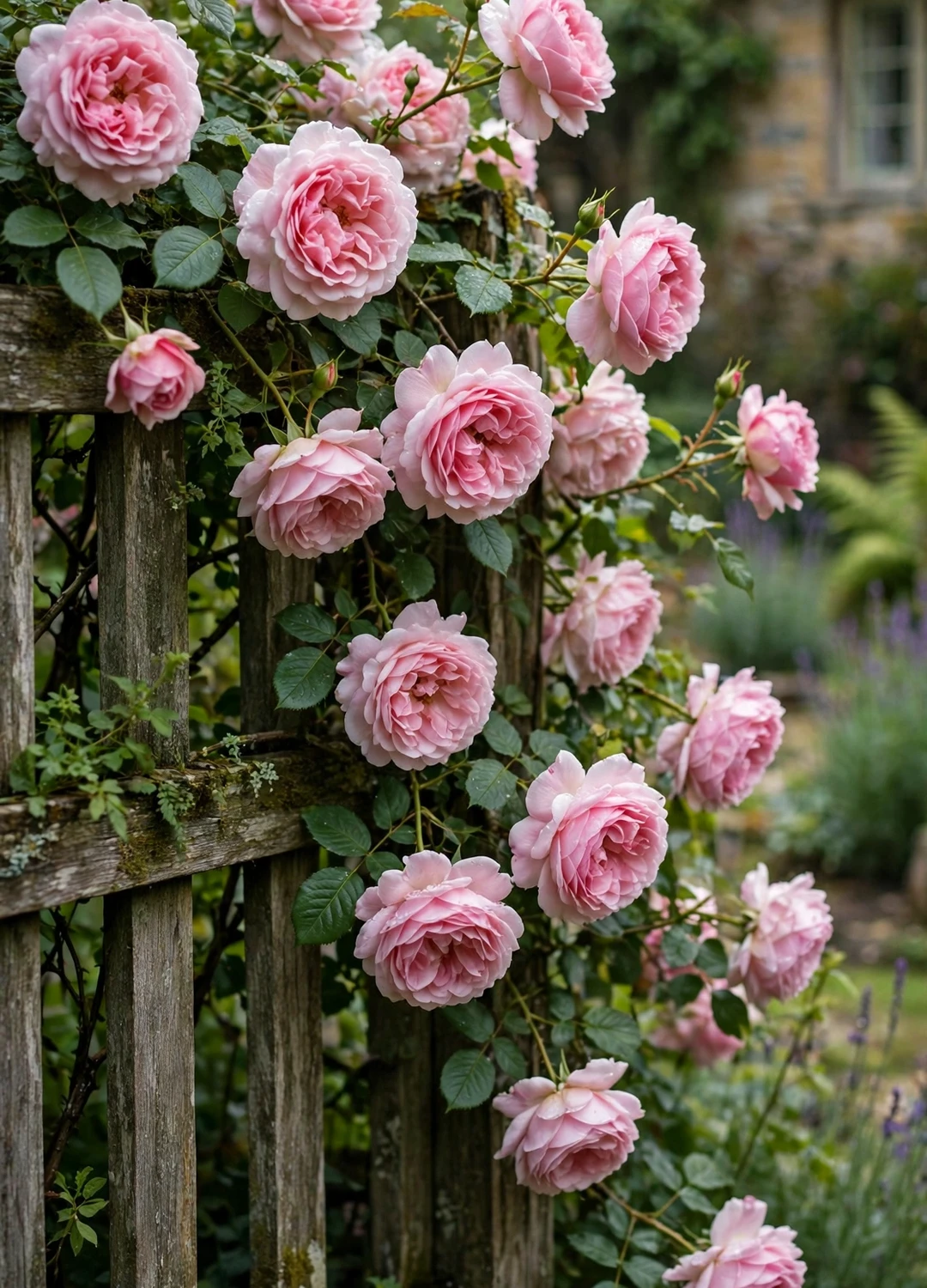
No cottage garden is complete without roses. Shrub roses fill the borders with scent and colour from early summer into autumn, and climbing roses turn a plain fence or doorway into the prettiest part of the garden. David Austin English roses like 'Gertrude Jekyll' were bred for exactly this look — full, old-fashioned flowers with a strong scent.
Why It Works
Roses give the garden its structure and its romance. They flower for months, they smell wonderful, and they look right against old brick, wood fences, and stone walls.
Best for
Full sun and well-drained soil. Grow shrub roses in the middle of the border and climbing roses over arches, doorways, and fences. They pair beautifully with lavender planted at their feet.
Styling Tips
Choose repeat-flowering varieties so you get blooms all summer, not just one flush. 'Gertrude Jekyll' (deep pink), 'Graham Thomas' (yellow), and 'Iceberg' (white) are all reliable. Feed them in spring and deadhead spent flowers to keep new ones coming.
2. Lavender
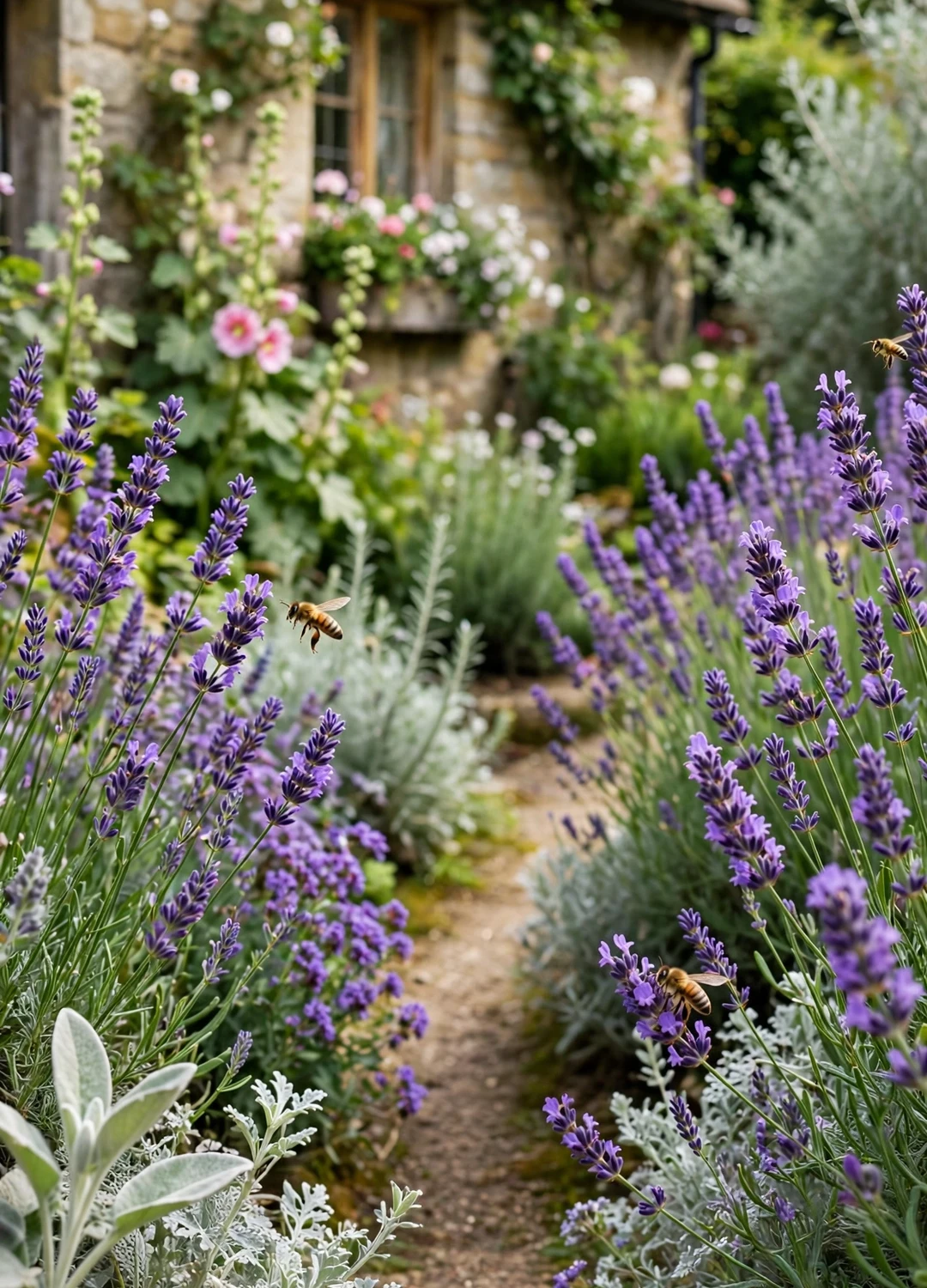
Lavender is a cottage garden must. Its silvery foliage and purple flowers edge paths and borders, and the scent hits you every time you brush past. Bees love it, and it flowers from June into August with almost no work from you.
Why It Works
Lavender adds fragrance, colour, and a neat low edge that holds the whole border together. It is evergreen too, so the garden keeps its shape through winter.
Best for
Full sun and poor, well-drained soil — lavender hates wet feet. English lavender (Lavandula angustifolia) is hardier than French types. 'Hidcote' is compact and deep purple, which makes it perfect for path edging.
Styling Tips
Plant lavender in a row along a path so you catch the scent as you walk by. Give each plant about 40 cm of space so air can move around it, and trim it lightly after flowering to keep it bushy instead of woody.
3. Foxgloves
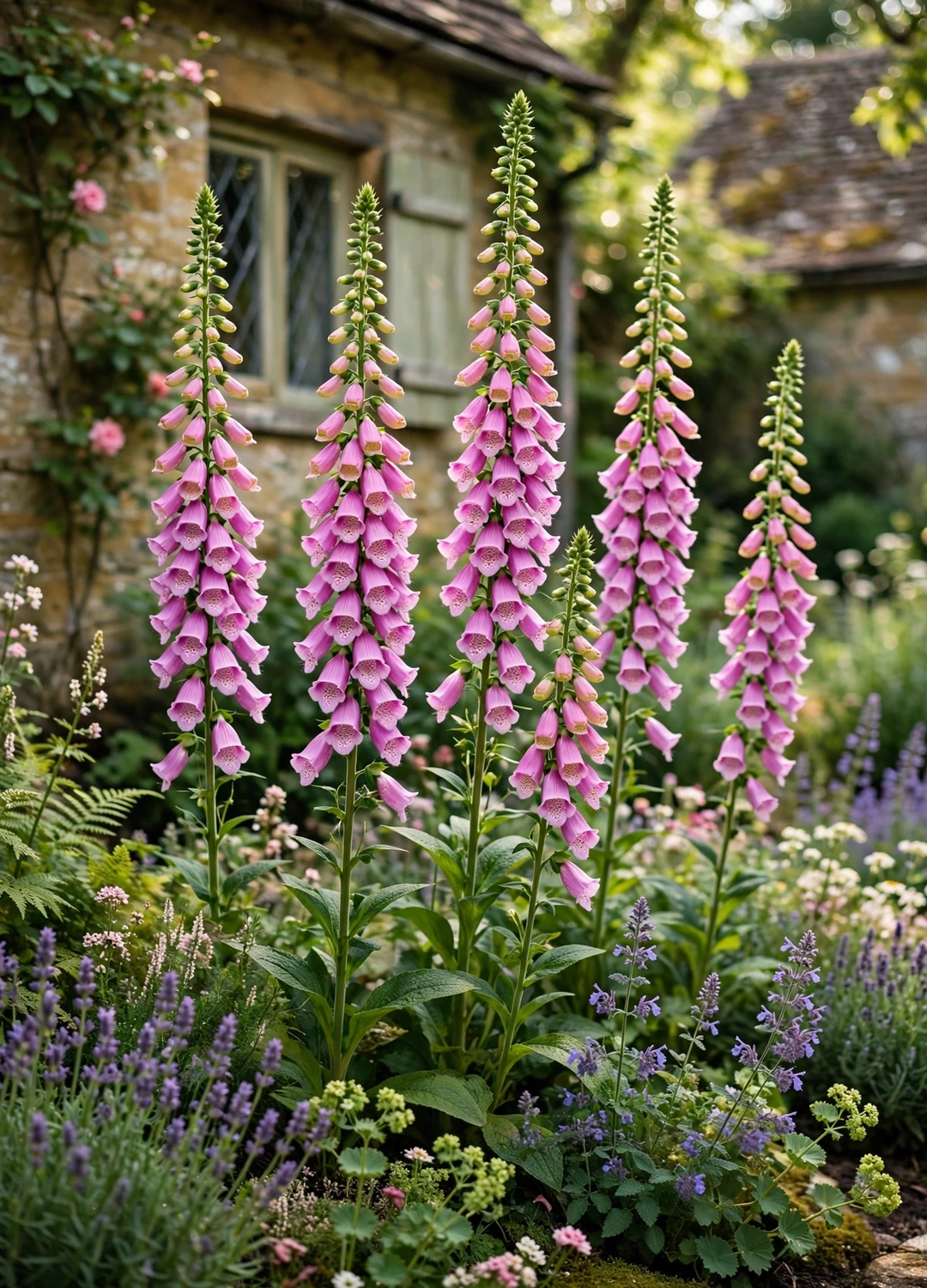
Foxgloves are the spires of the cottage garden. Their tall stems of bell-shaped flowers in pink, purple, white, and apricot rise above everything else in June and stop people in their tracks. They are biennials, which means they flower in their second year — but they seed themselves so freely that once you have them, you have them forever.
Why It Works
Foxgloves add height and drama without taking up much ground space. They fill gaps between shrubs and bring a wild, woodland feel to the border.
Best for
Partial shade or dappled light, though they cope with sun too. They like moist, rich soil and look best scattered through the middle and back of the border rather than planted in stiff rows.
Styling Tips
Leave a few spent flower spikes standing so they drop seed — that is how you get foxgloves next year. Cut others back to encourage side shoots. One caution: every part of the foxglove is toxic, so wear gloves when you handle it and keep it away from curious children and pets.
4. Hollyhocks
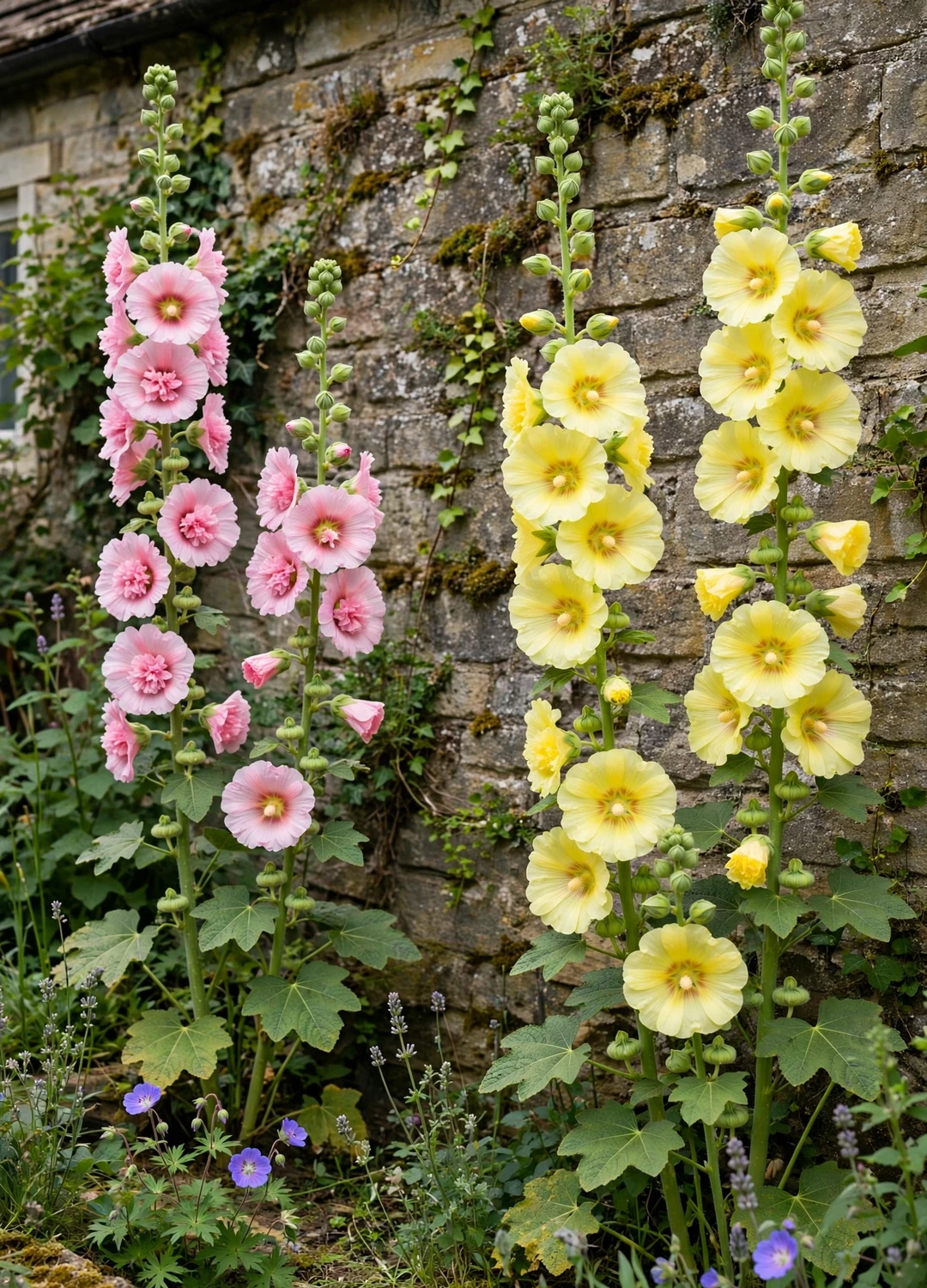
Hollyhocks are the architectural plants of a cottage garden. Their stems grow 1.8 to 2.4 metres tall, covered in open flowers from near-black to soft pink and lemon yellow. Planted against a wall or fence, they turn a plain boundary into a flower tower.
Why It Works
Nothing else gives you that much height with so little effort. Hollyhocks frame the garden and make even a small plot feel grand.
Best for
Full sun, against walls and fences where they get shelter from wind. They are short-lived perennials that behave like biennials, but they self-seed happily, so new plants appear on their own.
Styling Tips
Choose single-flowered heritage types rather than frilly doubles — singles are tougher, resist rust better, and feed the bees. Give them space for air to circulate, and stake tall stems in exposed spots.
5. Delphiniums
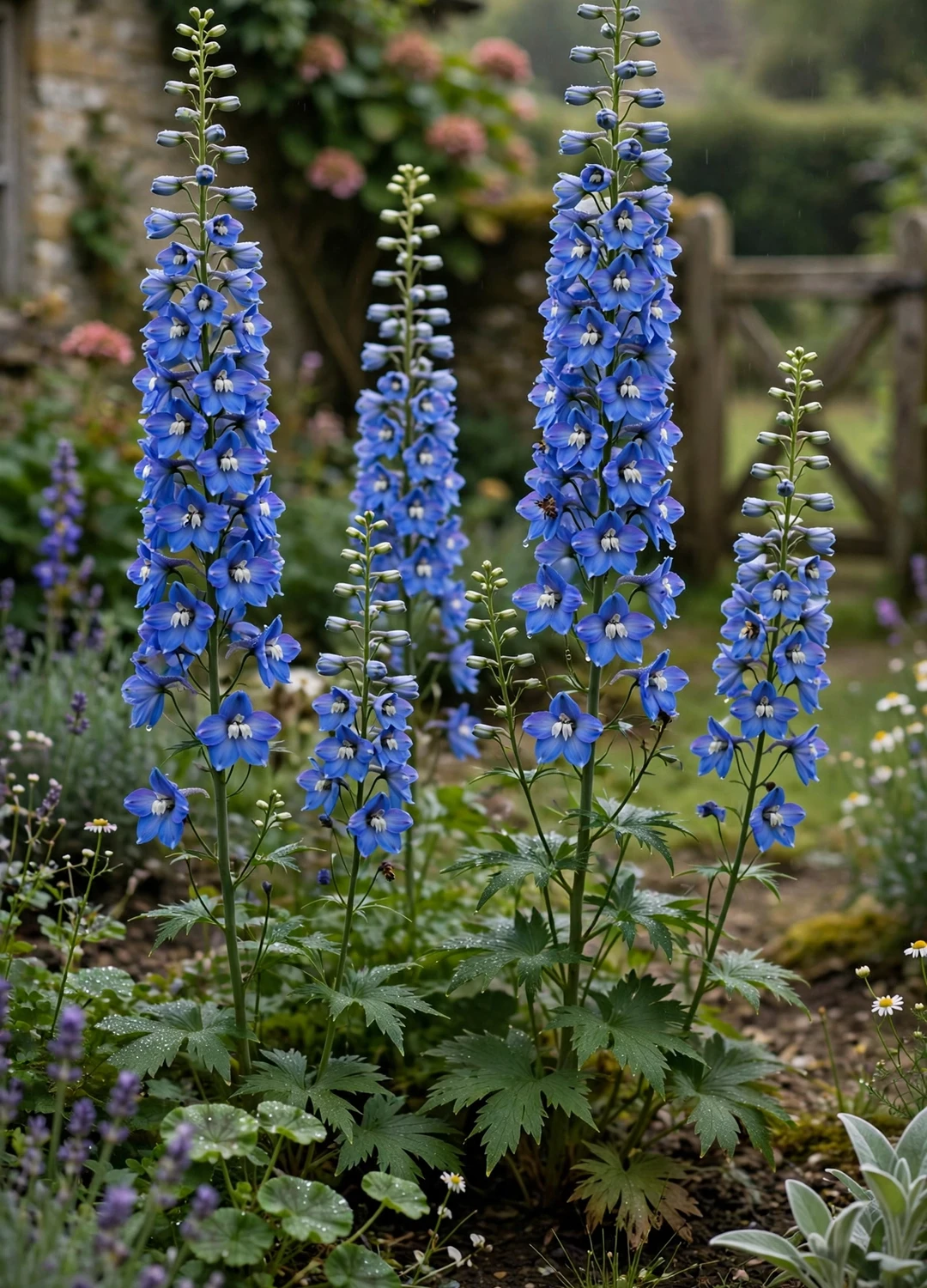
Delphiniums are the classic cottage garden vertical. Their spires of blue, purple, or white flowers reach 1.5 to 1.8 metres, and no other plant gives you that pure cottage blue. They are the plant people picture when they think of an English country garden.
Why It Works
Delphiniums add height and a cool colour that balances all the pinks and purples around them. They look best in groups of three or five at the back of the border.
Best for
Full sun and rich, moist, well-drained soil. They need a sheltered spot — strong wind can snap their tall stems.
Styling Tips
Stake them in May, before they get tall, so the supports stay hidden. Cut the stems back after the first flowers fade and you will often get a second, smaller flush in late summer. Watch for slugs on young shoots in spring.
6. Peonies
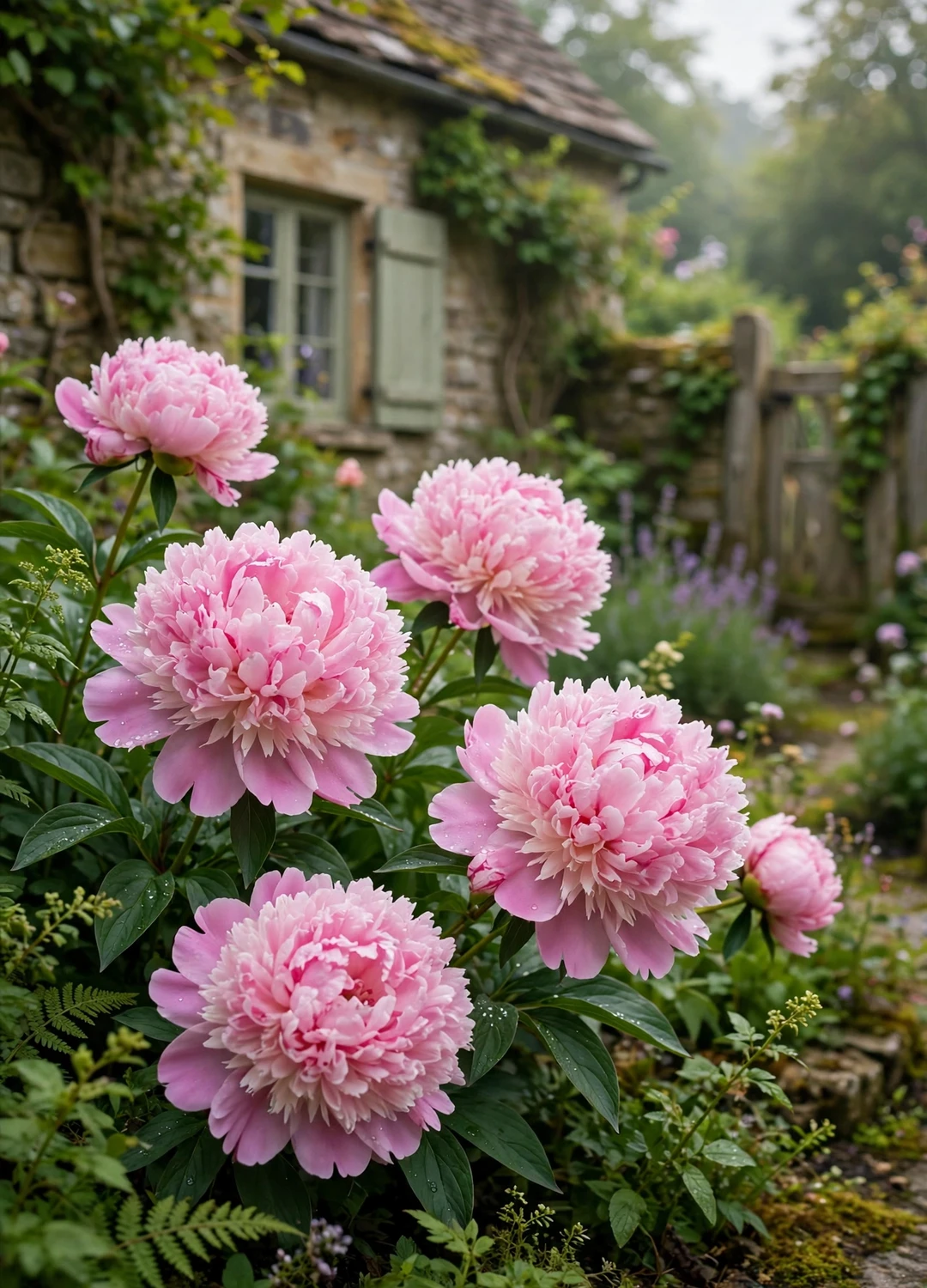
Peonies are the slow luxury of a cottage garden. Their huge, blowsy flowers open in late spring, and a single plant can live for decades — some peonies outlast the gardener who planted them. They ask for patience: a new peony can take two or three years to settle and flower properly. After that, it needs almost nothing.
Why It Works
Peonies bring big, romantic blooms and lush foliage that holds the border together all summer, even after the flowers are gone.
Best for
Full sun or light shade, in rich soil that drains well. Plant them where they can stay put — peonies hate being moved.
Styling Tips
Plant the crown no more than 5 cm deep, or the plant will grow leaves and never flower. Support heavy flower heads with a hoop or ring in spring, and leave the foliage standing until autumn so the plant stores energy for next year.
7. Clematis
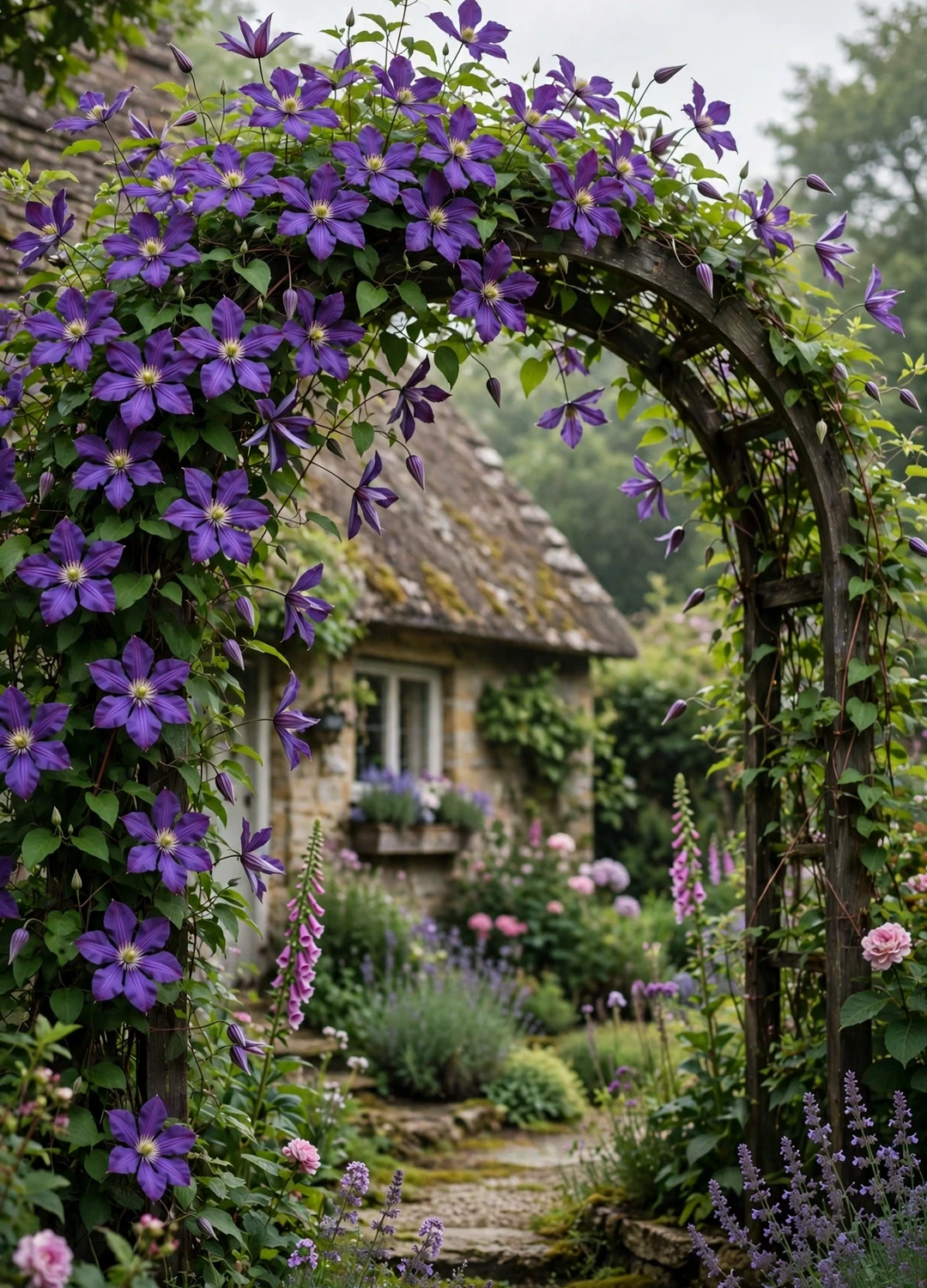
Clematis turns garden structures into flowers. Let it climb over an arch, a doorway, or a fence, and it covers the whole thing in blooms from spring to autumn, depending on the variety. Pair it with a climbing rose on the same arch and you get the most photographed corner of the garden.
Why It Works
Clematis flowers at eye level and above, where most border plants never reach. It softens hard structures and adds months of colour to arches and walls.
Best for
Sun on the flowers and shade on the roots — the old rule is "feet in the shade, head in the sun." Plant it at the base of an arch or fence with a low shrub or stones shading its roots.
Styling Tips
Check the pruning group before you cut: early-flowering types need almost no pruning, while summer types get cut back hard in late winter. Grow it through a rose for a double display — the two flower together and share the same support.
8. Honeysuckle
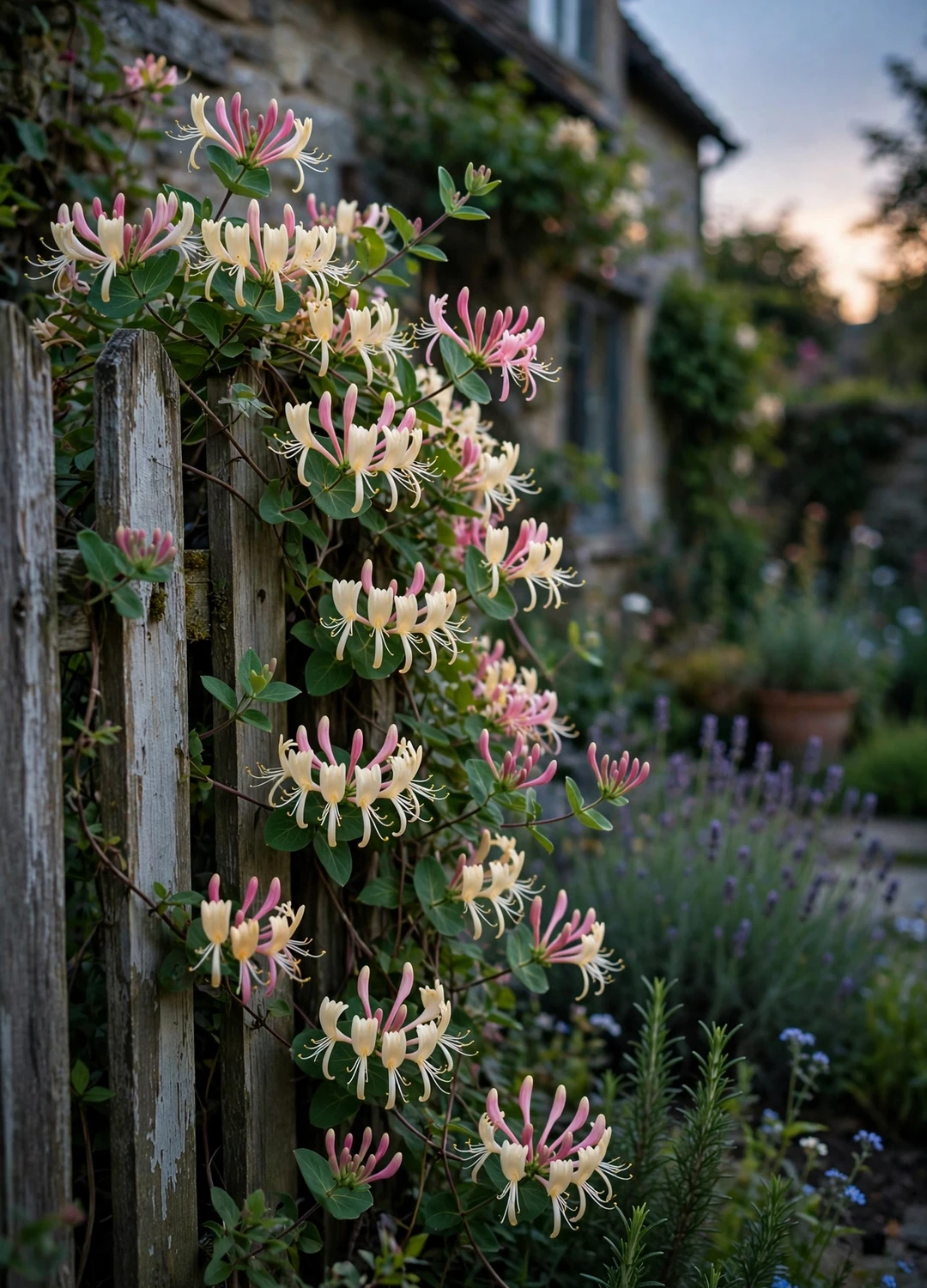
Honeysuckle is the scent of a cottage garden after dark. Its tubular flowers open in the evening and fill the air with a sweet perfume that drifts through open windows. Grow it over a fence, a porch, or a seating area, and summer evenings smell wonderful.
Why It Works
Honeysuckle flowers for months, feeds bees by day and moths by night, and covers plain fences with scented colour.
Best for
Sun or partial shade, with its roots in cool, moist soil. It climbs by twining, so give it wires or trellis to wind around.
Styling Tips
Plant it where you sit in the evening — near a bench, a door, or a bedroom window. Prune lightly after flowering to keep it from getting tangled, and never let it smother the shrub it climbs on.
9. Catmint
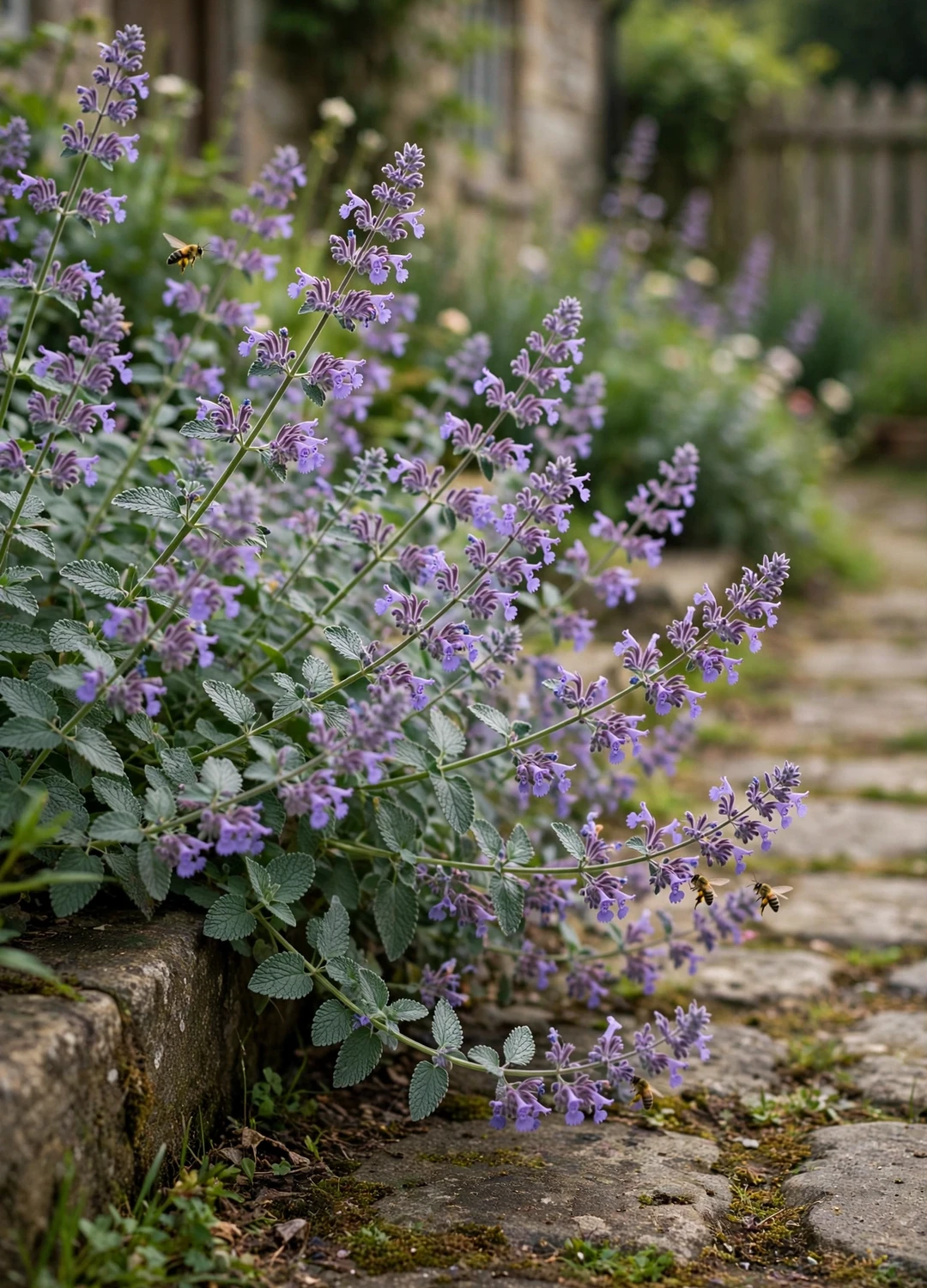
Catmint is the plant that makes a border look soft. Its grey-green leaves and clouds of small lavender-blue flowers spill over path edges from late spring into summer, and bees visit it all day long. It is one of the toughest cottage plants you can grow.
Why It Works
Catmint fills the front of the border with colour for months, hides bare stems of taller plants behind it, and asks for almost nothing in return.
Best for
Full sun and well-drained soil. It is drought-tolerant once settled, so it suits dry edges and sunny paths.
Styling Tips
Plant it at the feet of roses — the two are classic partners. After the first flush of flowers fades, shear the plant back by half and it will flower again. Cats may roll in it, so plant a spare clump at the edge of the garden for them.
10. Lupins
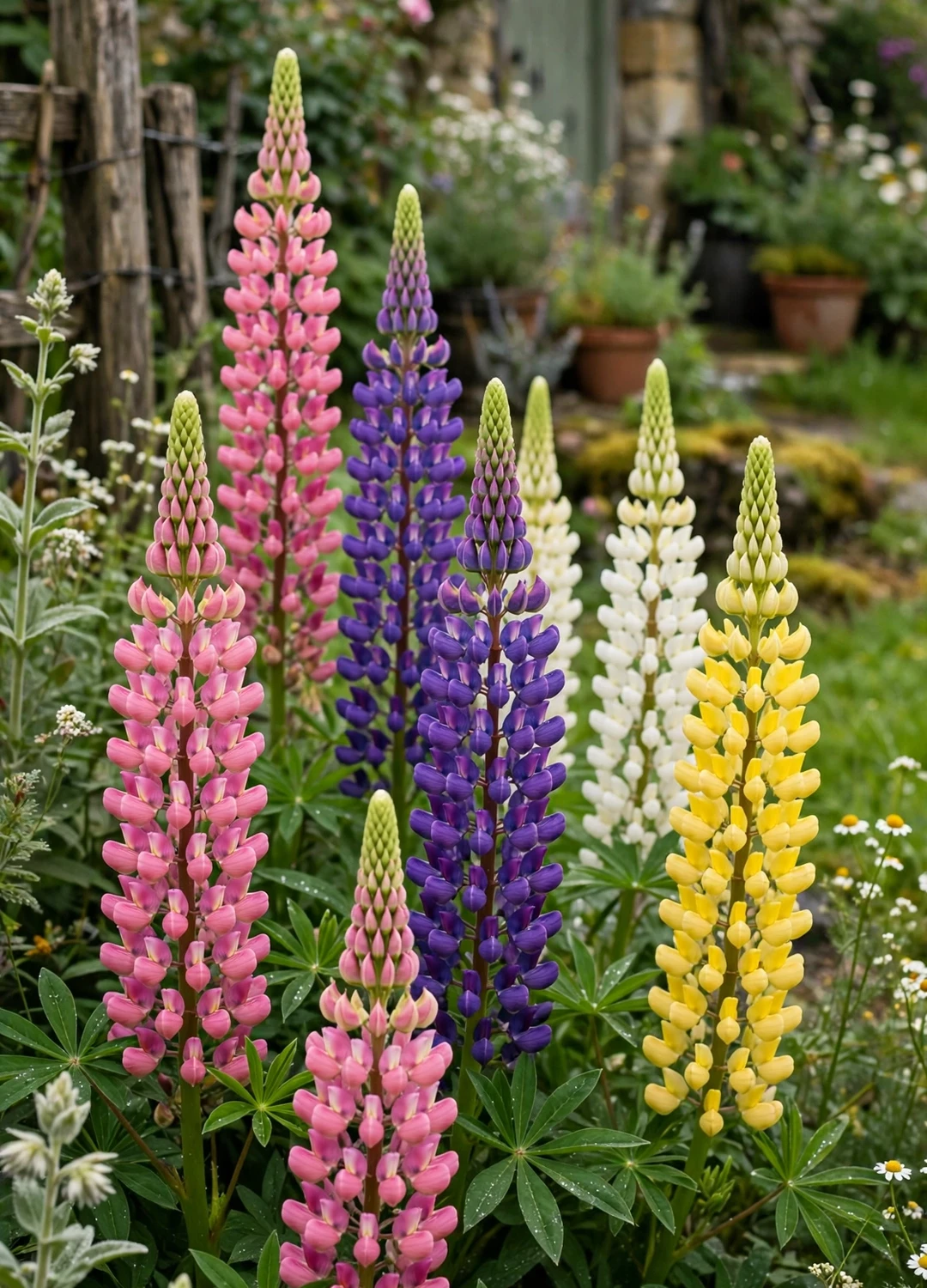
Lupins bring bold, upright spires of colour in pink, purple, yellow, and white, and they do something clever while they grow: their roots fix nitrogen in the soil, which feeds the plants around them. They are short-lived, but they self-seed, so the display renews itself.
Why It Works
Lupins add strong vertical colour in early summer, right when the spring bulbs are finished and the roses are just starting. Their bold flower spikes stand out against softer cottage planting.
Best for
Full sun and slightly acidic, well-drained soil. They grow best in cooler gardens and dislike hot, humid summers.
Styling Tips
Protect young plants from slugs — they are a favourite snack. Deadhead spent spikes to keep the plant tidy and encourage a second flush. Let a few plants set seed if you want new lupins next year.
11. Hardy Geraniums
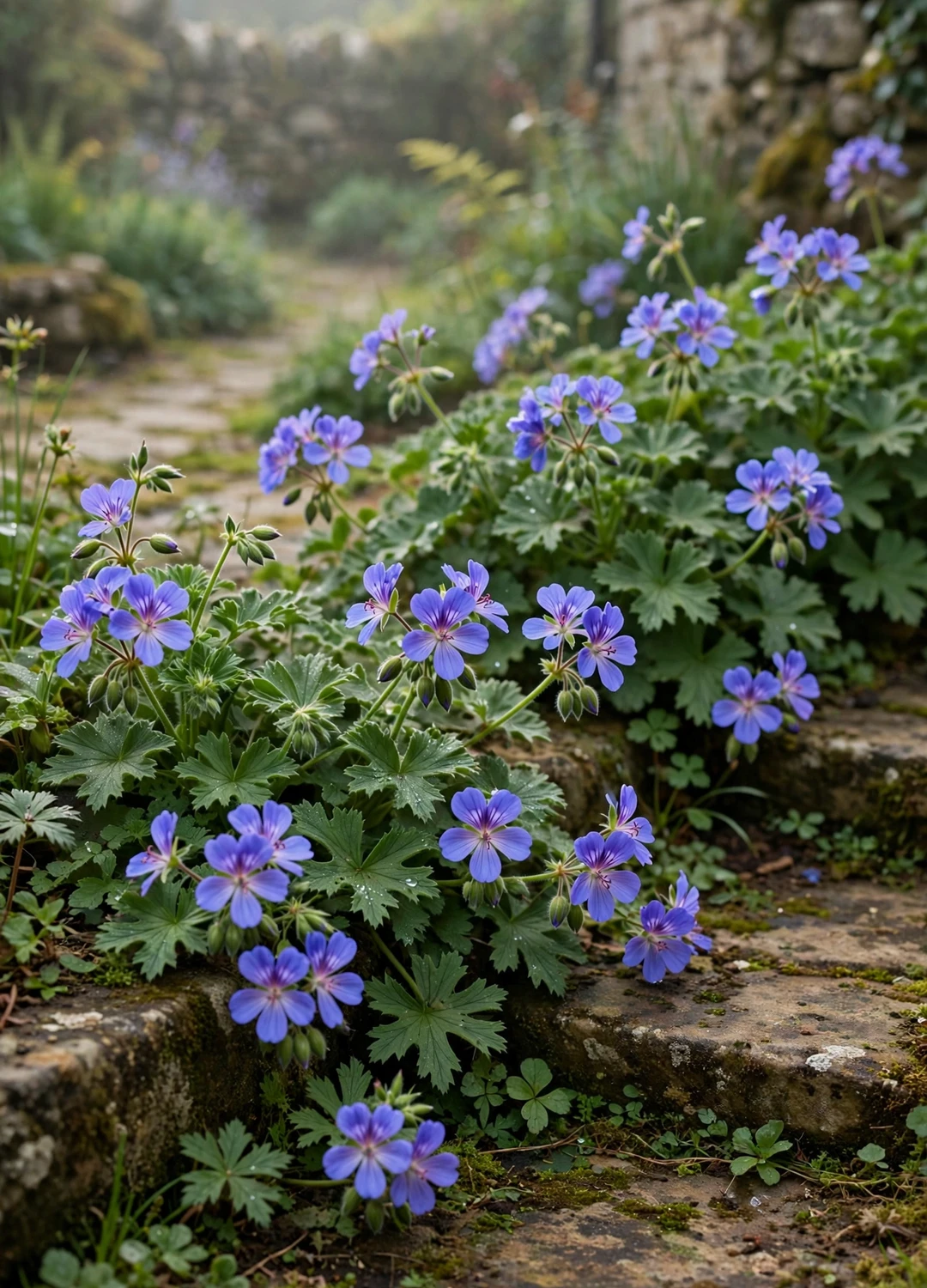
Hardy geraniums are the weavers of the cottage garden. Their low mounds of lobed leaves spread between taller plants, cover bare soil, and smother weeds — then they flower for months in pink, purple, blue, and white. 'Rozanne', with its violet-blue flowers, is one of the longest-flowering perennials you can grow.
Why It Works
Geraniums knit the border together. They fill gaps, soften hard edges, and keep flowering long after most perennials have finished.
Best for
Sun or partial shade, in any reasonable soil. They cope with dry shade under shrubs and with the front of sunny borders alike.
Styling Tips
Let them spill over path edges and between paving stones — that relaxed, slightly untidy look is exactly what a cottage garden wants. Cut the foliage back hard in midsummer if it gets scruffy, and fresh leaves and flowers will follow.
12. Salvias
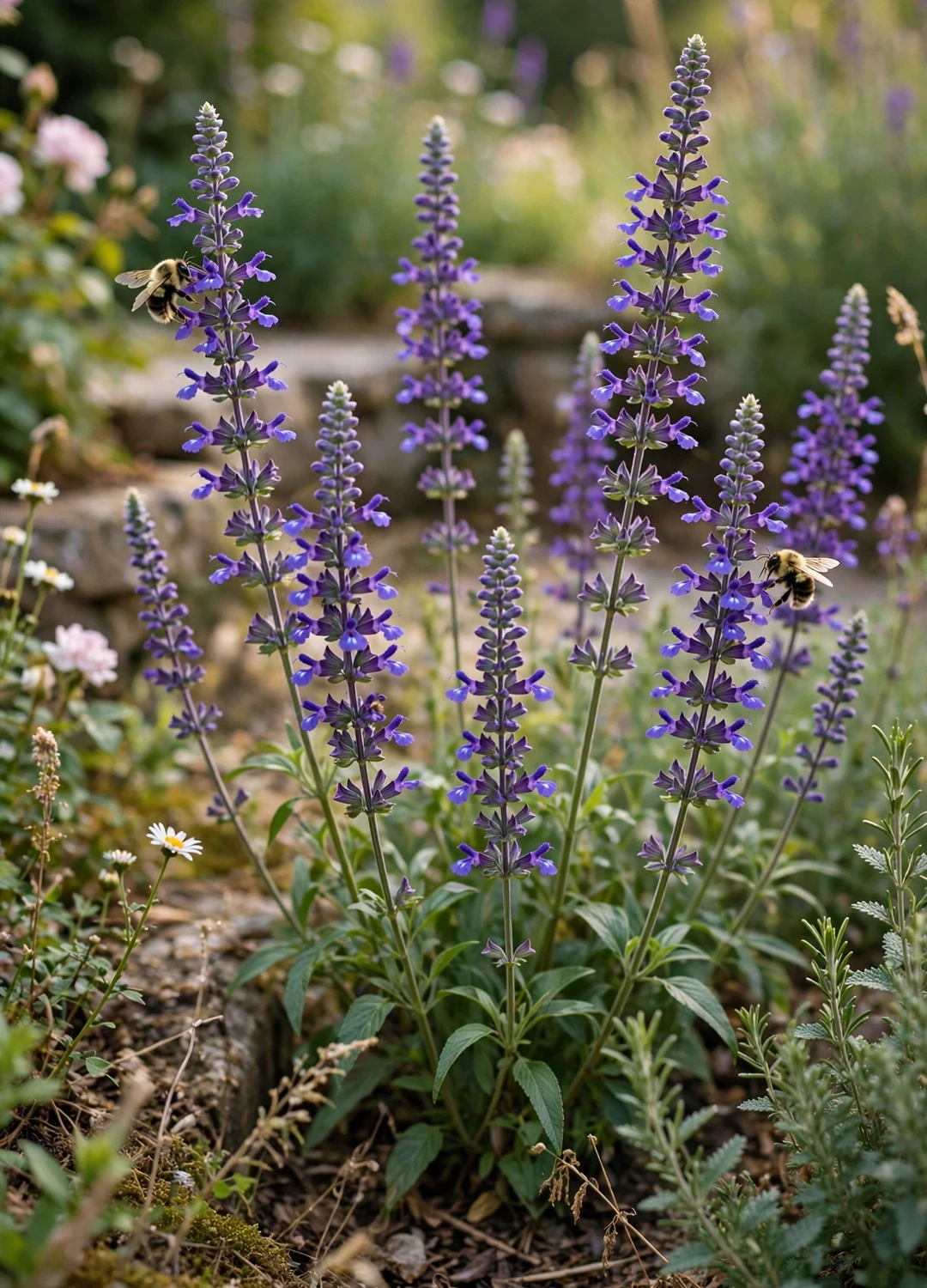
Salvias keep the cottage garden colourful long after the early summer rush. Varieties like Salvia nemorosa flower from June into autumn in deep purple, blue, and pink, and bees visit them constantly. They are tough, drought-tolerant, and they look good with almost everything.
Why It Works
Salvias bridge the gap between the June peak and the autumn garden. Their upright spikes add structure, and their long flowering season means the border never has a dull moment.
Best for
Full sun and well-drained soil. They dislike wet winters, so avoid heavy clay that stays soggy.
Styling Tips
Deadhead the spent flower spikes and most salvias will flower again within weeks. Plant them in drifts of three or five for the best effect, and pair their purple spikes with soft pink roses or pale yellow flowers for a classic cottage contrast.
How to Layer Them in a Border
Cottage gardens look effortless, but the layering does the work. Put the tall plants — hollyhocks, delphiniums, and foxgloves — at the back. Fill the middle with roses, peonies, lupins, and salvias. Edge the front with lavender, catmint, and hardy geraniums. Then let the self-seeders — foxgloves, hollyhocks, and lupins — fill the gaps on their own. That is how a border looks full without looking crowded.
If you are still planning the cottage itself, our English cottage floor plans post shows how the house and garden sit together, with space for borders, paths, and a proper front garden. And when the garden is done, you can carry the same soft, layered look indoors — see our cozy cottage living room ideas for the inside version.
More Cottage Ideas
Frequently Asked Questions
What are the best plants for an English cottage garden?
Roses, lavender, foxgloves, delphiniums, and hardy geraniums are the essential five. Add peonies, hollyhocks, clematis, and catmint for the full cottage look.
Which cottage garden plants are easiest for a beginner?
Lavender, catmint, hardy geraniums, and salvias are the easiest. They need sun and well-drained soil, and they look after themselves once they settle in. Save roses and delphiniums until you have a season or two of practice.
When should I plant a cottage garden?
Plant perennials in early spring or early autumn. Bare-root roses go in during late winter or early spring. Foxgloves and hollyhocks can be sown from seed in spring for flowers the following year.
Can I grow a cottage garden in shade?
Partly. Foxgloves and hardy geraniums cope with partial shade, and clematis likes its roots in shade. But most cottage plants — roses, lavender, delphiniums, peonies — want at least six hours of sun a day to flower well.
How do I keep a cottage garden from looking messy?
Layer it: tall plants at the back, medium in the middle, low edging at the front. Edge paths with lavender or catmint, cut plants back after flowering, and leave a little room between them so air can move. A cottage garden should look full and relaxed, not tangled.