12 English Cottage Front Door Ideas for a Warm Welcome
English Cottage Front Door
12 English Cottage Front Door Ideas for a Warm Welcome
The front door is the first hello of an English cottage. One painted door in a soft cottage colour, a ring pull in black iron, a pair of lanterns, and roses trained over the porch — that is all it takes. These 12 ideas show you how to build that welcome, door by door, in any home.
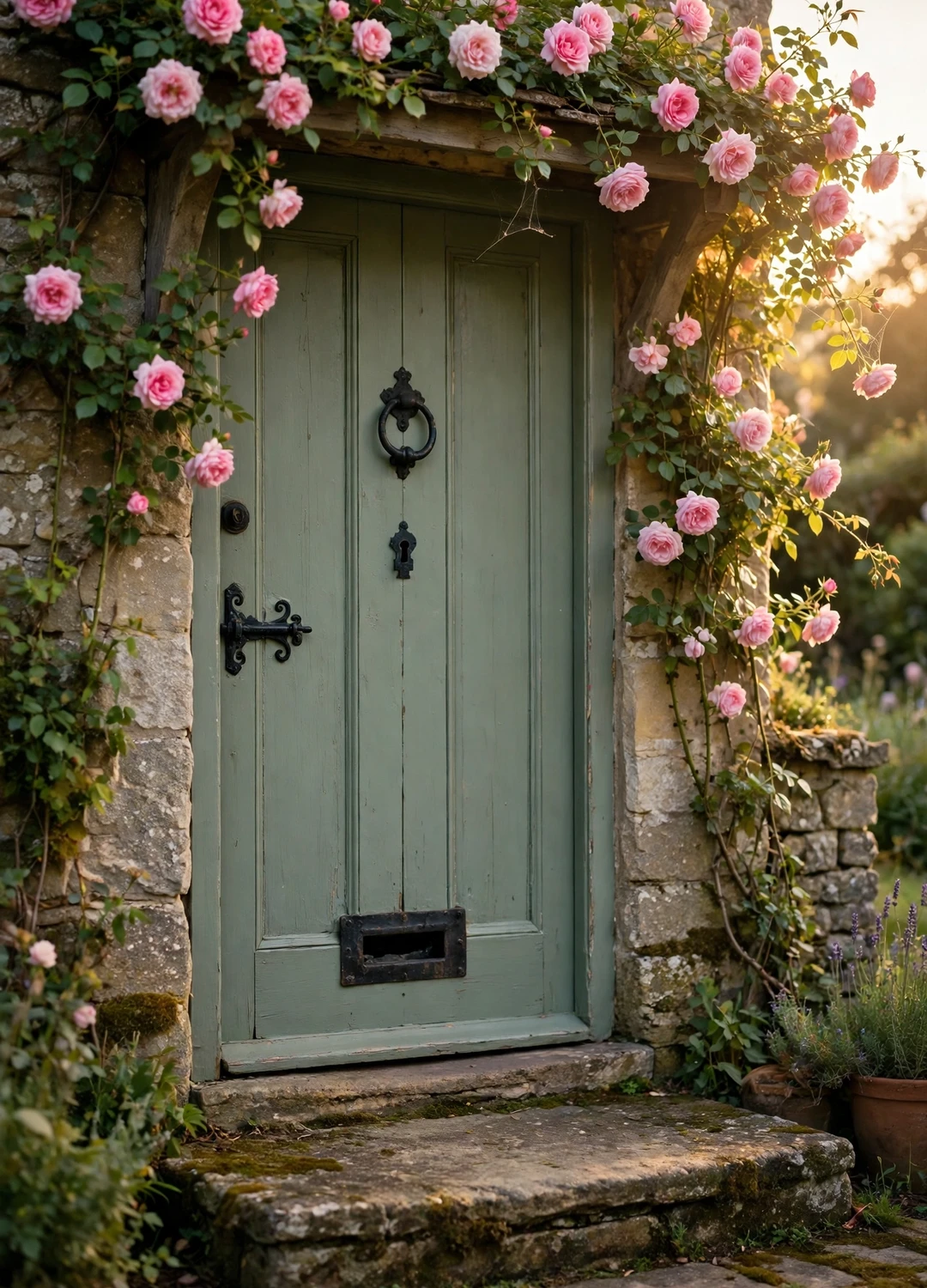
One painted door, black iron hardware and roses over the porch — the cottage welcome starts here.
An English cottage front door is not a grand entrance. It is small, honest, and full of small touches that add up: a colour you can spot from the lane, a knocker that has been polished by a hundred hands, a lantern glowing at dusk, and a pot of lavender by the step. The door sets the tone for the whole house, and it is the easiest part of the cottage look to get right — you can change a door in a weekend. The 12 ideas below cover the colour, the door itself, the hardware, the porch, the light, and the plants. Start with the colour, then add one touch at a time.
1. Paint the Door a Cottage Colour First
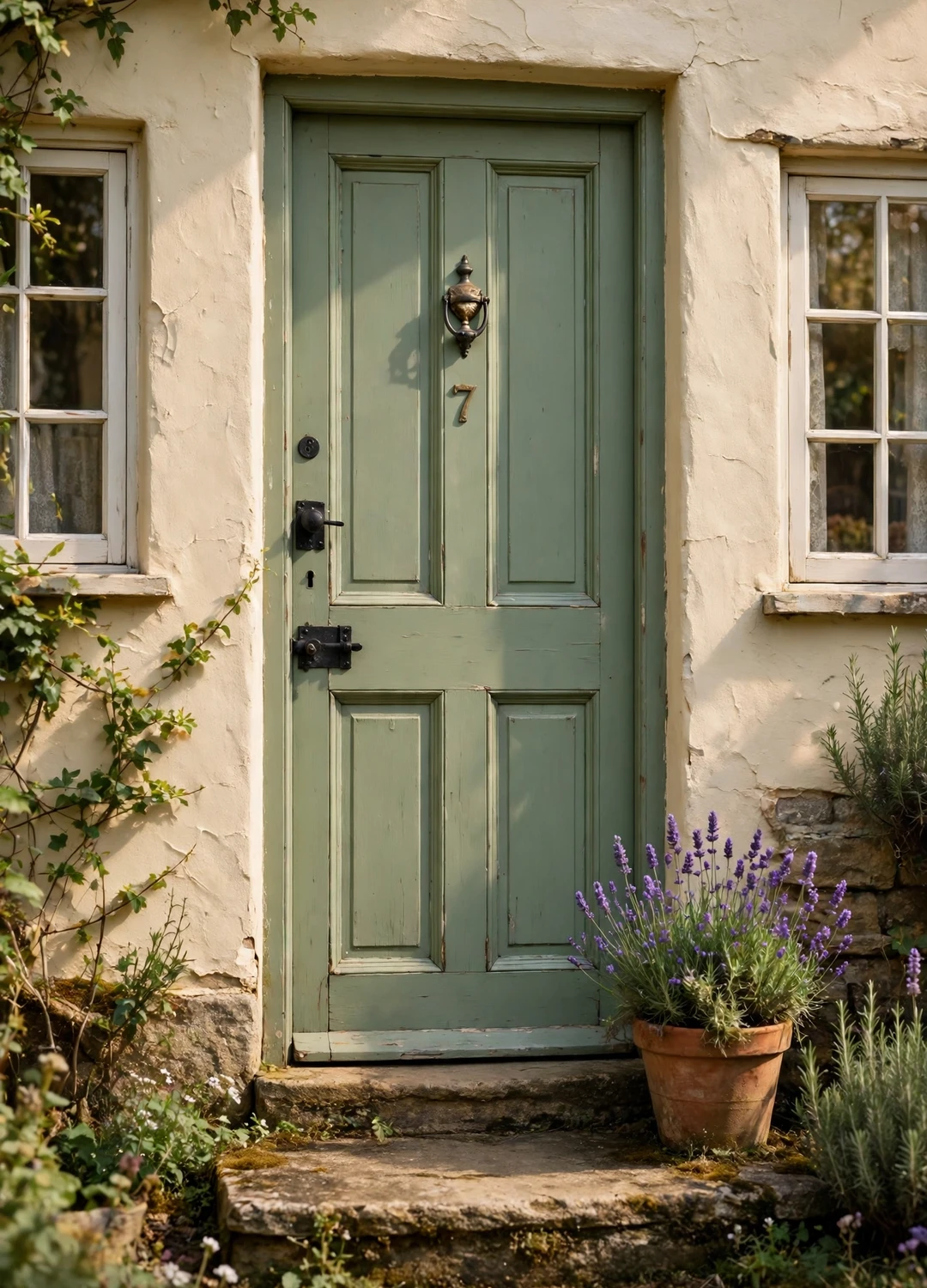
Pick the colour first, then match everything else to it. Cottage doors wear one saturated colour against stone, brick, or cream render: sage green, Chartwell Green, duck egg blue, Hamilton Blue, Heritage Red, or buttercup yellow. One strong colour makes a small door look confident, and it tells visitors they have found the right house. Keep the frame and trim pale, so the colour does the work.
Why It Works
Colour is the fastest way to make a door look like a cottage door. A bold, soft tone against pale walls gives the whole front of the house a focal point, and it works on any door shape — old timber, new composite, or a simple panelled door. The colour also sets the mood: green feels calm, blue feels fresh, red feels warm.
Best for
Any house, any budget. A tin of paint is the cheapest cottage change you can make, and it works just as well on a modern house as on an old stone cottage. If the rest of the house is plain, the door colour carries the whole cottage feeling.
Styling Tips
Paint a test patch and live with it for a week, in morning light and at dusk, before you commit. Match the path, the pots, and the hardware to the colour you choose — one colour, one metal, one calm front. For the full cottage look beyond the door, see our English cottage post.
2. A Ledged-and-Braced Timber Door
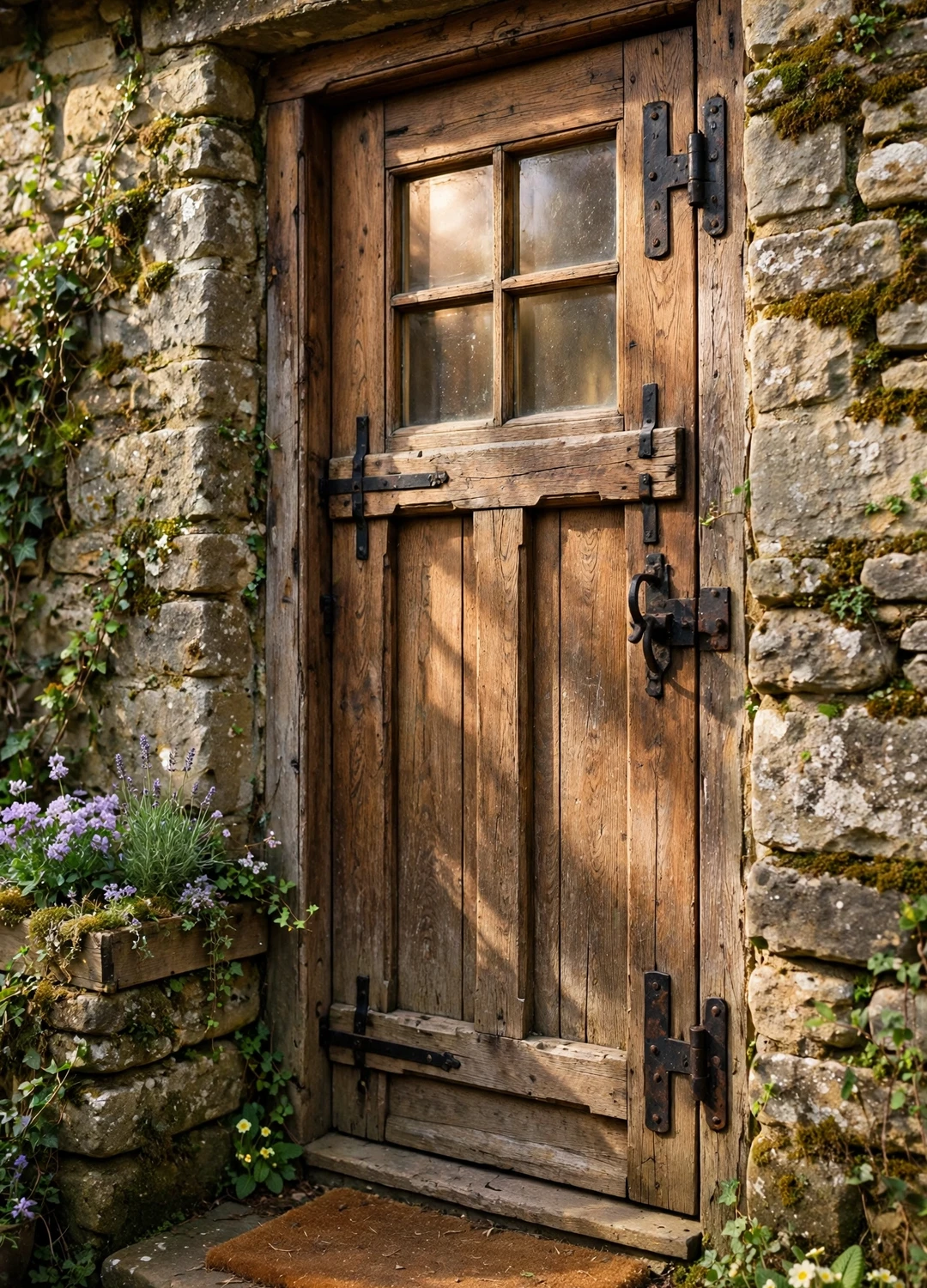
The traditional cottage door is made of vertical planks held together by horizontal ledges — a ledged-and-braced door, in seasoned oak or painted pine. It is the door shape you see on old cottages everywhere: simple, sturdy, and honest. Add a small glazed top panel to let light into the hall, and the door feels bright from the inside too.
Why It Works
A plank door looks like it belongs to the house, not to a catalogue. The vertical boards and the ledges give the door a texture that flat panel doors never have, and real timber ages with the house — it darkens, it marks, and it looks better for it. The glazed panel is the practical touch: a dark cottage hall gets a little daylight.
Best for
Old cottages, stone houses, and anyone replacing a door who wants the real thing. A ledged-and-braced door also suits a house with exposed beams and uneven walls, where a perfect modern door would look out of place.
Styling Tips
Choose seasoned oak if you want the wood to show, or painted pine if you want the cottage colour. Keep the glazing small — one panel at the top is enough — and use simple, wavy glass for an old look. Oil the hinges now and then so the door swings smoothly and quietly.
3. A Stable Door, Split in Two
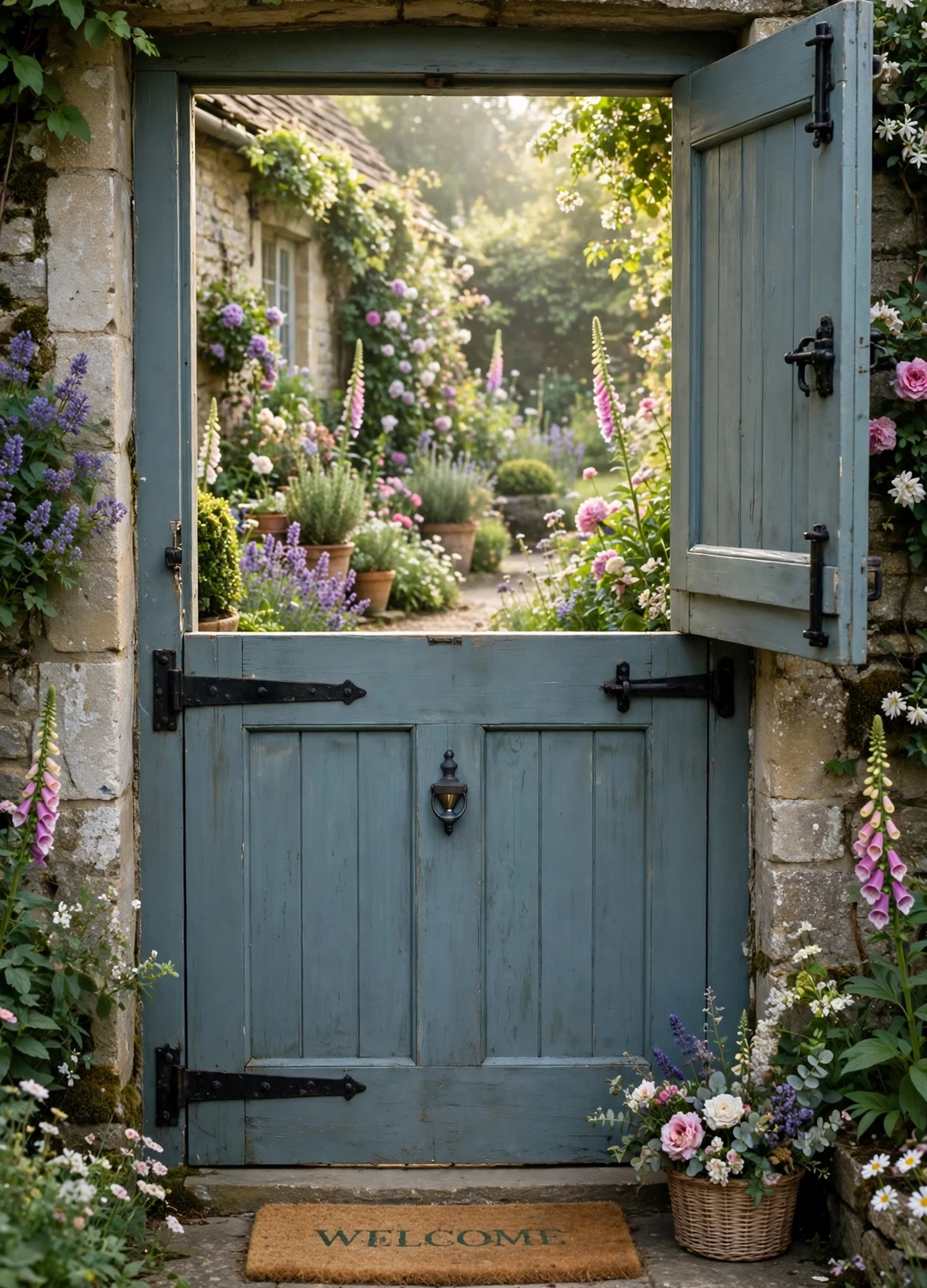
The stable door is the country-cottage classic: a door split in two, so the top half can open for air and light while the bottom half stays shut. Paint it in a cottage colour with black iron hinges, and you have a door that works as hard as it looks. Open the top on a summer morning, shut it on a winter night, and the door changes with the day.
Why It Works
A stable door is practical in a way no other door is. It lets in fresh air and birdsong without letting in the dog, the toddler, or the draught. It also suits a cottage kitchen that opens straight onto the garden, where the door is really a second window as much as an entrance.
Best for
Cottages with a garden at the back, homes with dogs or small children, and anyone who likes to leave the door open in summer. A stable door is at its best as a back door, but it makes a charming front door too.
Styling Tips
Fit a proper bolt between the two halves so they lock together as one solid door at night. Keep the hinges black iron and the handle simple — the door is the feature, not the fittings. If the door faces the street, add a small curtain on the top half for privacy.
4. Black Iron Hardware That Ages Well
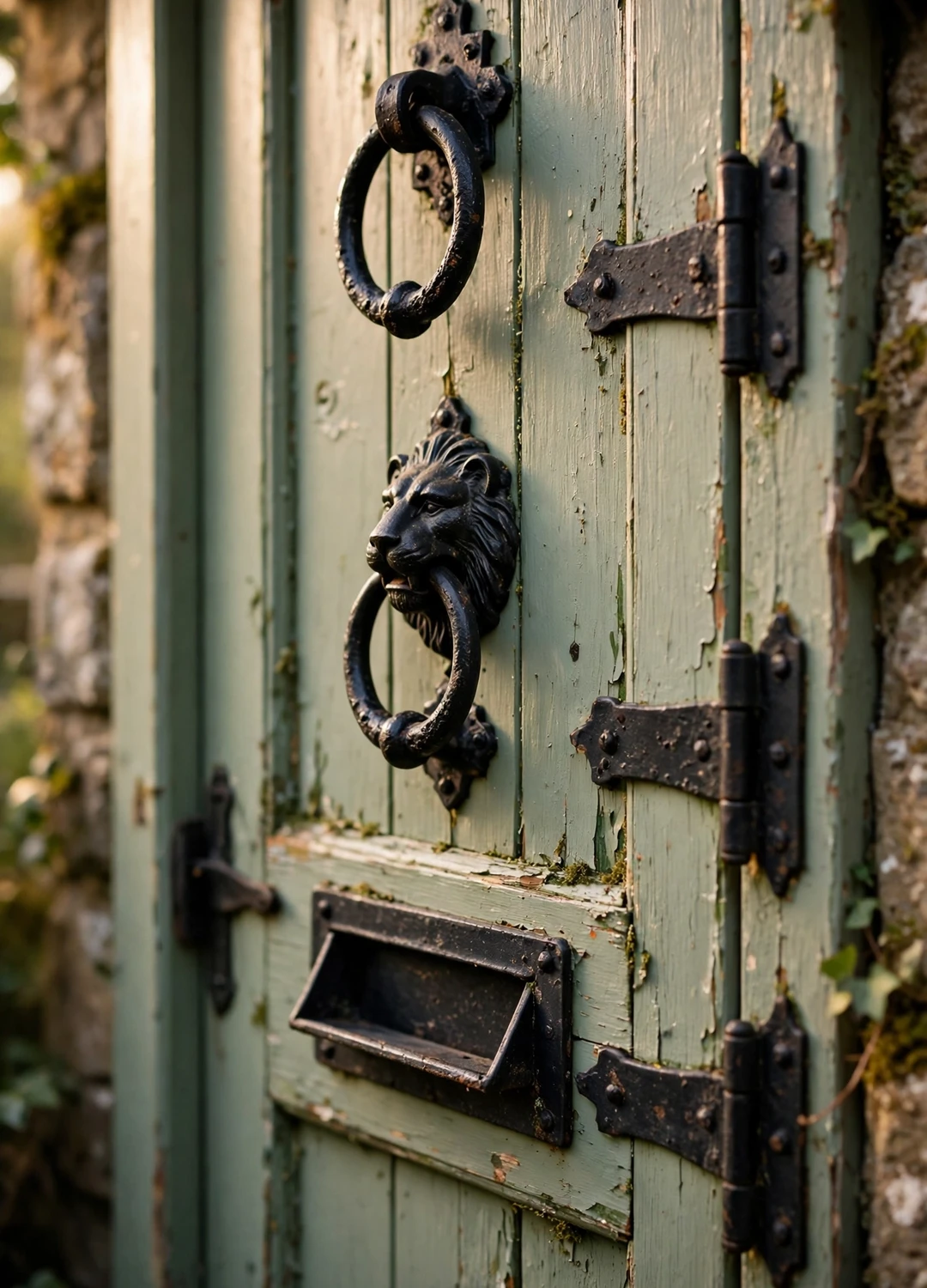
One metal finish across the whole door: a ring pull, a door knocker, a letterbox, and hinges in black iron or aged brass. Not a mix — one finish, repeated, so the door reads as one piece. Black iron suits painted timber best; aged brass suits a bare oak door. Either way, the hardware should look as if it has been there for years.
Why It Works
Hardware is the jewellery of the door, and matching it is what makes a door look considered. Black iron and aged brass both age well — they darken and soften instead of going shiny and cheap. A ring pull is also the most practical handle for a thick timber door, because you can pull it with a full hand.
Best for
Any cottage door, old or new. If you are repainting a door, changing the hardware at the same time is the quickest way to make the whole thing feel new without replacing the door itself.
Styling Tips
Choose the metal before you buy anything, then buy the knocker, the letterbox, the pull, and the hinges in that one finish. Keep the hinges visible — long strap hinges are part of the cottage look, not something to hide. For more on the small details that carry a cottage room, see our English cottage style ideas.
5. A Knocker, a House Number and a Name Plaque
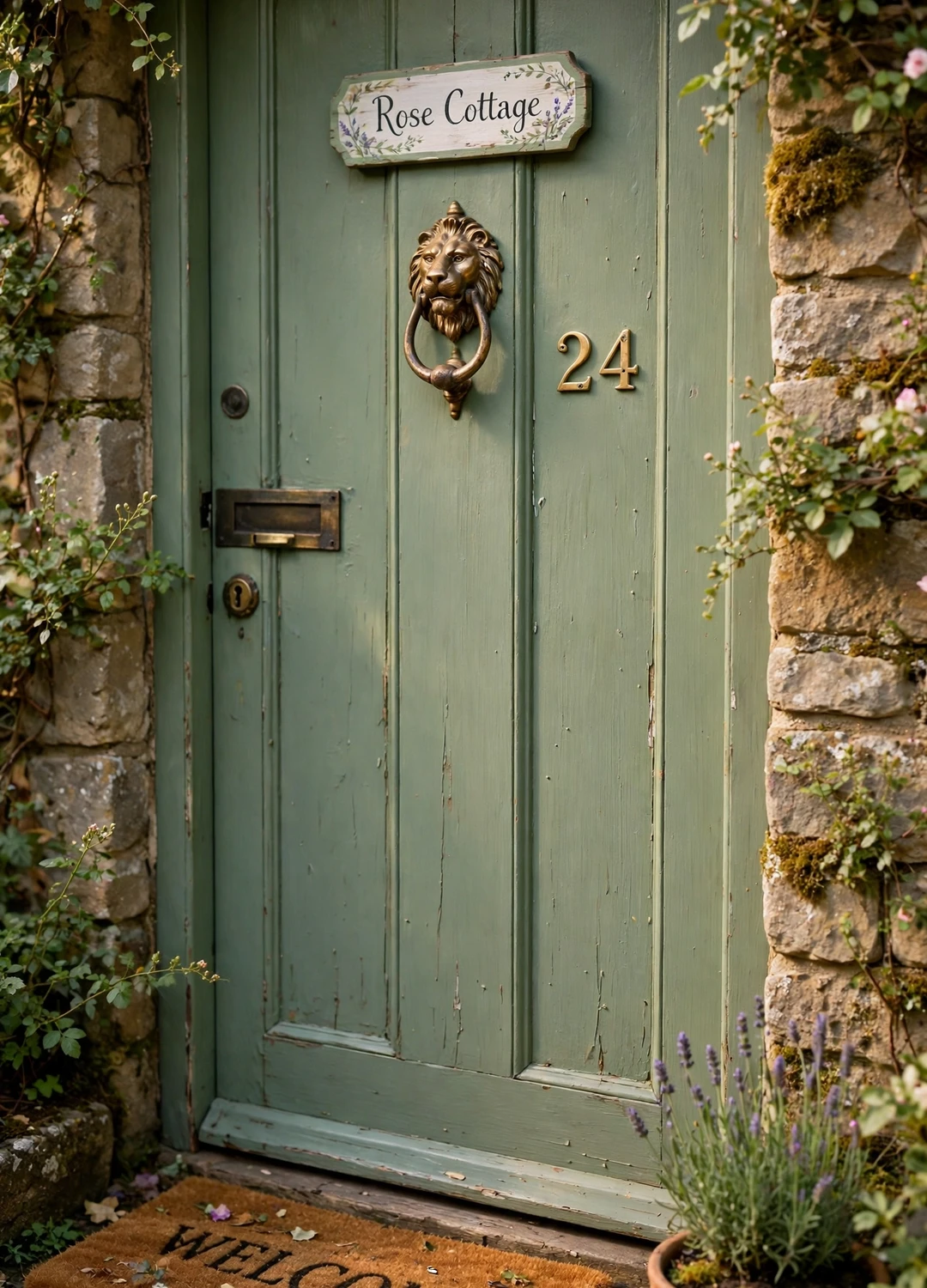
These are the details visitors touch and read first: a brass or iron knocker, clear house numbers, and a small painted name sign. A knocker with a simple shape — a ring, a fox, or a plain hand — is the cottage classic. Put the numbers where they can be read from the gate, and keep the name plaque small and hand-painted, not printed.
Why It Works
A knocker and a name plaque make a house feel like a home with a name, not just an address. They are also the most-used parts of the door — every visitor touches the knocker — so they carry the patina that makes a door feel old and loved. Clear numbers are simply practical: deliveries, guests, and the postman all find you faster.
Best for
Every cottage door. If your house has a name, use it — a name plaque is one of the oldest cottage traditions, and it suits a house in a lane far better than a bare number.
Styling Tips
Mount the knocker at a comfortable height, about chest high, and the numbers at eye level beside the door, not on it. Match the metal to the rest of the hardware. If you paint the name plaque yourself, use the same paint as the door for a joined-up look.
6. A Small Porch or Canopy Over the Door
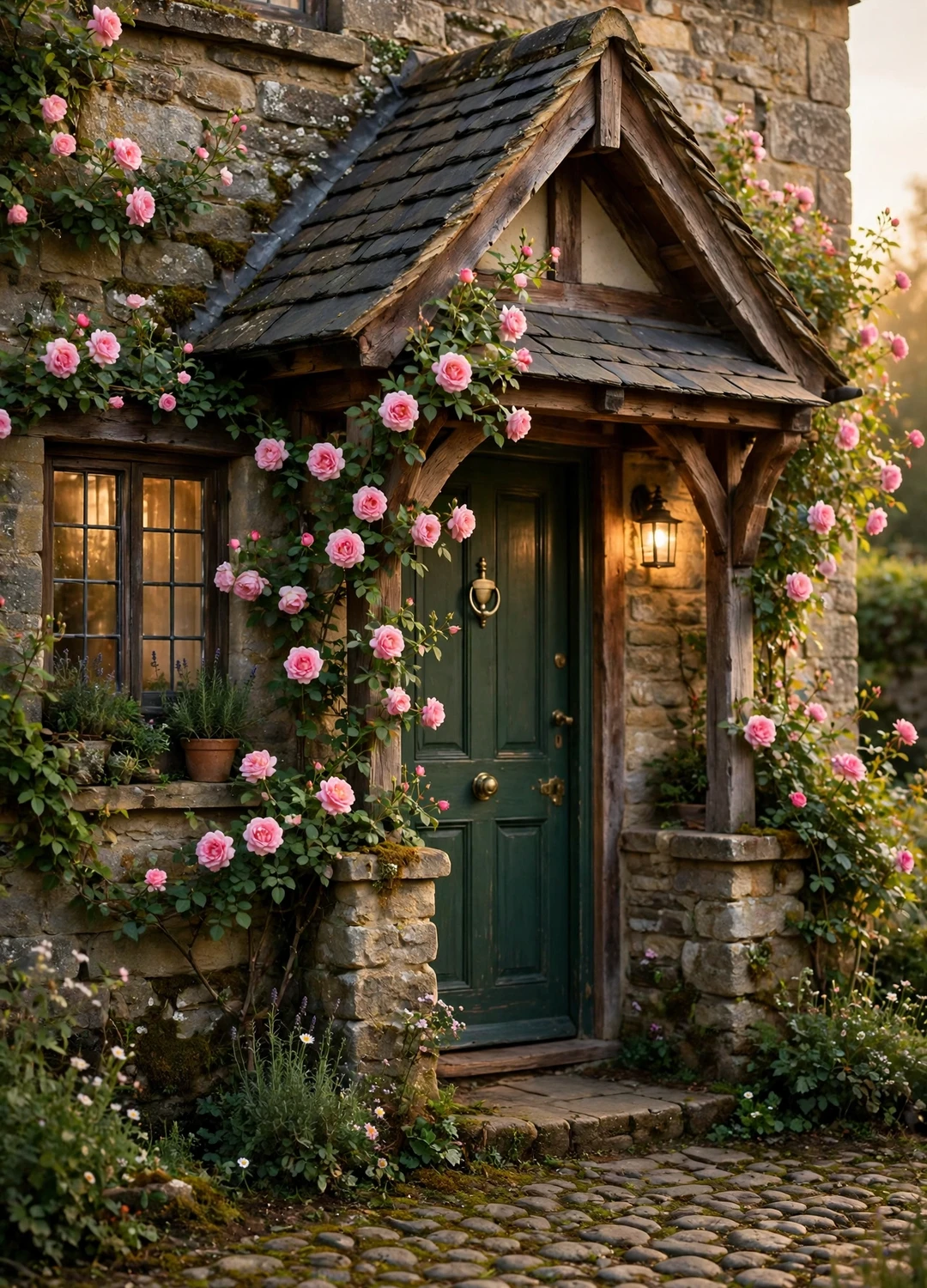
A tiny gabled porch, a simple timber canopy, or a slate pentice over the door does two jobs: it shelters you from the rain while you find your keys, and it frames the door like a picture. It also gives climbing roses or honeysuckle something to grow over, so the porch becomes part of the garden as well as part of the house.
Why It Works
A porch turns a flat front wall into a proper entrance. It adds depth and shadow, so the door stands out, and it keeps the rain off the step, the doormat, and the door itself — which means the paint lasts longer. A canopy also gives the house a shape from the lane, which a bare door never does.
Best for
Houses with a front door that opens straight onto the weather, and anyone who wants the cottage look without changing the door. A simple timber canopy is a small job; a gabled porch is a bigger one, but both change the whole front of the house.
Styling Tips
Keep the porch small — just wide enough to shelter one person and the step. Use the same timber and the same roof material as the house, so it looks like it was always there. Plant a climber at one side only, so the porch never gets swallowed by growth.
7. Lanterns on Either Side
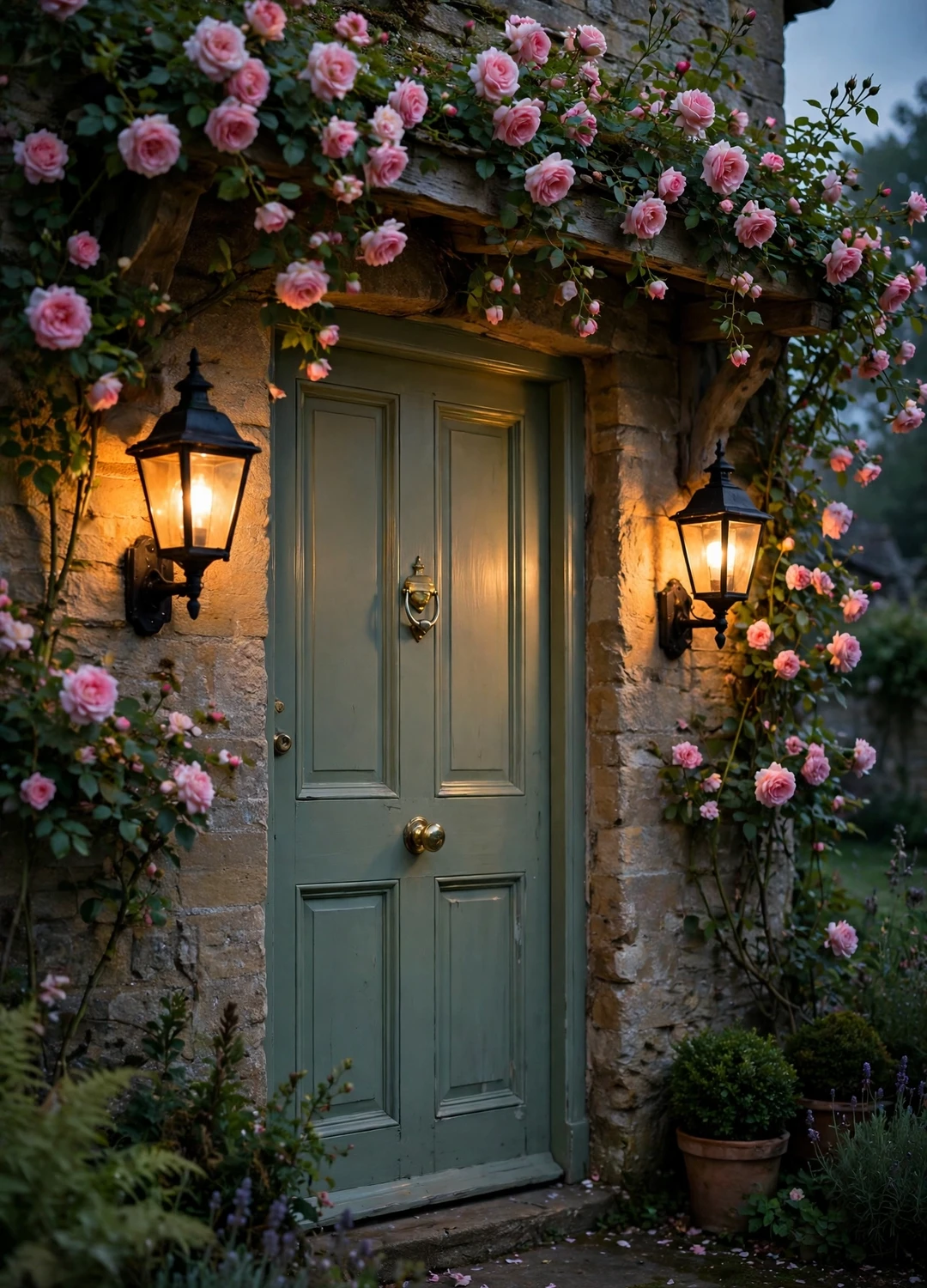
A pair of wall lanterns, one on either side of the door — or a single hanging lantern if the porch is small — in black iron with warm glass. Low, warm light at dusk, so the door is easy to find and the house looks welcoming from the lane. Choose warm bulbs, never bright white, and put the lanterns on a dusk sensor or a timer.
Why It Works
Warm light is what makes a cottage feel lived-in after dark. Two lanterns frame the door and light the step, so visitors can see the lock and the knocker. They also make the front of the house glow, which is the single most welcoming thing a house can do on a winter evening.
Best for
Any front door, especially one down a dark lane or behind a gate. Lanterns are at their best in winter, when the light comes on early and the house glows while you are still coming home.
Styling Tips
Hang the lanterns at eye level, about a hand's width from the door frame, and use warm-white bulbs around 2700K. Keep the glass clean — a lantern with dirty glass gives half the light. If you have a porch, hang one lantern from the centre instead of two on the wall.
8. Climbing Roses and Honeysuckle Over the Door
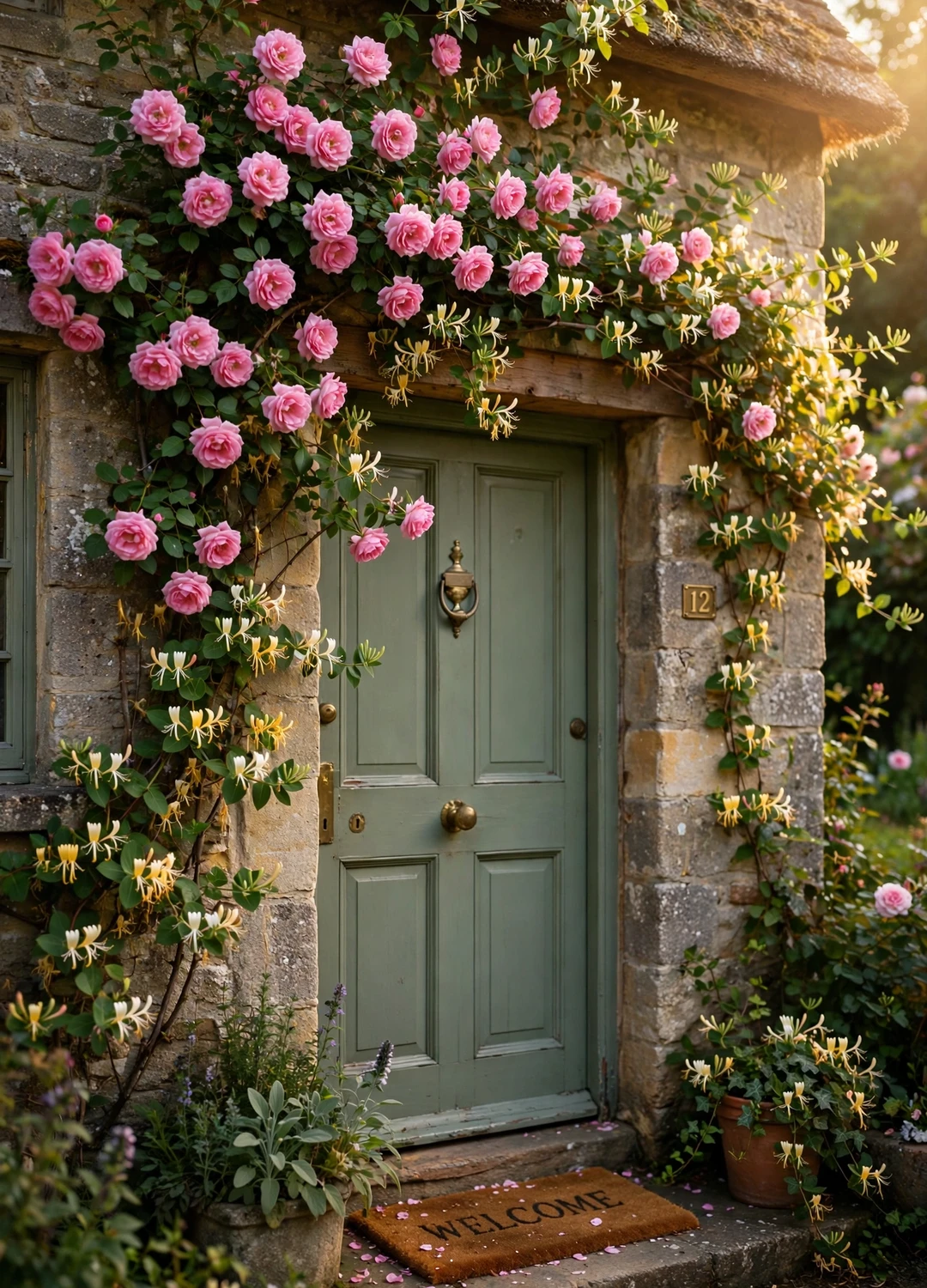
Roses trained over the porch or the doorway, with honeysuckle or clematis as a second climber, give the door its scent at the threshold. Choose a repeat-flowering rose so the door is in bloom from June to October, and keep the growth trimmed so it never blocks the door or the path. The roses should frame the door, not swallow it.
Why It Works
A rose over the door is the image everyone has of an English cottage, and it is the one plant that does the most work: colour, scent, and a soft frame for the doorway. Honeysuckle adds evening scent, and clematis adds a second flush of colour when the roses rest. Together they make the entrance feel alive.
Best for
Any door with a porch, a canopy, or a wall to grow against — and a sunny or part-shaded front. Roses need at least a few hours of sun, so a north-facing door is better with clematis or honeysuckle, which cope with shade.
Styling Tips
Tie the stems in loosely with soft twine, and train them sideways as well as up — horizontal stems flower more. Prune in late winter, and deadhead through the summer to keep the blooms coming. For more on roses as a storybook touch, see our fairytale English cottage garden ideas.
9. Pots and Topiary Flanking the Steps
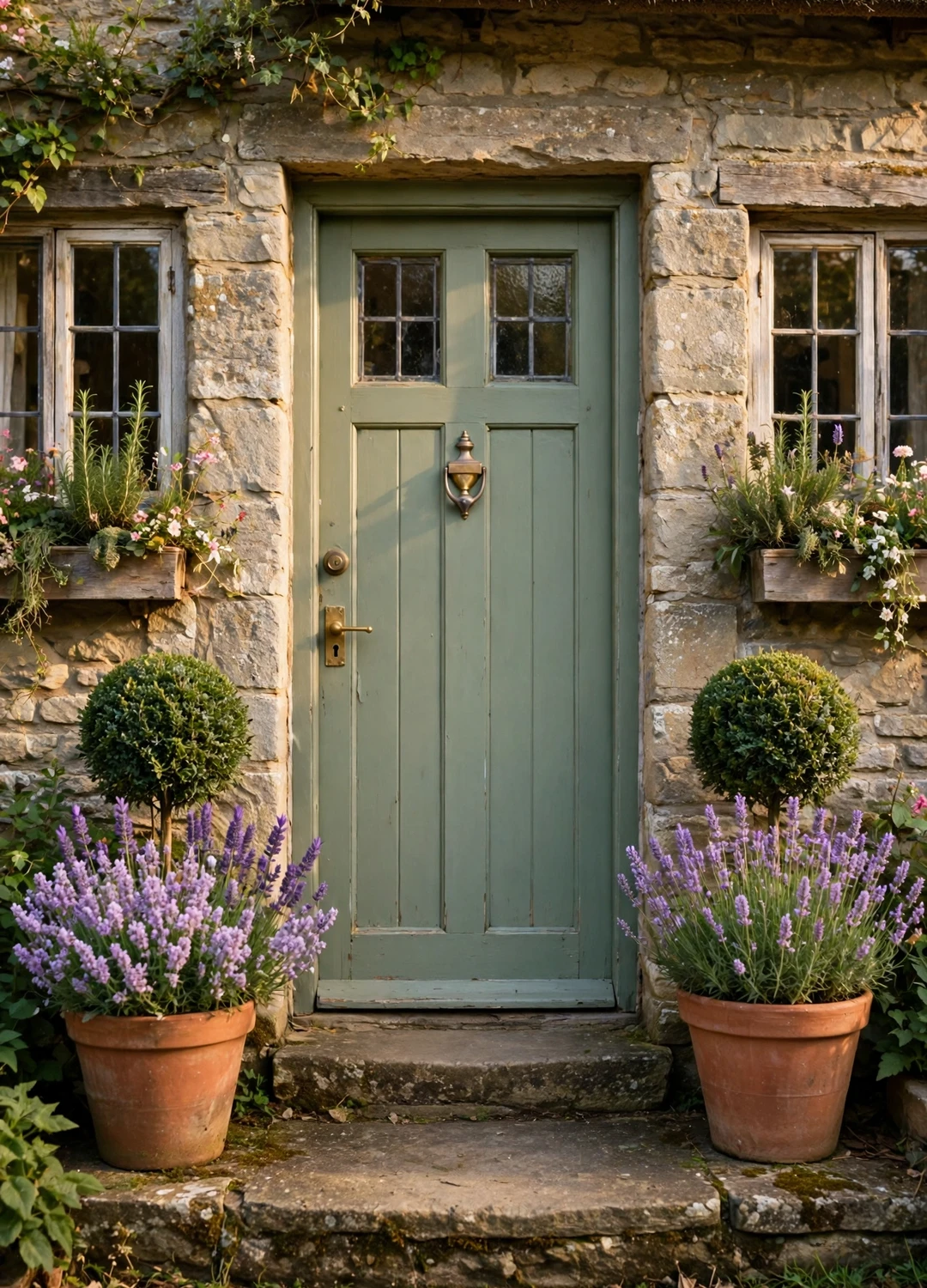
A matching pair of terracotta pots with lavender, box balls, or small topiary, one either side of the door. A pair, not a row, so the entrance stays calm. Terracotta suits a cottage front better than plastic or shiny metal, and it weathers to a soft, pale tone that matches stone and brick.
Why It Works
Two matching pots frame the door the way a pair of lanterns does — they give the entrance symmetry, and they soften the hard edges of the step and the wall. Lavender adds scent at ankle height, and box topiary stays green all winter, so the door never looks bare in January.
Best for
Any front step, even a small one. A pair of pots works on a doorstep with no garden at all, and it is the quickest way to make a plain front door feel like a cottage entrance.
Styling Tips
Keep the two pots the same size, the same material, and the same plant — matching is the point. Raise them on small feet so water drains and the frost does not crack them. Water the lavender little and often, and clip the box twice a year to keep its shape.
10. A Stone Step and a Short Path
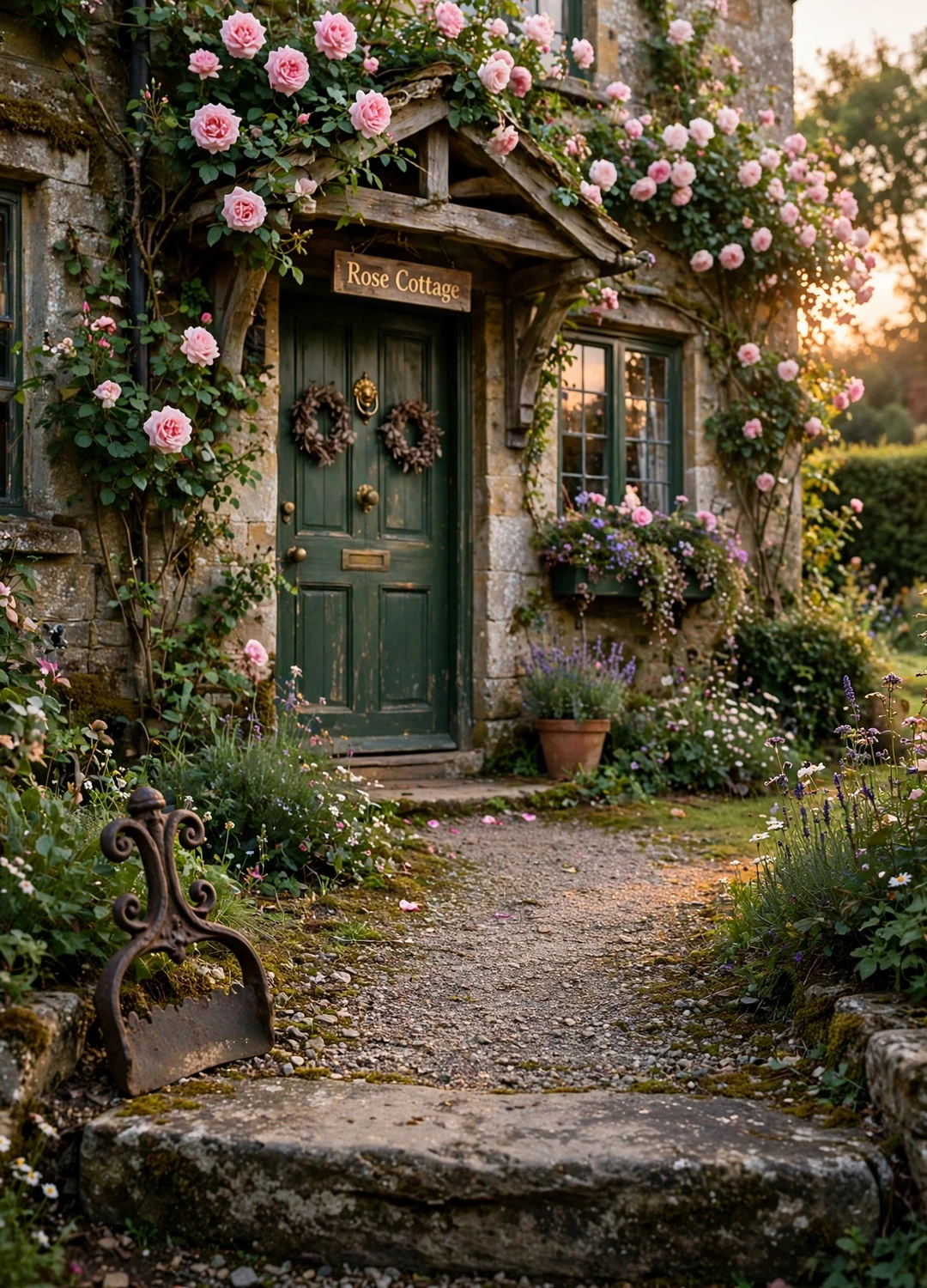
A worn stone step, a gravel or stone-slab path to the gate, and a boot scraper by the door. This is the practical side of the cottage entrance — and the first thing underfoot. The step should be wide enough for two feet and a pair of pots, and the path should be the spine that leads the eye from the gate to the door.
Why It Works
Stone and gravel feel old the moment they are laid, and they age better than concrete or paving slabs. A worn step tells visitors the house has been lived in for a long time, and a short, clear path makes the entrance easy to find. The boot scraper is the honest cottage detail: mud stays outside, where it belongs.
Best for
Any cottage with a front garden, and any house where the door opens onto a path. Gravel suits a cottage garden best, because it is soft underfoot and it drains well in the rain.
Styling Tips
Choose stone that matches the house — the same stone as the walls, if you can. Keep the path clear and wide enough for two people to walk side by side. For more on planning a path as the spine of the garden, see our English cottage garden plan — and for the garden side of the path, see our English cottage garden post.
11. A Seasonal Wreath and a Simple Doormat
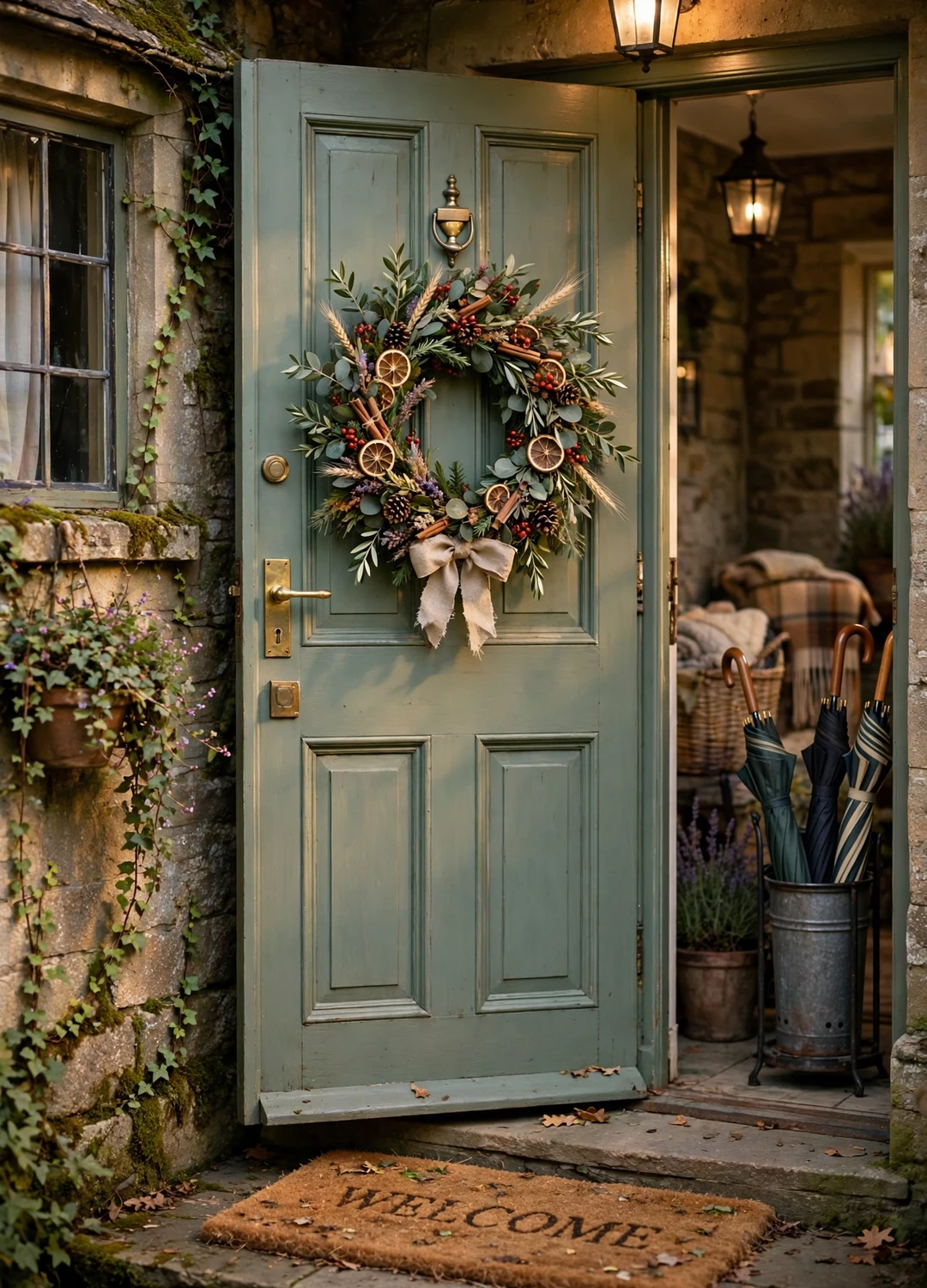
A fresh wreath — roses and greenery in summer, holly and pine in winter — a coir doormat, and an umbrella stand inside the porch. One change per season, never a crowded doorway. The wreath is the door's one piece of jewellery that changes through the year, and the doormat is the plain, hardworking part that keeps the hall clean.
Why It Works
A wreath marks the season without any fuss, and it is the cheapest way to make the door feel cared for. A coir mat is tough, it traps mud, and it looks right against stone and timber in a way a printed mat never does. Together they say: someone lives here, and they look after the place.
Best for
Every front door, in every season. A wreath is the one decoration that suits a cottage door all year round — just change the greenery with the season.
Styling Tips
Hang the wreath from a small hook or a ribbon over the top of the door, not a nail through the paint. Keep the wreath smaller than the door panel it hangs on, and leave the rest of the door bare — one wreath, one mat, nothing else. Swap the wreath four times a year, and the door always feels fresh.
12. Paint Finish and Upkeep
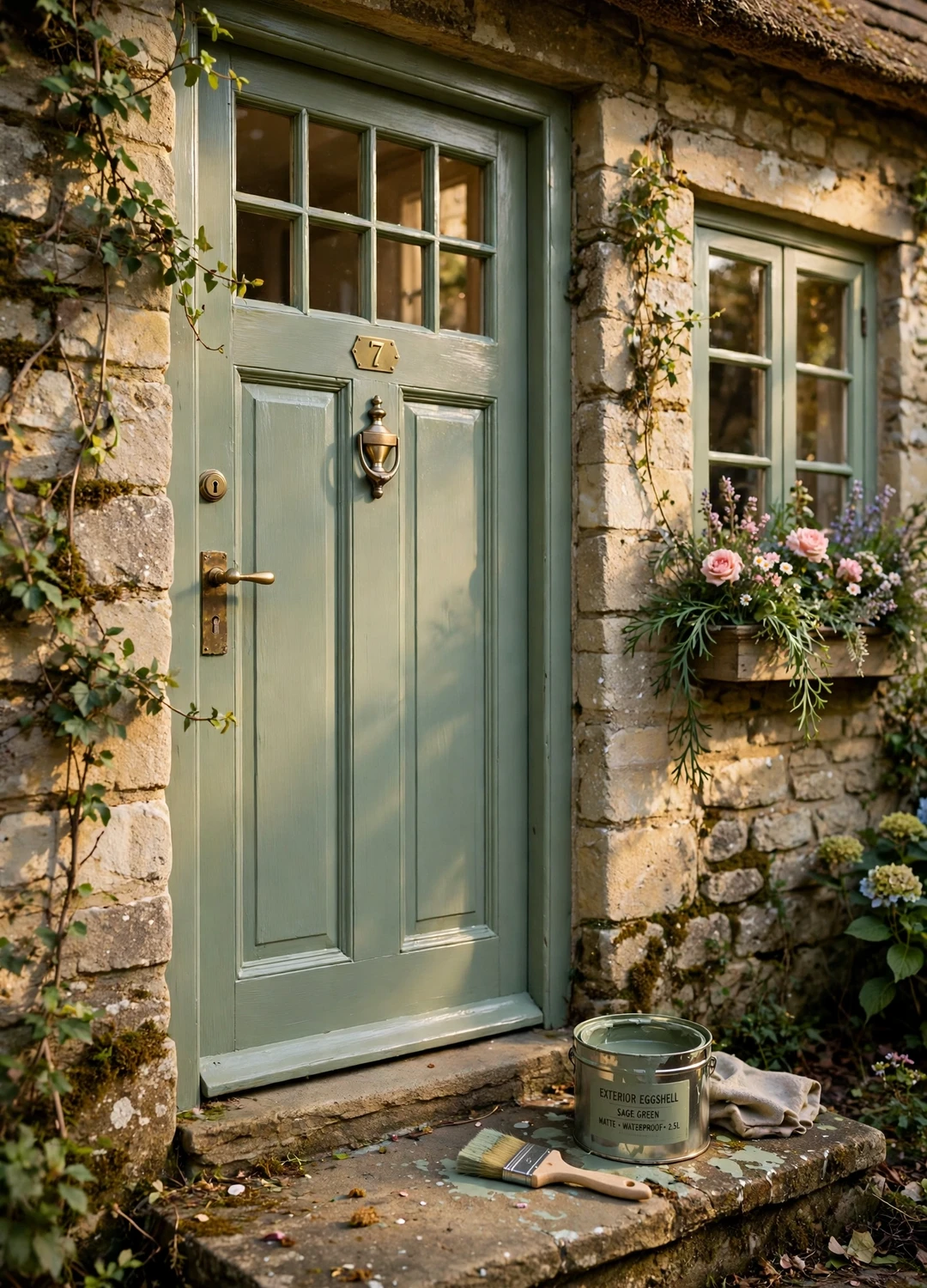
Exterior eggshell for a soft cottage look, full gloss for a classic shine in strong colours. Repaint every few years, oil the hinges, and keep the frame the same pale tone as the trim so the door colour does the work. A door that is looked after shows: the paint stays smooth, the hinges swing quietly, and the colour stays true.
Why It Works
The finish is what makes the colour last. Eggshell hides the small marks of daily life and suits a soft cottage colour; gloss suits a deep red or a strong blue, and it wipes clean. Regular upkeep is the real cottage secret — old doors look good because someone has painted them, oiled them, and cared for them for decades.
Best for
Anyone who has just painted a door, and anyone whose door is looking tired. A fresh coat every few years is the cheapest way to keep the whole front of the house looking loved.
Styling Tips
Paint on a dry, mild day, and take the door off its hinges if you can — it paints far better flat. Use an exterior primer first, and two thin coats rather than one thick one. While the paint dries, oil the hinges and polish the knocker, so the whole door comes back fresh at once. For more on the colours that suit cottage rooms, see our English cottage style post.
Start with the Colour, Then Let the Door Grow
An English cottage front door is not finished in a day — and that is the point. Start with one idea from this list: paint the door, change the hardware, or hang a pair of lanterns. Live with it for a season, and add the next touch when you are ready. The door will tell you what it wants next: a bare wall where a lantern could go, a porch that needs a rose, a step that wants a pair of pots. That slow, steady growth is how the great cottage entrances were made — one colour, one detail, one season at a time.
More Cottage Ideas
Frequently Asked Questions
What colour should I paint an English cottage front door?
Pick one saturated cottage colour against pale walls: sage green, Chartwell Green, duck egg blue, Hamilton Blue, Heritage Red, or buttercup yellow. Keep the frame and trim pale, match the hardware to the colour, and test a patch in morning and evening light before you commit.
What is a cottage-style front door?
A cottage-style front door is usually a ledged-and-braced timber door, or a stable door split in two, in seasoned oak or painted pine, with black iron or aged brass hardware and often a small glazed top panel. It looks simple, sturdy, and handmade — like it has been part of the house for a long time.
How do I make a cottage front door look welcoming?
Paint it one warm cottage colour, add a pair of lanterns with warm light, train roses or honeysuckle over the porch, and put a matching pair of pots either side of the step. Add a fresh wreath and a coir doormat, and keep the doorway clear — one change at a time is enough.
Can I get the cottage front-door look on a modern house?
Yes. A tin of paint in a cottage colour, matching black iron hardware, a pair of lanterns, and two terracotta pots will carry the look on any door, old or new. The colour and the small details matter far more than the age of the house.